
Forget Your Password Constantly? Passwordless Login Concept Predicted to Become Standard by 2026
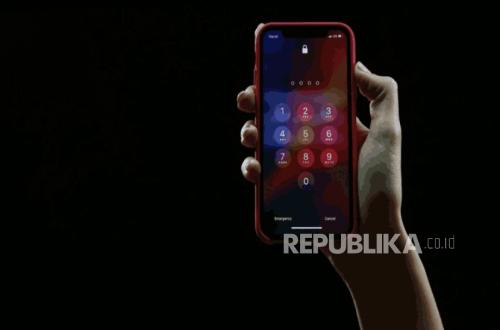
Forgetting email passwords, bank account credentials, or social media login details has become an exhausting experience in the digital era. With dozens of accounts to access daily, remembering combinations of letters, numbers, and symbols is not only burdensome but often results in frustration and repeated reset procedures.
This situation has driven the emergence of the passwordless concept or password-free authentication. The author predicts that 2026 will become a turning point when password-free login systems begin to be adopted more widely and extensively.
Reliance on passwords has become a major vulnerability in digital security. Systems that depend on human memory are considered no longer relevant amid increasing cyber threats and the growing complexity of digital services.
We live in an era of password fatigue. Each time we are asked to create a new, increasingly complex password, we are essentially maintaining an outdated security system that is vulnerable to human error.
Passwordless Does Not Mean No Security
Passwordless does not mean eliminating security. Rather, this approach replaces the concept of “something you know” such as a password with “something you have” or “something you are”.
Users will no longer need to type in passwords. Account access can be achieved simply through fingerprint scanning, facial recognition, or a verified personal device. The login process becomes faster, more secure, and less cumbersome.
Several key technologies are identified as drivers of this transition. Biometric authentication such as fingerprint and facial recognition is now increasingly common in modern devices.
Additionally, passkeys are being introduced as a login method based on public key cryptography that no longer stores or transmits passwords, making it more resistant to phishing attacks.
Another supporting technology is security keys or physical security tokens, which provide an additional layer of protection for users with high security requirements.
Beyond improving security, passwordless systems also bring positive impacts in terms of user convenience. The login process becomes simpler, without the need to remember complex technical details or go through lengthy account recovery procedures.
Looking ahead, the shift towards password-free authentication is viewed as a natural evolution in digital security. As the need for systems that are both secure and practical increases, passwordless authentication is expected to become the new standard for accessing digital services across various sectors.