
Forget Hormuz, the Red Sea Heats Up as Cargo Ship Attacked
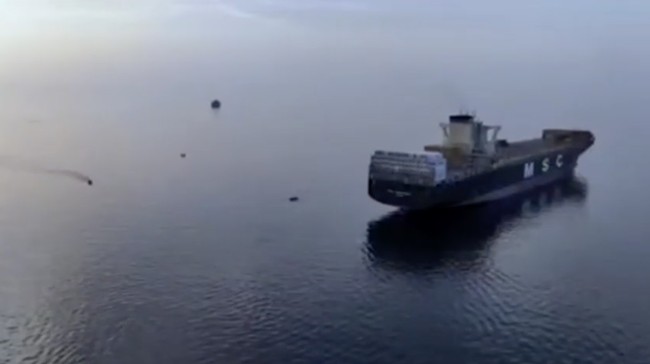
An attack on an international shipping lane has occurred once again. A cargo ship was attacked by unknown parties in the Red Sea on Sunday (5/7/2026), sparking new concerns over the security of global trade and energy routes. The United Kingdom Maritime Trade Operations (UKMTO) revealed that the vessel sent a distress signal after being attacked approximately 30 nautical miles, or about 56 kilometres, southwest of the port of Al Hudaydah, Yemen. “A cargo ship has triggered a danger warning stating that they were attacked by unknown assailants,” the UKMTO wrote in a post on X. The relevant authorities are currently investigating the incident. The UKMTO also urged all vessels transiting the area to increase vigilance. “Transit with caution,” the British maritime security agency warned. This incident is under the spotlight as it occurs while the ceasefire between the United States and Iran remains fragile. Previously, Iran-backed Houthi groups in Yemen frequently launched attacks against commercial ships in the Red Sea throughout 2023 to 2025 as a form of support for Palestine in the Gaza war. However, the group has largely not been directly involved in the conflict between the US and Iran. Tensions in the Red Sea have also emerged as energy market attention was previously more focused on the Strait of Hormuz, the narrow channel that is the main exit point for Middle Eastern oil exports. Now, the focus is shifting to the Bab el-Mandeb Strait, which connects the Red Sea to the Gulf of Aden and the Arabian Sea, given that this route is a vital alternative for global oil distribution. Bab el-Mandeb’s role has become increasingly strategic after exports through the Strait of Hormuz were disrupted due to escalating conflict between Iran and the US and Israel earlier in the year. At that time, Saudi Arabia increased oil shipments via the East-West Pipeline before channelling them to the Red Sea for subsequent delivery to Asian markets via Bab el-Mandeb. This route helped maintain energy supplies to major consumer countries, including Japan and South Korea, when traffic through Hormuz experienced disruptions. The situation began to improve after the United States and Iran signed a memorandum of understanding on 17 June to end the nearly four-month-long war. The agreement reopened the Strait of Hormuz while initiating 60 days of peace negotiations to reach a permanent settlement. Since the reopening of Hormuz, the flow of oil exports has increased significantly. Based on data from trade intelligence company Kpler, Saudi Arabia has shipped approximately 34 million barrels of oil through the Strait of Hormuz since 17 June. This figure more than doubled compared to the roughly 15 million barrels shipped during the period from 9 March to 17 June. The recovery in oil distribution has helped depress global crude oil prices. The price of Brent crude, the global benchmark, has reportedly fallen by about 39% from its peak in March. However, the latest attack on a cargo ship in the Red Sea shows that geopolitical risks to the global energy supply chain are far from over.