
Forget Boeing-Airbus, Welcome Embraer: The New Ruler of the Skies
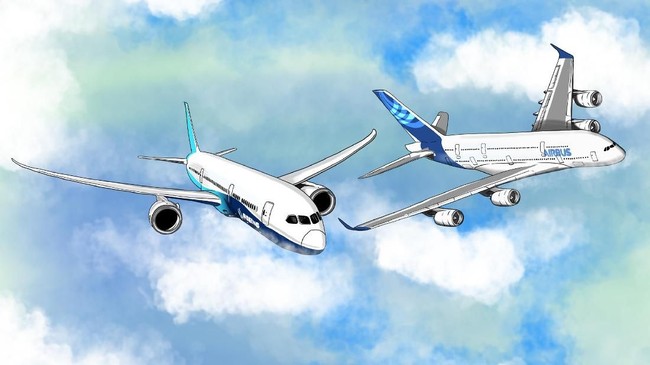
The global commercial aircraft industry has long been synonymous with two big names: Airbus and Boeing.
However, amid the lengthy order queues at both manufacturers, Embraer has been slowly seizing opportunities and growing far more quickly.
The Brazilian aircraft manufacturer remains much smaller than Airbus and Boeing. Even so, demand for its regional passenger aircraft, private jets and military planes continues to rise.
As reported by The Economist, Embraer delivered a total of 141 aircraft in 2021.
That figure rose to 244 units in 2025, comprising 78 commercial aircraft, 155 executive jets, three KC-390s and eight A-29 Super Tucanos.
Growth has continued this year. According to the company’s official report, Embraer delivered 109 aircraft in the first half of 2026, up roughly 20% from 91 units in the same period last year. Second-quarter deliveries reached 65 units, the highest for a second quarter in 16 years.
For 2026, the company is targeting deliveries of 80-85 commercial aircraft and 160-170 executive jets. If the upper end of the target is met, the two divisions could deliver a combined 255 aircraft, excluding defence aircraft.
The value of unfulfilled orders, or the order backlog, also reached a record US$34.5 billion at the end of the second quarter of 2026. That figure rose 16% year on year and marked a new record for the seventh consecutive quarter.
The backlog does not come solely from passenger aircraft. Orders for the commercial division reached US$15.1 billion, executive jets US$7.8 billion, defence US$6.1 billion, and services and supporting offerings US$5.5 billion.
Its financial performance has also improved. Embraer’s revenue reached a record US$7.58 billion in 2025, growing 18% year on year. The company also booked US$491.2 million in free cash flow and ended the year with a net cash position of US$109.3 million, excluding the Eve air taxi business.
Chief Executive Francisco Gomes Neto sees room for significant growth in the years ahead. This performance has begun to raise questions about whether Embraer will remain dominant in the small aircraft market or begin challenging Airbus and Boeing in the larger segment.
Winning While Airbus and Boeing Struggle
One of the main drivers of Embraer’s growth has in fact come from the lengthy backlogs at its two rival manufacturers. As of the end of June 2026, Airbus had a total backlog of 9,222 commercial aircraft, while Boeing had more than 6,200. Combined, that amounts to more than 15,400 units.
Such long queues mean airlines must wait years to receive large narrow-body aircraft. This has opened the way for Embraer’s regional E2 jets, which can be delivered more quickly.
Since 2017, Embraer has marketed the E2 under the nickname “Profit Hunter”.
The name is not merely a promotional gimmick. The E195-E2 consumes around 25% less fuel than the previous generation of aircraft. Its basic maintenance interval also reaches 10,000 flight hours, reducing the amount of time aircraft spend in servicing.
Changing travel patterns have further supported Embraer’s business. Passengers increasingly prefer direct flights between smaller cities and airports without having to connect through major hubs.
Boeing noted that nearly 5,500 new airport pairs have been opened since 2015. Airbus also estimates that growth in smaller cities will prompt airlines to open more direct routes.
Such routes are better served by small-capacity aircraft because passenger numbers are not yet large enough to justify Boeing 737- or Airbus A320-class planes.
Embraer estimates that demand for aircraft with a maximum capacity of 150 seats could reach 8,500 units by 2045, worth US$650 billion.
Gomes Neto believes that even if demand is only half that projection and Embraer secures half of those orders, the company’s production capacity would still be filled for 20 years.
Embraer has also benefited from its E175. That aircraft is the only model still in production that can be operated by regional feeder airlines in the United States, because agreements with the pilots’ union limit the maximum size of aircraft they may fly.
This performance is also reflected in the stock market. According to Refinitiv data, in the five years up to Monday’s trading (3/8/2026), Embraer’s shares have surged 380.51%, far outpacing Airbus, which rose 80.53%, and Boeing, which gained just 3.62%.
Its Business Is Not Just Passenger Aircraft
Embraer’s growth has also been underpinned by a private jet business that has expanded rapidly since the Covid-19 pandemic. The Phenom 300 has been the world’s best-selling light-class jet for 14 consecutive years, according to data from the General Aviation Manufacturers Association (GAMA).
Throughout 2025, Embraer delivered 72 Phenom 300 units. More than 900 of these aircraft operate in 70 countries and have collectively logged more than 2.9 million flight hours.
Beyond its strength in private jets, rising military budgets in various countries have also lifted Embraer’s defence business. This division’s backlog reached US$6.1 billion in the second quarter of 2026, jumping 42% year on year. The rise was supported in part by a United Arab Emirates order for 10 C-390 Millennium aircraft with options to purchase 10 more.
Embraer also holds a controlling stake in Eve, a developer of electric air taxis. The business is still at the development stage, but with fewer and fewer start-ups surviving in the industry, Eve has the opportunity to become one of the leading players.
This range of business lines means Embraer is not entirely dependent on passenger aircraft sales. However, Gomes Neto believes the company still needs to prepare a new product range to enter a more ambitious phase of growth.
Dare to Challenge Airbus and Boeing?
Embraer has two major options. The first is to develop larger private jets. The far bolder option is to build larger commercial aircraft to compete directly with Airbus and Boeing.
That opportunity is expected to emerge towards the end of the 2030s, when Airbus and Boeing begin preparing replacements for their flagship narrow-body aircraft.
As long as current models remain in strong demand, neither company will be prompted to rush into spending on new aircraft development. That window of time could be exploited by Embraer.
However, breaking into a market dominated by two giants is no easy task.
Bombardier once attempted to enter that market through its C Series programme, but the project strained the company’s finances. Airbus subsequently took a 50.01% stake in the programme without paying any cash and renamed it the A220.
Airbus Chief Executive Guillaume Faury has even warned Embraer to “think twice”. Bombardier’s experience shows that having a good aircraft is not enough. A manufacturer also needs substantial capital, a supplier network, after-sales services, and access to airlines in many countries.
On the other hand, the potential market is too large to ignore. Boeing estimates the world will need 43,625 new aircraft by 2045, while Airbus projects demand for 42,060 new aircraft over the same period.
Embraer is also not starting from scratch. Over roughly the past 20 years, the company has obtained certification for nearly 20 new aircraft. That track record means prospective customers are likely to take any new offering seriously.
The biggest obstacle is cost. Developing a new aircraft is estimated to require around US$10 billion. That is even more than Embraer’s entire revenue in 2025, which reached US$7.58 billion.
Embraer would likely need to partner with engine manufacturers, component suppliers, customers and other investors to finance such a project. Relying on its own funds would be too burdensome, even though its financial position has improved considerably.
The decision to challenge Airbus and Boeing is reportedly still dividing opinion within the company. Embraer does not need to decide in the near term because its existing business is still growing strongly. As Gomes Neto stressed, the company is currently “very comfortable with the position it holds”.
That comfort is also a dilemma. Embraer can choose to defend the market it has already captured with lower risk, or use its best momentum to attempt to reshape a commercial aircraft industry that has been dominated by two companies for decades.
Source: jawawa.id (https://jawawa.id/newsitem/forget-boeing-airbus-welcome-embraer-the-new-ruler-of-the-skies-1785901938)
Originally published by CNBC Indonesia (https://www.cnbcindonesia.com/research/20260804112431-128-756353/lupakan-boeing-airbus-sambutlah-embraer-sang-penguasa-langit-baru), translated from Indonesian