
Forests No Longer Relying on Timber, Forestry Ministry Promotes Food and Energy Business
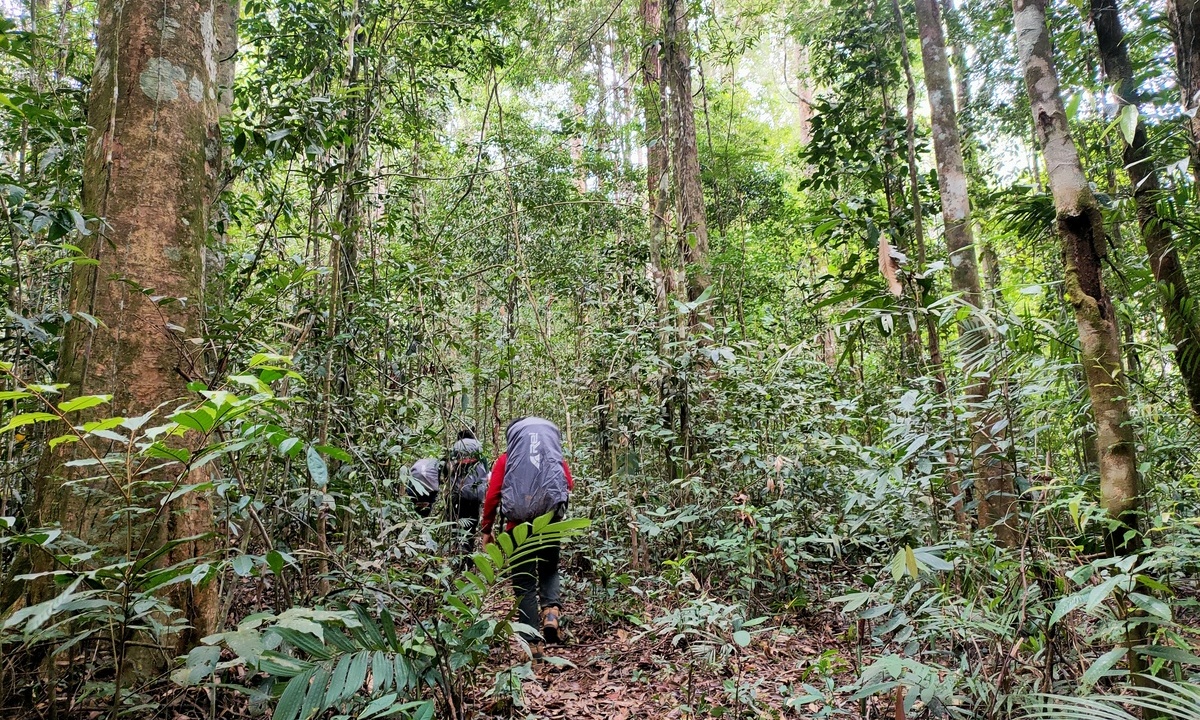
The Ministry of Forestry (Kemenhut) is encouraging a change in the paradigm of forest management so that it no longer relies solely on timber products. Through the transformation of Forest Area Utilisation Business Licences (PBPH), forest areas are being directed to become sources of food, energy, water, and environmental services to support the national bioeconomy.
Erwan Sudaryanto, Secretary of the Directorate General of Sustainable Forest Management at the Ministry of Forestry, stated during a national webinar on Thursday (2/7) that forest areas must be viewed as biological resources with functions broader than just timber production. He noted that forest areas are biological resources that can be utilised as sources for food, energy, and water, as well as environmental services.
According to him, forestry multi-business activities are the main foundation in the PBPH transformation to optimise forest utilisation while increasing economic added value and creating new jobs. Ilham, Director of Forest Utilisation Business at the Ministry of Forestry, revealed that this transformation is being implemented because the economic value of forestry businesses relying solely on timber is declining.
“Timber is no longer commercially viable. Production costs are higher than the selling price. Therefore, we need to find optimisation beyond timber, such as silvopasture, biomass, biofuel, and carbon environmental services,” said Ilham.
He explained that non-timber forest products and environmental services have great potential to support three aspects of national resilience: food, energy, and water. One area the government is promoting is the development of silvopasture, or integrated livestock systems, within forest areas. According to Ilham, the grassland regions in East Nusa Tenggara have great potential for cattle development and milk production.
“Most of Indonesia’s milk is currently imported. By optimising forest areas through silvopasture, God willing, domestic needs can be better met,” he said.
In addition to food, the energy sector is also a focus for development. The Ministry of Forestry is encouraging the planting of energy crops such as malapari (Borassus flabellifer), which can be processed into bioavtur to meet renewable energy needs. Ilham explained that global demand for bioavtur will continue to rise alongside the international aviation industry’s commitment to reducing carbon emissions.
“Indonesia has vast forest areas, and plants like malapari can grow in almost all types of land. We have the potential to become a global energy hub if this potential is utilised optimally,” he said.
In the field of environmental services, Indonesia also possesses significant carbon economy potential. The Ministry of Forestry noted that the target for rehabilitating 12 million hectares of land has a potential carbon absorption capacity of 13.4 billion tons. Consequently, the government is encouraging all PBPH holders to transform from single-business operations to forestry multi-businesses to ensure more optimal and sustainable forest utilisation.
Ita Putri Pancaningtyas, Director of PT Tusam Hutani Lestari, stated that her company has implemented the forestry multi-business concept since 2018 when the timber market declined. The company subsequently developed the use of pine resin as a non-timber forest product to maintain business sustainability.
“We welcome the forestry multi-business policy because our Work Plan (RKU) has been heading in that direction since 2018. At that time, we faced difficulties marketing timber products, so we sought alternatives through the utilisation of pine resin,” she said.
Source: jawawa.id (https://jawawa.id/newsitem/forests-no-longer-relying-on-timber-forestry-ministry-promotes-food-and-energy-business-1782989465)
Originally published by Media Indonesia (https://mediaindonesia.com/humaniora/906738/hutan-tak-lagi-andalkan-kayu-kemenhut-dorong-bisnis-pangan-dan-energi), translated from Indonesian