
Forests burned: Is reforestation or greening needed? Here's the difference
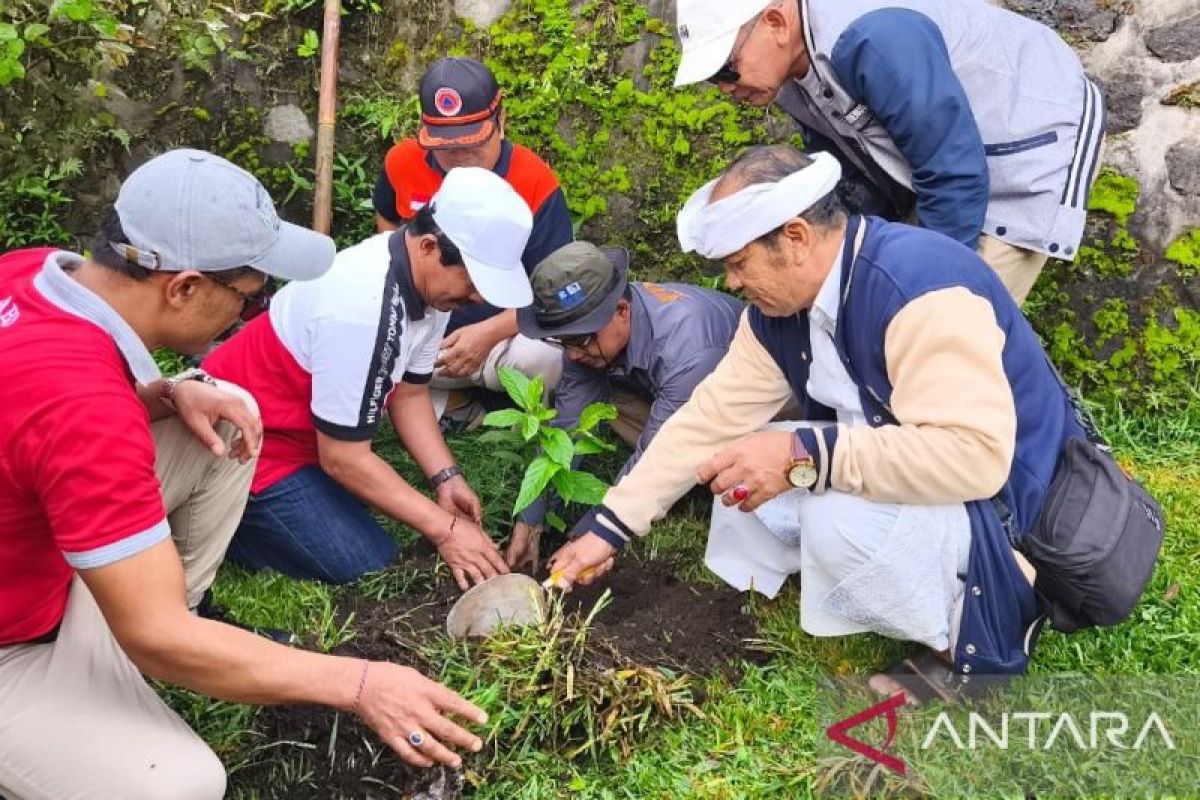
Forest and land fires (karhutla) have once again become a concern in several regions of Indonesia. The government is currently prioritising six provinces in Kalimantan and Sumatra for karhutla handling, namely West Kalimantan, Central Kalimantan, South Kalimantan, Riau, South Sumatra, and Jambi. Based on the results of the emergency karhutla coordination meeting on 21 August 2026, the peak fire risk is expected to occur from August to September.
In Kalimantan, fires remain a concern as several areas require intensive handling. Similar conditions also occur in several parts of Sumatra, with officers continuing to monitor and extinguish fires to prevent them from spreading. BMKG also provides monitoring of karhutla potential for Indonesia and the ASEAN region as part of early warning efforts.
Once the fire has been successfully extinguished, the real problem is not over. Burned forests and land require time to regain their ecological functions. One effort that can be undertaken is rehabilitation through replanting.
However, the terms reforestation and greening are often used interchangeably. In fact, the two have different meanings and scopes.
So, after a forest fire, is reforestation or greening needed?
Reforestation and greening are different
Simply put, reforestation is the activity of replanting in forest areas that have suffered damage or loss of forest cover.
Meanwhile, greening has a broader scope and is not limited to forest areas. Tree planting can be carried out on land outside forest areas, for example around settlements, critical land, public facilities, or certain areas that require additional vegetation cover.
The Ministry of Forestry itself has a Directorate General of Watershed Management and Forest Rehabilitation (PDASRH) that handles forest and land rehabilitation policies, including soil and water conservation and watershed management.
Thus, the choice between reforestation and greening actually depends on the location and condition of the damaged land.
When a fire occurs within a forest area and causes vegetation cover to be damaged, replanting can be part of rehabilitation efforts.
The goal is not merely to make the area look green again. Vegetation has ecological functions, ranging from providing habitat for wildlife, protecting soil, helping regulate water systems, to absorbing carbon.
However, planting cannot be done carelessly. The types of plants selected need to be adapted to the ecosystem conditions and site characteristics.
In this way, the restored forest is expected not only to have many trees, but also to be able to resume its ecological functions.
Greening is more suitable for land outside forest areas
Unlike reforestation, greening can be carried out on various lands outside forest areas.
For example, open land affected by fire, areas around settlements, river buffer zones, or critical land that requires additional vegetation cover.
The Ministry of Forestry includes forest and land rehabilitation as one of the efforts to increase the carrying capacity of watersheds and maintain ecosystem balance.
This means that greening can be one part of a broader environmental recovery process after a fire.
This is quite important. After seeing land turned black due to fire, there may be an assumption that the fastest solution is to immediately plant as many trees as possible.
In fact, ecosystem recovery is not always that simple.
Burned land needs to be inspected first. Is the soil still able to support plant growth? Is there still vegetation that can grow naturally? What is the condition of water and drainage? Is there a threat of fire recurring?
Research stored in the Ministry of Forestry library shows that burned land can undergo natural recovery and vegetation succession according to post-fire conditions.
Therefore, recovery should be based on ecosystem conditions, not merely pursuing the number of seedlings planted.
Natural recovery also needs to be considered
In certain areas, nature actually has the ability to recover itself.
Seeds still remaining in the soil, shoots from surviving plants, or plants originating from surrounding areas can be part of the natural regeneration process.
If land conditions still allow, this process can be maintained and assisted through area protection.
Replanting is only carried out when necessary, especially in areas that have suffered severe damage or have low regeneration capacity.
This approach is important so that recovery does not alter the original character of the ecosystem.
Post-fire peatland recovery cannot rely solely on tree planting.
Peat has special characteristics because it is formed from the accumulation of organic matter in wet conditions. When peat dries out, the risk of fire becomes higher.
The Ministry of Forestry, through the Centre for Forest and Land Fire Mitigation Development, states that rehabilitation of burned peat areas should ideally be carried out no later than one year after the incident to prevent changes in ecosystem conditions that are more difficult to restore.
Therefore, peat recovery needs to pay attention to water management in addition to vegetation. Maintaining peat moisture is an important part of ensuring the area does not become easily flammable again.
Plant types must not be chosen carelessly
There is an assumption that the more trees planted, the better the greening results. In fact, plant types play an important role in determining the success of recovery.
Selected plants should be suited to soil conditions, climate, water availability, and the character of the local ecosystem.