
Forestry Ministry Sets Carbon Trading Requirements to Safeguard Forest Sustainability
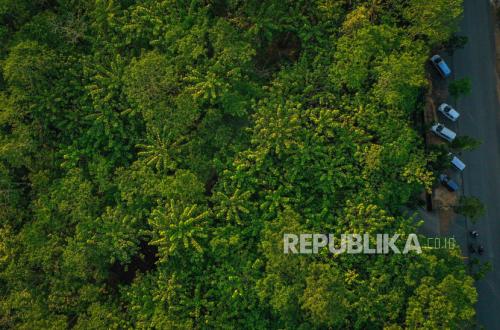
The government is promoting carbon trading in the forestry sector based on the principles of transparency and integrity so that it can support sustainable forest management. The Ministry of Forestry (Kemenhut) considers carbon trading to be a potential new source of funding as well as an instrument to support the achievement of national climate targets.
Kemenhut said that the credibility of carbon trading depends heavily on strong and accountable governance. This approach is in line with the commitment of Forestry Minister Raja Juli Antoni, who positions carbon not only as an economic commodity but also as an instrument to support forest revitalisation and biodiversity conservation.
President Prabowo Subianto previously stressed the importance of safeguarding national sovereignty over natural resources, including carbon potential, so that they can be managed independently for the benefit of the nation while contributing to global efforts to tackle climate change.
Secretary of the Directorate General of Sustainable Forest Management (PHL) Erwan Sudaryanto said that the transformation of forest utilisation is not solely oriented towards increasing the economic value of forest resources.
“The transformation of forest utilisation that we are building is not only oriented towards economic value, but also strengthens forest sustainability, improves community welfare, expands sources of development funding, and supports the achievement of national climate targets,” Erwan said in a Kemenhut statement on Wednesday (12/8/2026).
He added that carbon trading must be carried out transparently and with integrity, and provide equitable benefits for stakeholders.
To strengthen this governance, Kemenhut issued Minister of Forestry Regulation Number 6 of 2026 concerning Procedures for Carbon Trading through Greenhouse Gas Emission Offsets in the Forestry Sector.
According to Erwan, the regulation is expected to provide legal certainty, strengthen governance, and enhance the credibility of Indonesia’s carbon market.
“The regulation is expected to provide legal certainty, strengthen governance, enhance the credibility of Indonesia’s carbon market, while ensuring that carbon trading continues to support sustainable forest management,” he said.
Meanwhile, Director of Forest Utilisation Business Development Ilham explained that the forestry sector is transforming from a business model dominated by timber forest products towards a multi-business forestry system.
Under this scheme, forest utilisation derives not only from timber production but also from non-timber forest products, environmental services, ecotourism, and carbon trading.
According to Ilham, this change opens up new funding opportunities for sustainable forest management. However, traded carbon must meet the principles of high-integrity carbon credits in order to have credibility and be able to compete in international markets.
Several principles that need to be fulfilled include additionality, community involvement, fair benefit sharing, biodiversity protection, and management of emission reversal risks.
“Carbon trading must provide benefits for the state, communities, and forest sustainability simultaneously. Integrity is the main requirement for Indonesian carbon to be competitive and trusted in the global market,” Ilham said.