
Forestry Ministry Seeks to Improve Spending Quality and Ensure Effective Budget Delivery
The Ministry of Forestry (Kemenhut) is stepping up efforts to improve spending quality, accelerate budget execution and mitigate implementation risks by strengthening internal controls and conducting ongoing performance evaluations.
The measures are intended to ensure that state funds are managed effectively, efficiently, transparently and accountably in support of the government’s priority programmes and forestry-sector development.
Lady Martha Boturan Hasian Napitupulu, director of forestry and environmental oversight at the Development and Finance Supervisory Agency (BPKP), said the quality of government spending was an important factor in supporting national development and economic growth.
With budgets constrained, she said, every ministry and agency needed to ensure spending was directed towards strategic programmes that deliver the greatest benefits.
“With limited budgets, naturally our focus is on strategic programmes. All spending must be guided by the principle of quality expenditure,” Lady Martha said in a statement on Thursday (22 October 2026).
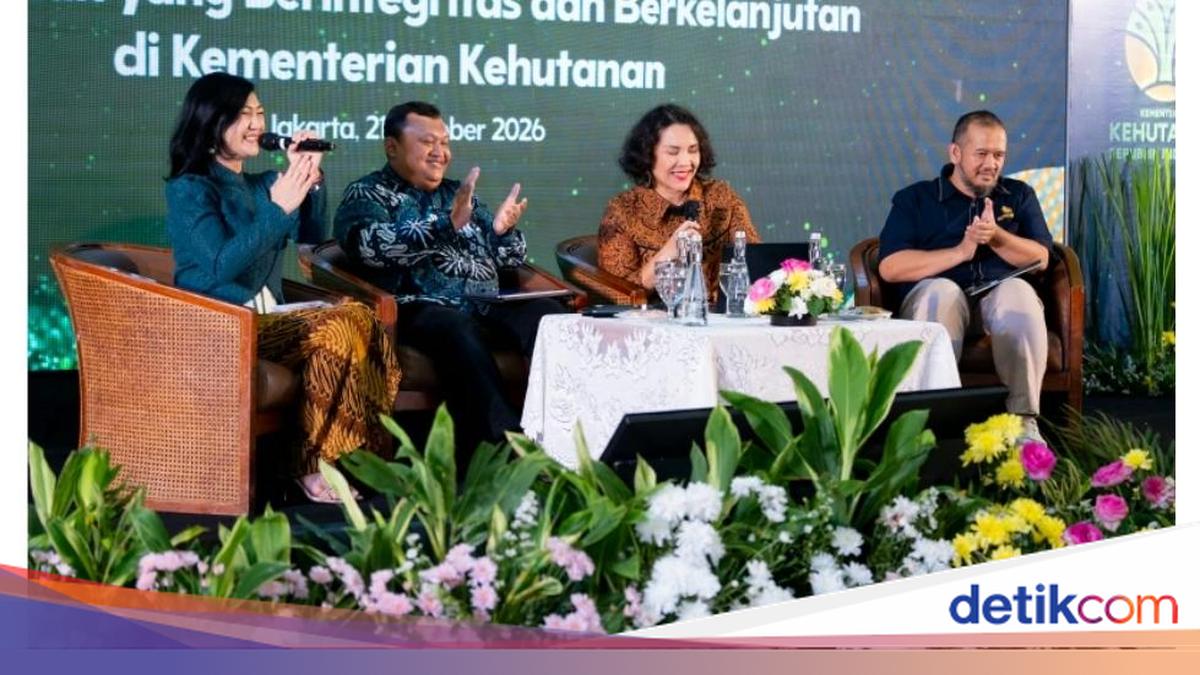
She made the remarks at a discussion in Jakarta on Wednesday (21 October 2026) entitled “Optimising Spending Discipline and Strategies to Mitigate Budget Execution Risks within the Ministry of Forestry”.
Lady Martha said BPKP oversight was part of efforts to advise the President on the implementation of the government’s priority programmes. Spending effectiveness therefore needed to be ensured down to the activity level, taking into account whether budget use, outputs and programme objectives were aligned.
Figures presented at the discussion showed that the ministry had realised 53.46% of its revised budget by the end of the third quarter of 2026. Execution rates for several priority activities included 47.62% for updating forest-area designations, around 47% for building the capacity of community groups granted access to manage forest areas, and 57.83% for supporting the business independence of forest-farming groups.
These figures will inform an evaluation intended to accelerate activities during the remainder of the budget year. Lady Martha also stressed the importance of optimising the Fund Disbursement Plan (RPD), regularly reporting progress on priority programmes and strengthening risk mitigation at every stage of budget execution.
“If controls are already in place, we need to see whether they are being implemented and whether they are effective in reducing risk,” she said.
She added that risk mitigation should cover the allocation of funds in the Budget Implementation List (DIPA), commitment-making, procurement of goods and services, and payment verification. Risks should also be identified according to the characteristics of each work unit and addressed with adequate controls.
Abdul Rozaq, a senior examiner at Audit Board of Indonesia (BPK) Directorate General IV, said state finances must be accounted for both in financial statements and in terms of the results achieved through the use of public funds.
He said accountability for state finances was grounded constitutionally in Article 23E of the 1945 Constitution and legally in Law No. 15 of 2006 on the Audit Board of Indonesia.
“When we talk about financial statements, we are talking about financial accountability; when we talk about performance, we are talking about accountability for results. What outputs are produced when the government receives state budget funds, and how are they implemented and accounted for each year?” he said.
He said BPK had used Big Data Analytics since 2020 to support risk-based audits. Analysis of financial transaction data sourced from the Finance Ministry enables auditors to identify transaction patterns across ministries and agencies, map risks and determine which areas warrant closer examination.
At the discussion, Abdul Rozaq also highlighted the need to review recurring problems involving state revenue, spending and asset management. Audit findings, he said, should inform improvements to internal controls so that the same issues do not recur in the following budget year.
He also provided an update on the ministry’s implementation of BPK audit recommendations. Data presented showed that, in the first half of 2026, 82% of recommendations had been acted on in accordance with the audit’s instructions.
Overall completion was reported at 87%, including recommendations that could not be implemented for justifiable reasons.
Abdul Rozaq said the ministry aimed to raise the completion rate for audit recommendations to 90%. To meet that target, each work unit needed to strengthen its commitment to addressing outstanding recommendations that remained actionable and ensure audit findings led to tangible improvements in financial governance.
Heru Hermawan, representing the Finance Ministry’s Directorate General of Treasury, urged the Forestry Ministry to plan its budget around strategic priorities rather than simply repeating the previous year’s allocation pattern.
He said limited financial resources required ministries to identify the most important activities and those that would deliver the greatest benefits towards organisational goals. This approach, he said, should make budget allocations more effective and strengthen spending discipline.
“Priorities should simply be ranked. What is the Forestry Ministry’s foremost priority?” he said.
Heru also noted that budget absorption tended to be concentrated towards the end of the year. Budget execution should be monitored regularly using performance indicators covering eight measures, he said.
Evaluation should therefore consider not only the year-end absorption rate but also progress in actual spending each quarter.
He said accelerating expenditure was a key concern ahead of the close of the 2026 budget year, particularly because some Forestry Ministry activities were funded through non-tax state revenue (PNBP). Revenue availability needed to be matched by readiness to carry out activities so that funds could be used to the fullest extent.
Heru said the Finance Ministry had communicated measures to accelerate and refocus budgets to ministries and agencies. The Forestry Ministry was expected to follow through by speeding up priority activities, completing the necessary documents and monitoring potential obstacles to execution.
“Planning activities is important, but what matters is putting them into effect promptly. We are now in the final stage of implementing the 2026 budget,” he said.
Nevertheless, he stressed that faster spending must comply with state financial management rules, maintain high standards of governance and ensure that every payment can be properly accounted for.
Source: jawawa.id (https://jawawa.id/newsitem/forestry-ministry-seeks-to-improve-spending-quality-and-ensure-effective-budget-delivery-1792644815)
Originally published by detikcom (https://news.detik.com/adv-nhl-detikcom/d-8718528/pastikan-realisasi-anggaran-efektif-kemenhut-optimalkan-kualitas-belanja), translated from Indonesian