
Forestry Ministry Partners with KPK and OJK to Track Money Flows from Forest and Wildlife Crime
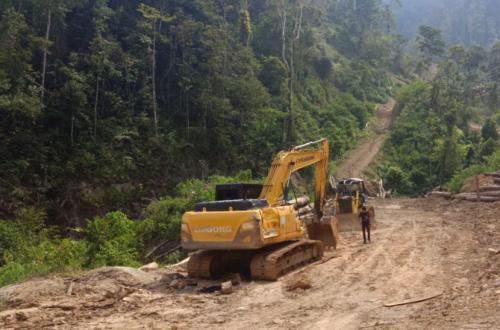
The Ministry of Forestry is strengthening law enforcement against forestry crime and the illegal trade of plants and wildlife by involving various institutions, from the Corruption Eradication Commission (KPK) to the Financial Services Authority (OJK). This strategy not only targets perpetrators on the ground but also seeks to dismantle criminal networks and trace the economic profits generated.
The enforcement strengthening aligns with Forestry Minister Raja Juli Antoni’s policy to improve forestry governance. The policy also follows President Prabowo Subianto’s directive that forest resource management should focus not only on utilisation but also on the protection of Indonesia’s forests, ecosystems, and biodiversity.
The strategy was discussed in a Multistakeholder Meeting on Integrated Law Enforcement for Forestry and Plants and Wildlife organised by the Directorate General of Forestry Law Enforcement together with the LEVERAGE Programme in Bogor on 7-8 August 2026. The forum brought together various elements of the criminal justice system and relevant stakeholders, including civil servant investigators from across ministries and agencies, the Police, the Attorney General’s Office, the KPK, the Supreme Court, Customs and Excise, the OJK, the Ministry of Marine Affairs and Fisheries, the Quarantine Agency, and academics.
The meeting served as a space to unify perspectives while strengthening the application of a multidoor approach in handling forestry crime and illegal wildlife trade. Director General of Forestry Law Enforcement Dwi Januanto Nugroho stated that the multidoor approach is a crucial instrument for translating this strategy.
“The multidoor approach is becoming increasingly important. Various available legal instruments need to be utilised optimally, including criminal acts of corruption, taxation, customs, and the financial services sector,” Dwi said in a press release on Sunday (9/8/2026). According to him, this approach can expand the scope of law enforcement while increasing the state’s leverage in dismantling larger criminal networks.
As a megabiodiversity country, Indonesia faces a serious threat from organised and transboundary illegal trade in plants and wildlife. These crimes not only impact ecosystem sustainability and biodiversity but can also cause complex economic losses. Therefore, the law enforcement paradigm needs to shift from an approach solely oriented towards punishing field perpetrators to one that cuts the crime chain while eliminating its economic incentives.
“Effective law enforcement is not only measured by the number of perpetrators convicted, but by the state’s ability to build precise, science-based evidence and eliminate the economic motivation for these crimes,” Dwi asserted. This approach is also reinforced through asset recovery, severing the proceeds of crime, and utilising forensic science in the investigation and evidentiary processes.
To strengthen integrated law enforcement, the multistakeholder forum formulated four strategic steps. First, institutional strengthening, including through the push to establish an Integrated Law Enforcement Task Force to handle high-risk and large-scale illegal wildlife trade cases. Second, the drafting of an integrated Standard Operating Procedure to clarify the coordination mechanism for inter-agency law enforcement. Third, strengthening the substance of regulations through the harmonisation of various supporting enforcement rules. Fourth, human resource capacity development, particularly for civil servant investigators, in applying the multidoor approach, asset recovery, and ecosystem loss recovery schemes.
Director of Forestry Criminal Enforcement Rudianto Saragih Napitu said the success of integrated law enforcement requires consistency in coordination, communication, and changes in inter-agency work culture. “Integrated law enforcement is not limited to case handling but also encompasses the transformation of working methods and culture between institutions,” he said. He added that strengthening human resource capacity, communication platforms for civil servant investigators, and the formation of a special team to handle money laundering and asset tracing are important for optimising investigations, inquiries, and environmental recovery.
As a follow-up, the Directorate General of Forestry Law Enforcement together with the LEVERAGE Programme will publish a Study on the Challenges of Investigating Illegal Trade in Plants and Wildlife as a shared reference. The study is expected to strengthen cross-agency understanding of investigative challenges while serving as a basis for developing more effective handling strategies.
Source: jawawa.id (https://jawawa.id/newsitem/forestry-ministry-partners-with-kpk-and-ojk-to-track-money-flows-from-forest-and-wildlife-crime-1786261878)
Originally published by Republika (https://esgnow.republika.co.id/berita/tjhp3a416/gandeng-kpkojk-kemenhut-bidik-aliran-uang-kejahatan-hutan-dan-satwa-liar), translated from Indonesian