
Forestry Ministry Integrates Forest Rehabilitation with 'Beautiful Indonesia' Movement
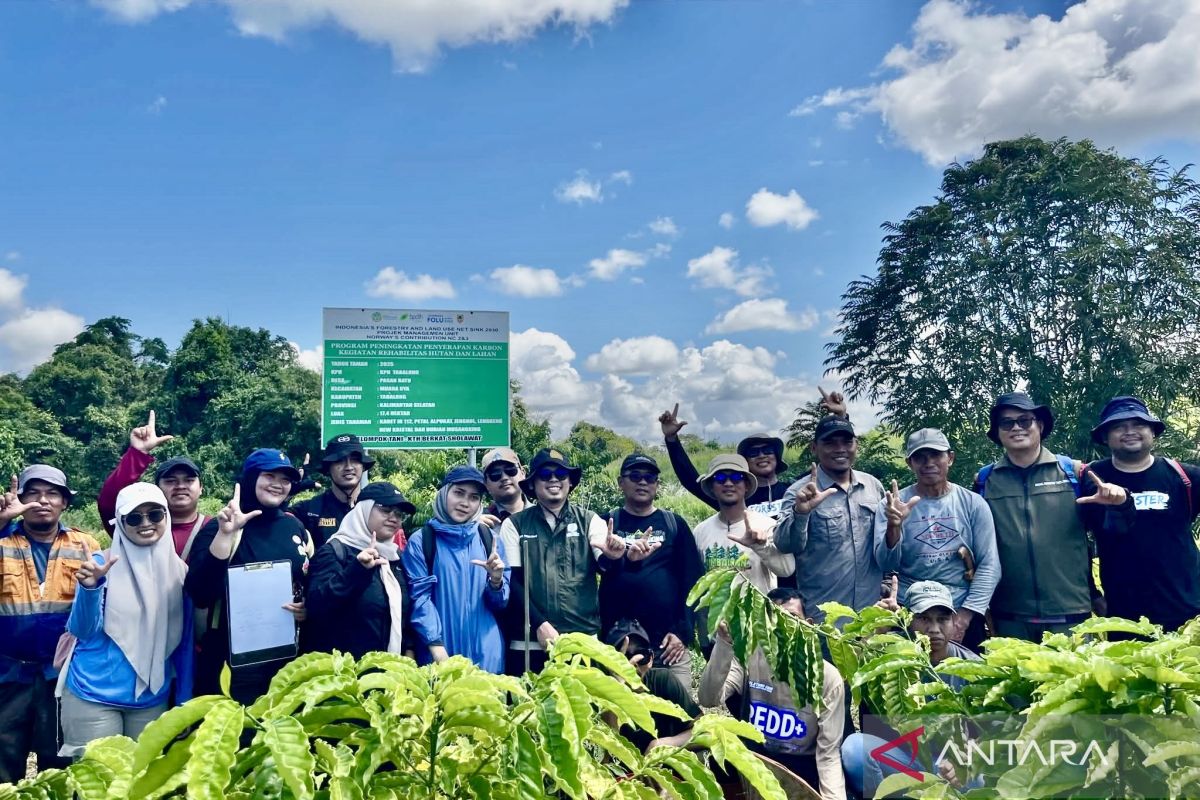
The Ministry of Forestry is integrating all Forest and Land Rehabilitation programmes with the ‘Indonesia Asri’ (Beautiful Indonesia) Movement to improve the quality of the living environment across the country.
Deputy Minister of Forestry Rohmat Marzuki stated that this integration is a concrete follow-up to the programme launched by President Prabowo Subianto. “President Prabowo Subianto has launched the Indonesia Asri Movement—aiming for a Safe, Healthy, Clean, and Beautiful environment—one of which is achieved through greening programmes or tree planting,” he said during the commemoration of World Day for Combating Desertification and Drought in Jakarta on Wednesday.
He explained that the Ministry’s implementation of this movement involves both vegetative and civil-technical forest rehabilitation actions. These efforts aim to support food, energy, and water security through community involvement within river basins (DAS).
As a result of these efforts, he noted that by 2025, Indonesia has successfully rehabilitated more than two million hectares of degraded land through multi-stakeholder financing schemes involving the government, the private sector, and international partners.
“We certainly invite academics and researchers to continue developing innovations and models for forest and land rehabilitation,” he expressed.
He ensured that government support will continue for academics and researchers to develop technologies and innovations to improve national environmental quality. He cited examples of modern technology utilisation in the forestry sector, such as the use of unmanned aerial vehicles (drones) for aerial seeding, the development of artificial intelligence (AI), the use of mycorrhizae in former mining lands, and effective soil carbon sequestration methods.
In addition to technological approaches, he also ensured support for various community-led greening initiatives, such as tree waqf (endowment) movements, tree alms, and nature-based tourism concepts centred on tree planting.
“Therefore, it is necessary for us to develop these, collect their success stories in a database, and then socialise them to all parties. We recall the vegetation innovation on the rocky lands of Gunung Kidul by Professor Umi Han’in,” he concluded.