
Forestry Ministry Evaluates Business Permit Compliance, Prioritises Land and Water Conservation
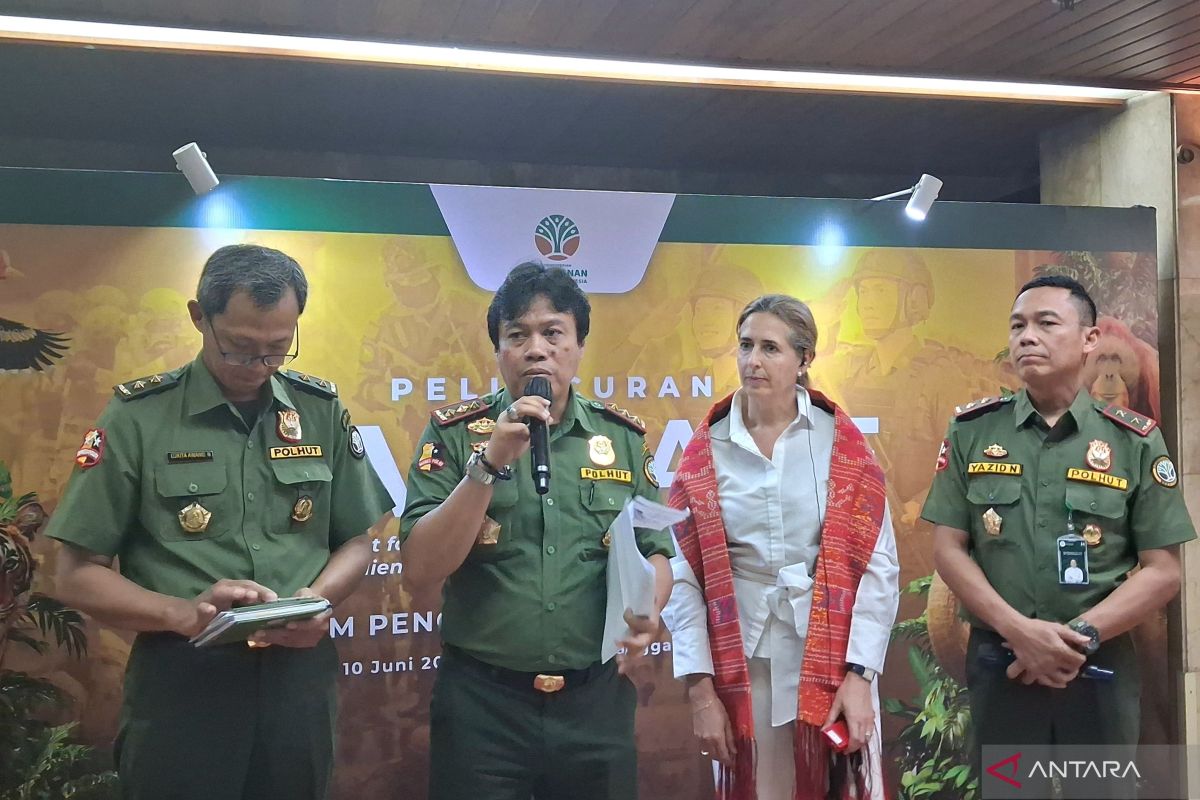
Jakarta - The Ministry of Forestry is continuously evaluating corporate permit compliance in order to strengthen the law enforcement system to prioritise land and water conservation to prevent environmental damage. “In relation to disaster mitigation, of course in the broader context, land and water conservation is a priority. As we saw previously in Sumatra, Aceh, and various other regions, we continue to evaluate corporate licensing compliance,” said the Director General of Forestry Law Enforcement at the Ministry of Forestry, Dwi Januanto Nugroho, in Jakarta on Wednesday. “So, both area use and forest product utilisation, we continue to develop all of it. Administrative, civil, and criminal instruments can be applied simultaneously depending on the case,” he said. In order to strengthen law enforcement against forestry crimes, such as the trade in protected wildlife, the ministry, in cooperation with UNDP, has also launched the Law Enforcement for Sustainable Viable Ecosystems and Biodiversity Resilience through Multi-Sectors Engagement project, or Leverage. “In principle, through the support of Leverage, the ministry is strengthening an adequate law enforcement system for enforcement efforts, from the initial complaint to the enforcement action, even in the context of prevention,” Dwi stated. He emphasised that law enforcement against crimes in forest areas cannot be carried out by a single institution, as wildlife trade often involves many parties. Therefore, every project with an approach like Leverage certainly has the spirit to build a more integrated law enforcement system. “We use a system that we continue to develop for early detection, as well as other instruments to prevent specific modus operandi of forestry crimes. Leverage also involves key actors to understand the modus operandi and how existing loopholes can be closed through collaboration, involving quarantine, customs, and various other elements that form a unified system,” he explained. In the context of rescuing protected wildlife, the ministry is protecting habitats and developing wildlife reproduction through cooperation with various elements. “We previously apprehended those involved in the illegal trade of pangolins and various other wildlife crimes. It is very concerning. There were several tonnes, which if converted might be equivalent to thousands of pangolins, for example. Where did they come from? This is what we detect for prevention efforts, so we are not only taking enforcement action,” Dwi said.