
Forestry Minister promotes multi-use forestry model for productive forest management
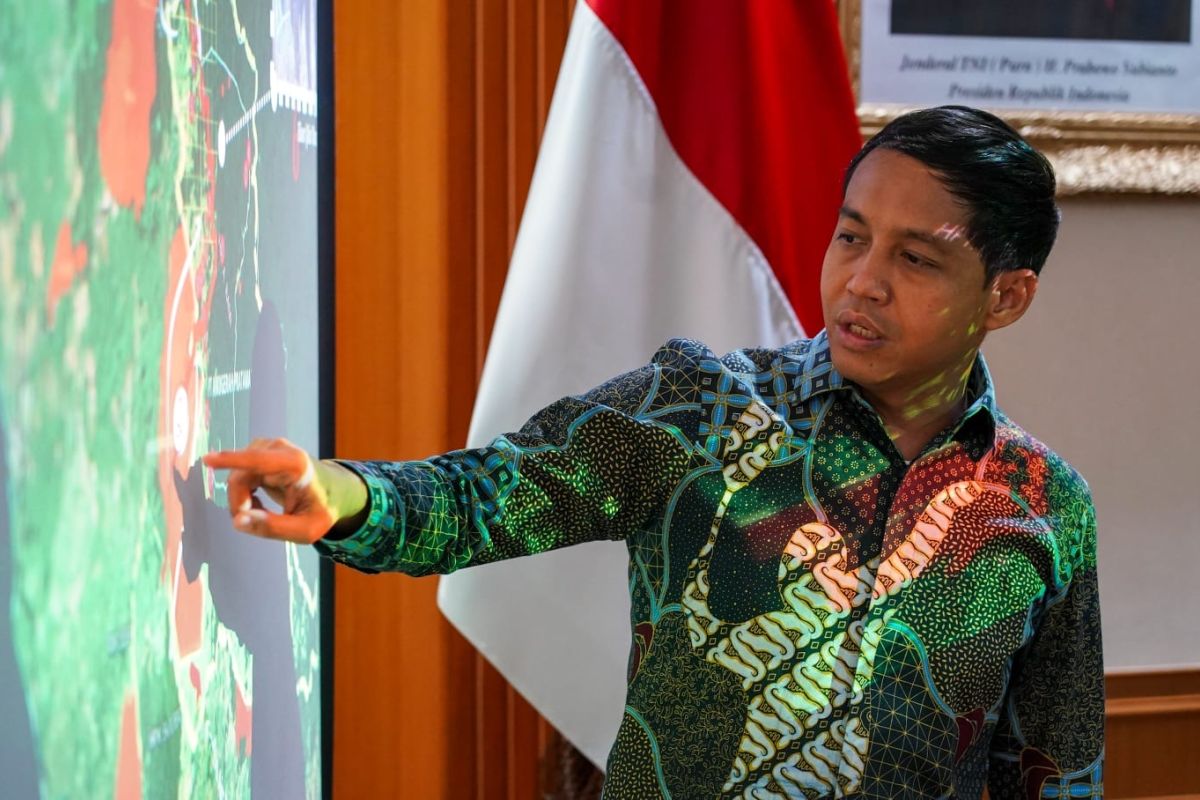
Jakarta - Forestry Minister Raja Juli Antoni is promoting the implementation of Multi-Use Forestry (MUK) as a model for productive, sustainable forest management that is investment-ready and benefits local communities.
In a statement confirmed in Jakarta on Friday, the minister said MUK aims to balance ecological, economic, social, and market interests.
‘Accelerating MUK implementation will help develop adaptive, productive, and sustainable forest management models to address green economy challenges, biodiversity conservation, food security, and improved livelihoods for forest-adjacent communities,’ he said.
The Ministry of Forestry has established a Taskforce for Accelerating MUK Implementation to support data, coordination, and technical follow-up. ‘This taskforce is to help accelerate MUK implementation. If there are data, coordination, or technical needs, please communicate them promptly so we can push forward together,’ Antoni added.
Forestry Minister’s Chief Adviser Silverius Oscar Unggul said the taskforce is developing two main approaches: agroforestry and ecosystem restoration, focusing on coffee and cocoa due to strong global market prospects and climate resilience.
Projections until 2045 indicate MUK-based coffee and cocoa agroforestry could boost exports by around Rp418 trillion, support 3.8 million livelihoods, sustainably manage 2.5 million hectares of land, and absorb approximately 25 million tonnes of CO2 equivalent.
‘Pilots must demonstrate that PBPH, Social Forestry, communities, buyers, funding institutions, local and central governments can work together in a strengthened value chain,’ Unggul said.
The taskforce has identified priority landscapes for pilot projects, including Bukit Tiga Puluh (Jambi), Pesawaran and Lampung Selatan (Lampung), Wehea Kelay/Bentala (East Kalimantan), Kubu Raya (West Kalimantan), and the Peusangan Elephant Conservation Initiative (PECI) in Aceh for ecosystem restoration and elephant conservation.
Successful MUK implementation depends on multi-stakeholder collaboration, from PBPH and Social Forestry as production bases, buyers as market guarantors, funding institutions, and government levels supporting policies, coordination, and resolving on-ground challenges.
To strengthen market commitment, the taskforce is preparing a MUK Buyer Roundtable as a strategic forum for partnerships in pilot landscapes.
‘We want Multi-Use Forestry to be more than a concept—it must become a tangible reality on the ground,’ Unggul said.