
Forestry Minister: Heavy machinery permitted in national parks during forest fire emergencies
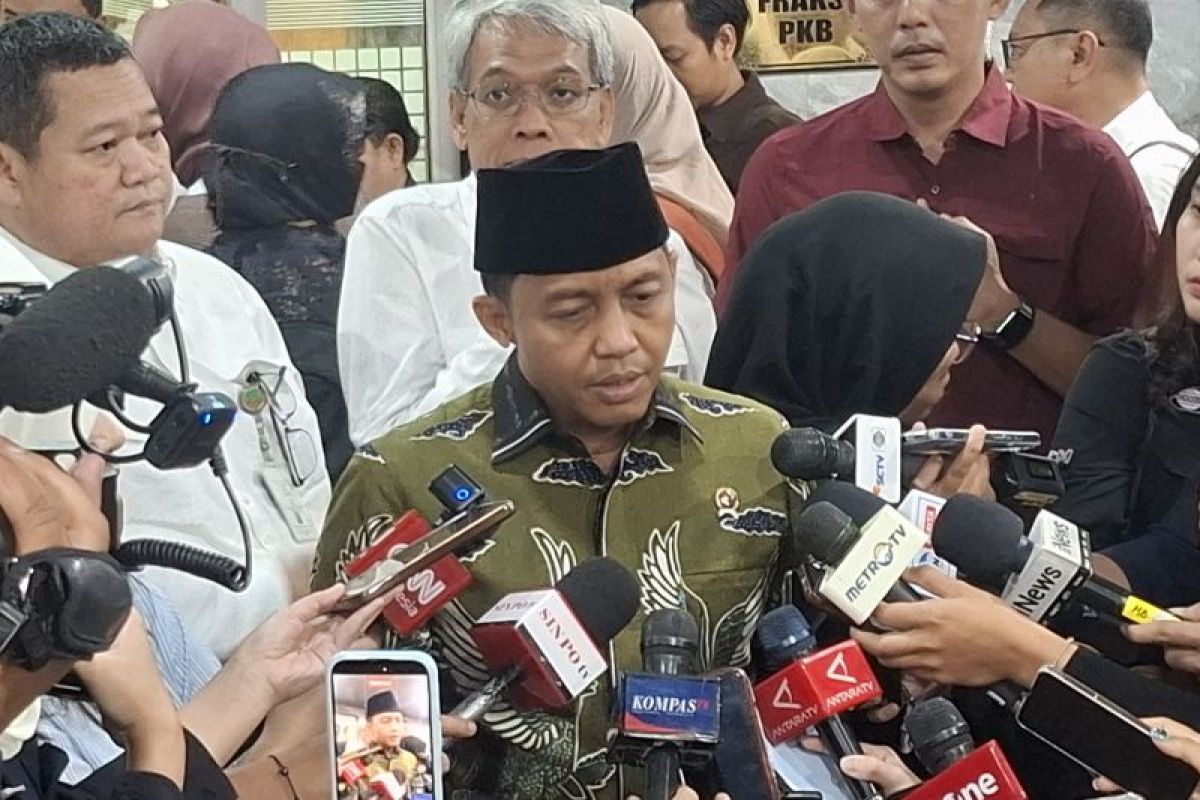
Jakarta (ANTARA) - Minister of Forestry Raja Juli Antoni has ensured that heavy machinery can be brought into national parks during forest and land fire (karhutla) emergencies, specifically for the purpose of creating firebreaks.
Raja Juli explained that under normal conditions, heavy machinery is prohibited from entering national park areas to protect biodiversity; however, emergency handling can be adjusted based on field requirements.
“There is the conservation law, where heavy machinery is indeed not allowed in national parks because we are protecting biodiversity,” said Raja Juli following a working meeting with Commission IV of the Indonesian House of Representatives (DPR RI) in Jakarta on Wednesday.
This statement was made in response to queries regarding the permits required for firefighters in several regions of Kalimantan when entering forest areas to manage forest fires.
Raja Juli stated that in dangerous or emergency conditions, heavy machinery is permitted to enter national parks, including for the construction of firebreaks.
He noted that this step is related to the latest Presidential Instruction and a circular letter that has been sent to all governors.
“Through the new Presidential Instruction from the President, and following that, I have also issued a circular letter to all governors, stating that in dangerous or emergency situations, heavy machinery can be brought into our national parks, for instance, to create firebreaks,” he said.
In the context of national forest fire control, the government has issued Presidential Instruction Number 1s of 2026 regarding the Strengthening of Law Enforcement against the Prohibition of Land Clearing by Burning and the Control of Forest and Land Fires.
This Presidential Instruction directs ministries, agencies, and local governments to take coordinated steps in the prevention and control of forest and land fires.
According to the Minister, firebreaks can be created to break the spread of fire so that the blaze does not expand to other parts of the area.
“For example, if the right side is already burning and moving towards the left, to avoid a larger emergency and prevent the fire from continuing to spread, we can deploy heavy machinery in the middle to cut off the fire by creating a firebreak,” he explained.
Nevertheless, Raja Juli reminded that the use of heavy machinery must still be based on the level of emergency and the specific conditions of the location to ensure that fire management does not disturb wildlife habitats within conservation areas.
“However, it must still be carried out with appropriate field decisions, measuring the level of emergency and determining where the heavy machinery can be deployed and operated, so that it does not disturb the habitats of orangutans or other wildlife. Because the ultimate goal is rescue during an emergency,” he added.
On 11 September 2026, the government stated that managing forest fires in Central Kalimantan requires various methods.
Deputy Chief of the Indonesian National Police, Inspector General Dedi Prasetyo, mentioned that large-scale fire management needs to be supported by heavy machinery, the construction of canal blocks, and the use of boreholes, in addition to ground and aerial firefighting.
Firefighting efforts are also being strengthened in Sungai Cabang Village, Kumai District, West Kotawaringin Regency, Central Kalimantan, which directly borders the Tanjung Puting National Park.
Local governments noted that several locations in the area are difficult for officers to reach, necessitating strengthened fire control to prevent the fire from spreading into conservation areas.
On 15 September 2026, the Ministry of Forestry also stated that forest fire control operations are being intensified, particularly in the Kalimantan region, through rapid field response, ground firefighting, water bombing, aerial patrols, land wetting, and Weather Modification Operations (TMC) according to meteorological conditions.