
Forestry Industry Ready to Contribute to Sustainable Mangrove Management
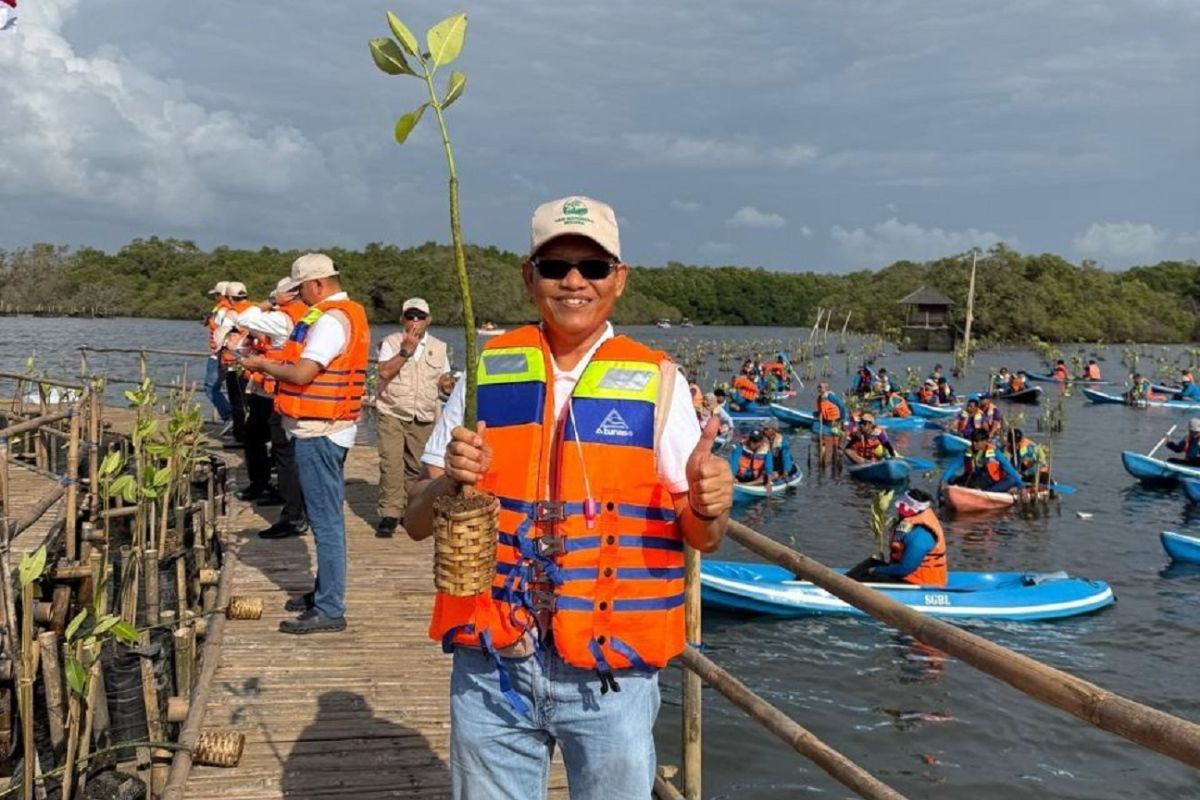
The Indonesian Forestry Entrepreneurs Association (APHI) has stated its readiness to contribute to sustainable mangrove management as part of efforts to restore the ecosystem of these abrasion-resistant plants while improving the welfare of coastal communities. APHI Chairman Soewarso welcomed the strengthening of collaboration between the government and the business sector in mangrove management. He noted that the vast extent of mangrove ecosystems within forest areas underscores the importance of forestry policies in ensuring their protection, rehabilitation, and utilisation are carried out sustainably. “Mangroves must be positioned as a strategic national asset. This ecosystem not only stores carbon and protects coastlines but also provides a living space and a source of income for communities,” Soewarso said. He added that the success of rehabilitation should not be measured solely by the number of seedlings or the area planted, but also by the survival rate of the plants, the restoration of ecosystem functions, institutional strengthening, and the increase in coastal community incomes. He emphasised that forestry businesses can contribute through seedling production, planting, maintenance, monitoring, technology development, community empowerment, and the development of non-timber mangrove products. “Businesses must not stop at symbolic planting. There must be maintenance, measurement of results, community assistance, and certainty that the ecological and economic benefits will last in the long term,” he said. Previously, Deputy Minister of Forestry Rohmat Marzuki outlined the ministry’s concrete efforts in mangrove ecosystem restoration, noting that by the end of 2025, the ministry and its partners had successfully rehabilitated 91,678 hectares. In 2026, the ministry is targeting the rehabilitation of more than 17,000 hectares across various regions in Indonesia through cross-partner collaborations, including the Mangroves for Coastal Resilience programme, Forest Programme VI, the Japan International Cooperation Agency, and the Nature-based Solutions for Climate-Smart Livelihoods in Mangrove Landscapes project. “Not only does it have an impact on environmental improvement, this mangrove forest area rehabilitation and protection programme has proven to provide real socio-economic benefits for coastal communities,” the Deputy Minister said on the sidelines of the 2026 World Mangrove Day commemoration. He noted that the collaborative support has created jobs for 64,386 people, supported the establishment of 63 village regulations on mangrove ecosystem protection and management, and distributed business grants worth IDR 16.29 billion. “This shows that mangrove rehabilitation can restore ecosystems while directly improving community welfare,” he said. The Deputy Minister stressed three main pillars as the foundation for future mangrove ecosystem sustainability: commitment, collaboration, and innovation from all stakeholders. The commemoration, themed “Protecting Mangroves, Securing Future Generations”, included mangrove planting activities at the Batu Lumbang Mangrove Ecotourism site and a main event at the Wantilan area of the Ngurah Rai Forest Park.