
Forest trees struggle to adapt to prolonged drought
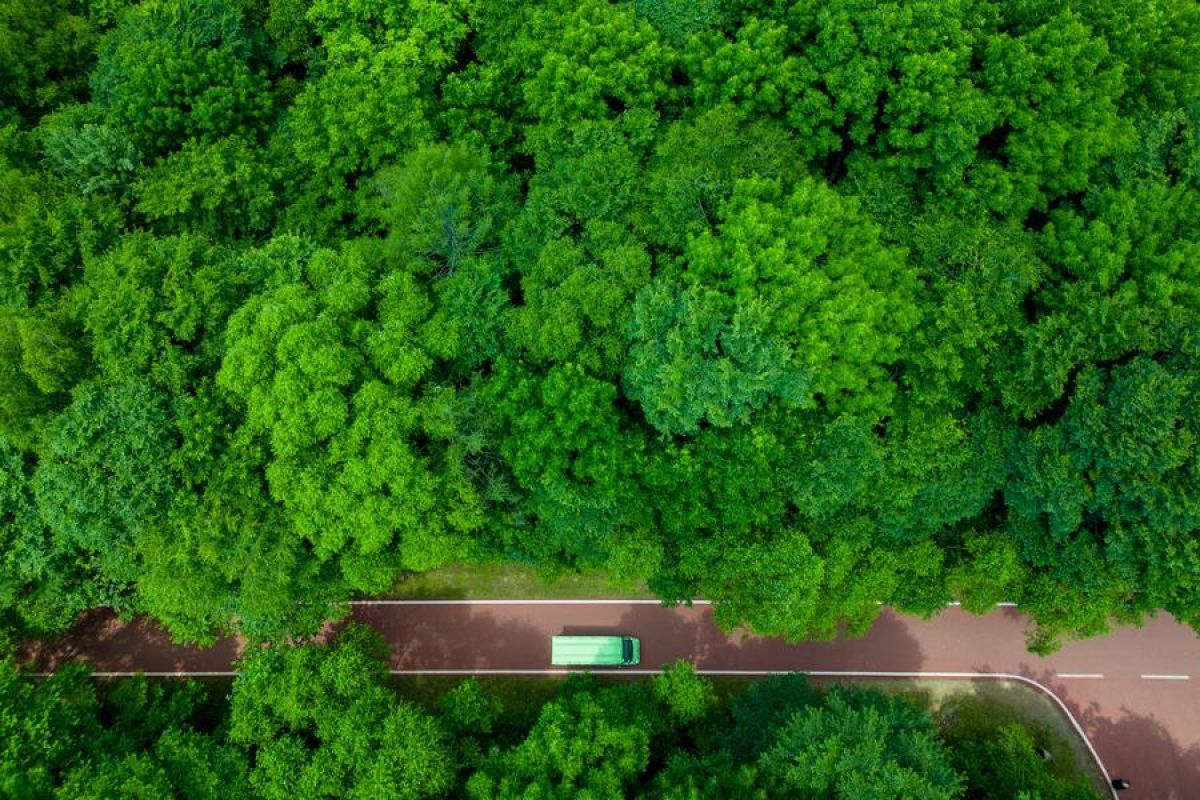
A new global study has found that forest trees do not significantly alter their internal functioning when faced with prolonged drought, indicating that forest trees may not be able to adjust to drier conditions as easily as some scientists had previously expected. The findings provide a strong scientific basis for forest conservation efforts.
Led by a team of scientists from the South China Botanical Garden (SCBG) under the Chinese Academy of Sciences (CAS), the study was based on 40 experiments conducted in forests around the world. The results were recently published in the journal Proceedings of the National Academy of Sciences (PNAS).
To obtain realistic results, the research team used a special method. They installed gutters beneath forest canopies to intercept part of the rainwater before it reached the ground. This reduced the amount of water reaching the soil while the trees remained in their natural environment. The method provides a far more accurate picture of how forest trees respond to drought compared with experiments using potted plants or comparisons of areas with different natural rainfall levels.
The researchers observed 24 different characteristics in the trees, including their ability to transport water, their resistance to drought, and their capacity to absorb carbon dioxide for growth. They studied forests with diverse climates and drought conditions. Overall, the trees showed very little change in these characteristics. Even when water shortage lasted for a long time, the hydraulic systems and photosynthetic capacity of forest trees remained largely unchanged.
According to Liang Xingyun, a researcher at SCBG and the lead author of the study, this lack of change may actually help trees make the most of rainy periods. When rain returns, trees can immediately resume absorbing carbon because their photosynthetic capacity remains fully intact.
However, this stability also carries risks. The study found that forest trees do not increase their ability to resist drought damage, while the water content in the trees declines. As a result, the safety margin between normal water conditions and the point at which the water transport system begins to suffer damage becomes much narrower. In other words, trees are operating increasingly close to the danger threshold without becoming stronger in the face of prolonged drought threats.
Ye Qing, a researcher at SCBG and corresponding author of the study, explained that just because forest trees can maintain their normal functions does not mean they are safer. The trees can still take advantage of wet periods, but as drought worsens, they will be pushed ever closer to the point of damage.
“This study challenges the common assumption that forest trees will gradually adapt to an increasingly dry climate. The findings provide a better foundation for scientists to predict forest responses to future drought by improving the assumptions used in computer models,” Ye added.
“More importantly, this research shows that the real danger to forests may not be carbon deficiency, but rather the shrinking safety margin in their water systems. With droughts expected to become more frequent and more severe, understanding these limits to adaptability will be crucial for protecting forests in the years ahead,” Liang said.
Source: jawawa.id (https://jawawa.id/newsitem/forest-trees-struggle-to-adapt-to-prolonged-drought-1787885544)
Originally published by Antara (Indonesian) (https://www.antaranews.com/berita/5714737/pepohonan-di-hutan-sulit-beradaptasi-dengan-kekeringan-panjang), translated from Indonesian