
Forest Fires Spread, Activists Highlight Natural Resource Governance
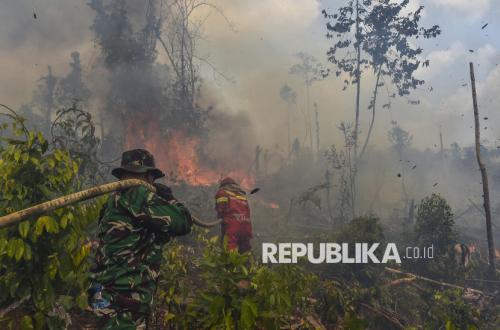
JAKARTA – Forest and land fires (karhutla) that have again spread across several regions of Kalimantan, Sumatra, and Papua are considered not solely triggered by dry conditions, but also reflect problems in natural resource governance. On the other hand, the government is strengthening integrated operations by deploying thousands of personnel and air support to contain the spread of fires and protect communities from the impact of smoke.
Program Officer for Natural Resources and Climate Justice at Yayasan Tifa, Firdaus Cahyadi, said karhutla is an accumulation of the climate crisis and poor natural resource governance. According to him, the extractive economic development model over several decades has created regions that bear the burden of ecological damage amidst rich biodiversity.
“This is the accumulated impact of the climate crisis and poor natural resource governance,” Firdaus said in a written statement on Sunday (23/8/2026).
Firdaus cited environmental organisation records showing 74 percent of hotspots are located in corporate concession areas. He said 10,739 hotspots were detected on oil palm cultivation rights (HGU) land, 7,880 in mining concessions, and 6,905 in forest utilisation business permit (PBPH) areas.
He also referred to the Auriga Nusantara 2026 report which recorded that Indonesia’s deforestation increased by 66 percent in 2025 with a loss of 433,751 hectares of forest. According to Firdaus, this figure is the highest in the last eight years and was partly triggered by the expansion of large-scale food security programmes.
“Not only natural damage, poor natural resource governance also causes an increase in agrarian conflicts. Data from the Consortium for Agrarian Reform recorded a surge in agrarian conflicts of up to 300 percent in 2025 compared to the previous year,” he said.
Firdaus urged the government to evaluate HGU, mining, and PBPH permits, and to stop expansion that damages remaining forest ecosystems. He also called for a shift from an extractive economic model towards a restorative economy.
“Technically extinguishing fire hotspots is an important short-term step. However, without fundamental changes to the policy foundation, Indonesia will continue to create new sacrifice zones for the extractive economy,” he said.