
Forest Fires: Komnas HAM Demands Action Against Corporations and Beneficial Owners
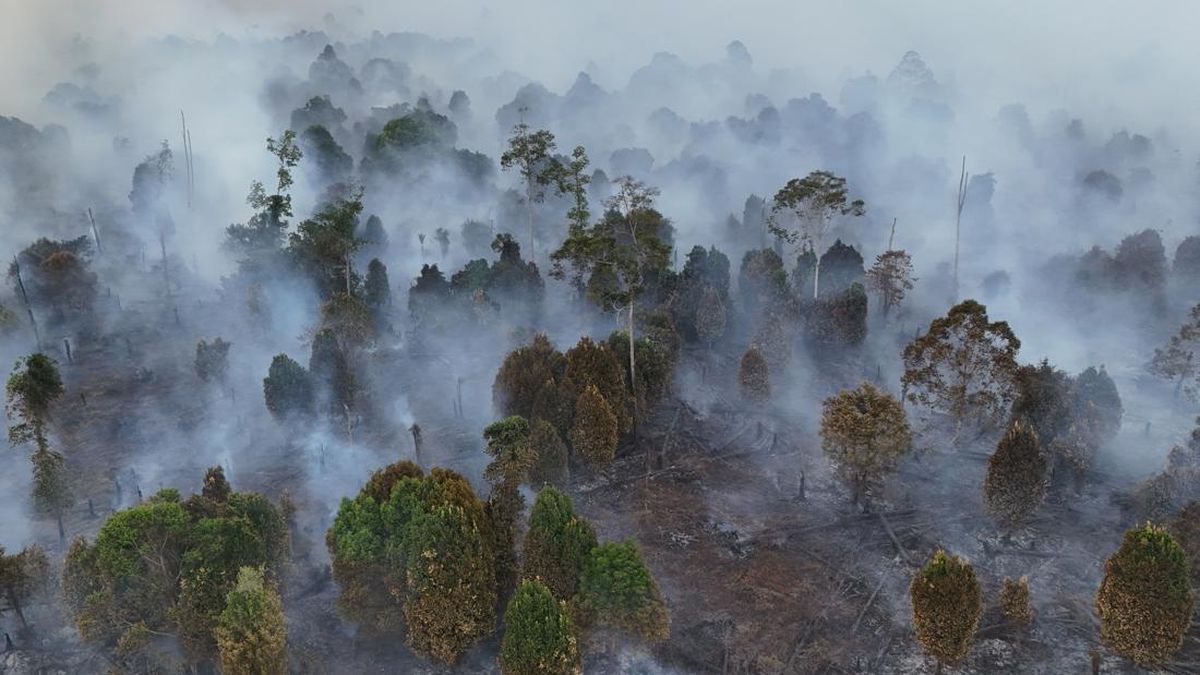
The National Commission on Human Rights (Komnas HAM) has requested that law enforcement regarding forest and land fires (karhutla) in several provinces be strengthened by pursuing legal action against corporations and beneficial owners (BO).
“Law enforcement regarding forest fires needs to be strengthened to reach all responsible parties and not stop at field perpetrators. The government is obliged to identify, publicly announce, and take action against companies and beneficial owners proven to have caused or been involved in forest and land burning,” stated the Chair of Komnas HAM, Anis Hidayah, in a press statement on Thursday (3/9).
Anis stated that case handling must be proportional, considering the scale, type of land, and land ownership, while respecting the rights of indigenous communities as recognised under Article 18B paragraph (2) of the 1945 Constitution and Article 6 of Law Number 39 of 1999, including traditional farming practices as recognised under Article 69 paragraph (2) of Law Number 32 of 2009.
“Any policy changes impacting such recognition must be pursued through legitimate procedures and meaningful participation from affected communities,” she added.
Anis noted that from 1 January to 21 August 2026, the National Police (Polri) have handled 89 reports of alleged forest fire crimes across nine regional police departments, naming 72 individuals as suspects.
The police are also reportedly investigating the potential involvement of other parties, including financiers or corporations, by tracing interests and transaction flows related to the fires.
“Komnas HAM will continue to monitor the progress of these legal processes,” said Anras.
In accordance with the United Nations Guiding Principles on Business and Human Rights, she explained, corporations are required to conduct human rights due diligence regarding the impacts of their operations, including fire risks within their concession areas.
Furthermore, she stated that the government must strengthen supervision and impose sanctions on corporations that neglect these obligations.
“Central and regional governments must take swift and coordinated steps to stop forest fires by deploying all public resources to their maximum potential,” she said.
Anis noted that the burden of handling these fires should not fall solely on citizens and volunteers; volunteers involved must receive adequate training, personal protective equipment, and safety guarantees.
Moreover, Komnas HAM requested the government to strengthen forest fire prevention through long-term management designs, including peatland hydrological restoration, verified early warning systems, air quality standards based on WHO guidelines, and performance indicators subject to public oversight.
The government also needs to evaluate licensing and concession management, particularly in peatland areas, and involve local and indigenous communities in prevention efforts.
“The government must immediately fulfil the rights of affected communities to a clean and healthy environment, health, livelihood, education, and psychosocial support, with special attention to vulnerable groups, without waiting for legal processes to conclude,” Anis stated.
“The restoration of land and environments damaged by fire must also be carried out, with the responsibility for restoration placed upon the parties proven to be responsible.”
The government recently stated that 19 companies in Sumatra and Kalimantan are suspected of being the primary drivers behind forest and land fires in Indonesia, and these companies will be held accountable.
Of these 19 companies, 12 suspected perpetrators are located in Kalimantan, while seven others are in Sumatra.
“Overall, these 19 companies are spread across provinces in Sumatra and Kalimantan, with a total burnt area reaching approximately 11,046.69 hectares,” said the Deputy for Law Enforcement of the Ministry of Environment (KLH), Irjen Rizal Irawan, as quoted from a press release by the Indonesian Government Communication Agency (Bakom) on Monday (31/8).
Specifically, seven companies are located in West Kalimantan with a total burnt area of 2,260.08 hectares. In South Kalimantan, there are three companies with a total burnt area of 6,595.15 hectares, and two companies in Central Kalimantan with 99.40 hectares.
Additionally, four companies are in South Sumatra with a total burnt area of 772.72 hectares; one in Lampung with an area of 202.73 hectares, and one in Riau with a recorded burnt area of approximately 7.10 hectares.