
Forest Fires in South Kalimantan Disrupt Proboscis Monkey Habitats
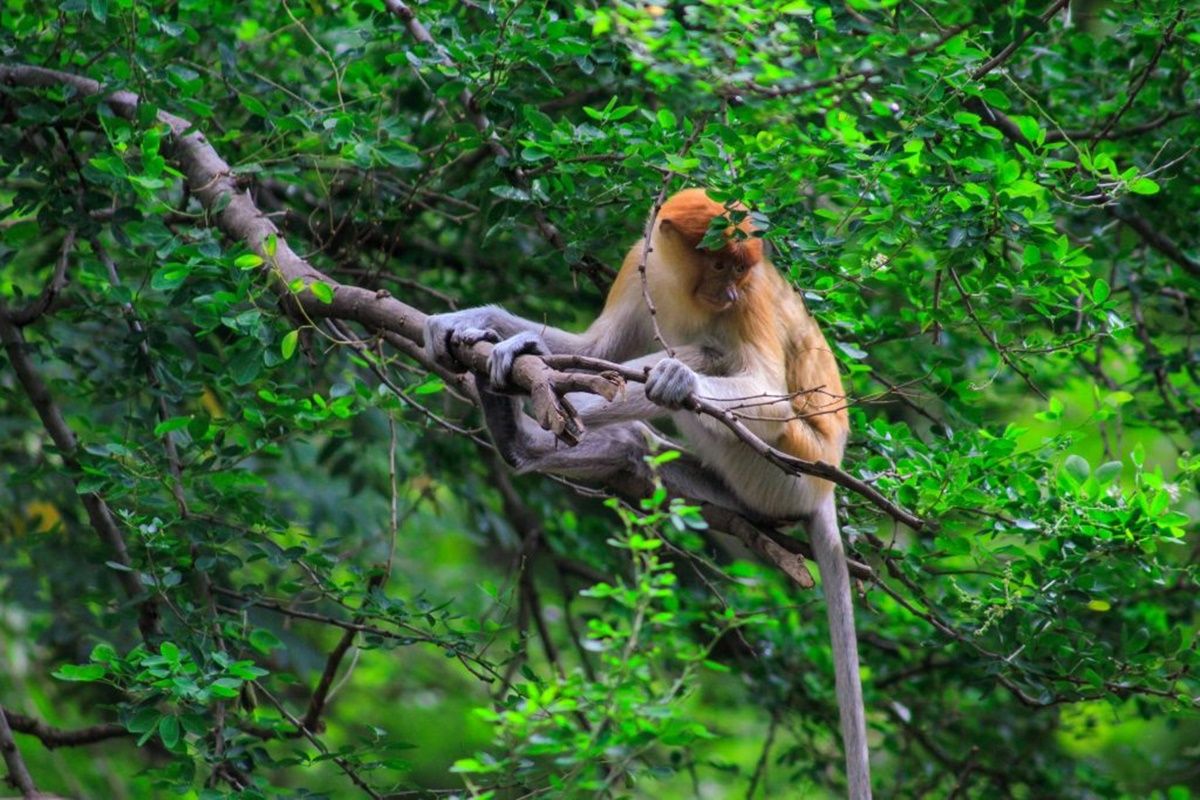
Banjarmasin (ANTARA) - Forest and land fires (Karhutla) occurring in several areas of South Kalimantan Province are having a long-term impact on proboscis monkey habitats. The disruption to vegetation and the availability of food sources may continue throughout the ecosystem recovery process.
Amalia Rezeki, founder of Sahabat Bekantan Indonesia and an academic in Conservation Biology at Lambung Mangkurat University (ULM), stated that proboscis monkeys have a strong dependency on riverside vegetation and wetland areas.
“Smoke can lower air quality and potentially disturb the respiratory systems of both humans and wildlife. We also need to pay attention to possible changes in behaviour, such as feeding, resting, or group movement activities, when environmental conditions are disrupted,” she said in Banjarbaru, as reported on Saturday.
The impact of forest fires on proboscis monkeys can occur through several mechanisms, ranging from air quality degradation due to smoke and damage to riverside vegetation, to the reduction of tree canopy that forms part of the species’ habitat.
She emphasised that the level of health disturbance in proboscis monkeys in specific locations still needs to be proven through field examinations and monitoring.
In addition to smoke, fires in riverside vegetation are a major concern because these areas serve as places for proboscund monkeys to forage, seek shelter, rest, and move from one location to another.
When vegetation is damaged, proboscis monkeys may lose some of the resources required for survival. Under certain conditions, groups of monkeys may migrate to find available food sources and shelter.
“This movement or migration certainly needs to be monitored, as they may enter habitats of lower quality or face disturbances from human activities,” she explained.
She noted that the impact of habitat destruction does not necessarily end once the fires are successfully extinguished.
Burnt vegetation requires time to regrow, whereas the animals’ need for food sources and shelter is a daily requirement.
According to her, post-fire recovery must be a part of conservation efforts. Monitoring should include the condition of vegetation, the availability of natural food, habitat quality, and the presence of monkey groups in affected areas.
She cited the Curiak Island Proboscis Monkey Research Station as an area receiving continuous attention from her organisation, particularly regarding the monitoring of habitat conditions, natural food availability, and environmental changes.
She emphasised that designating a location as directly or indirectly affected must be supported by monitoring results and field data.
“In conservation, we must not only measure success by whether or not the fire was extinguished. We must also see whether the habitat is still capable of supporting the lives of proboscis monkeys after the fire has occurred,” she said.
She added that efforts to protect proboscis monkey habitats are also part of protecting wetland ecosystems, which provide broader benefits to the environment and the community.
“When we protect ecosystem vegetation, maintain hydrological conditions, and prevent habitat destruction, we are essentially protecting the lives of the communities that depend on those ecosystems,” she explained.
Previously, the South Kalimantan Natural Resources Conservation Agency (BKSDA) received reports of 12 proboscis monkeys dying due to the impact of forest and land fires in Balimau Village, Kalumpang District, South Hulu Sungai Regency (HSS).
According to BKSDA South Kalimantan records, the proboscis monkey population in South Kalimantan is estimated to reach approximately 3,700 individuals in 2025.
About one-third of the population resides within conservation areas, while two-thirds are located outside conservation areas, such as production forests, protected forests, and other use areas (APL).
The 12 monkeys affected by the fires in Balimau were located in an APL area, which is owned by the local village.
Moving forward, BKSDA South Kalimantan is committed to continuing the data collection of APL areas that serve as wildlife habitats.