
Forest Fire Threats Predicted to Peak in 2027, DPR Urges Early Mitigation
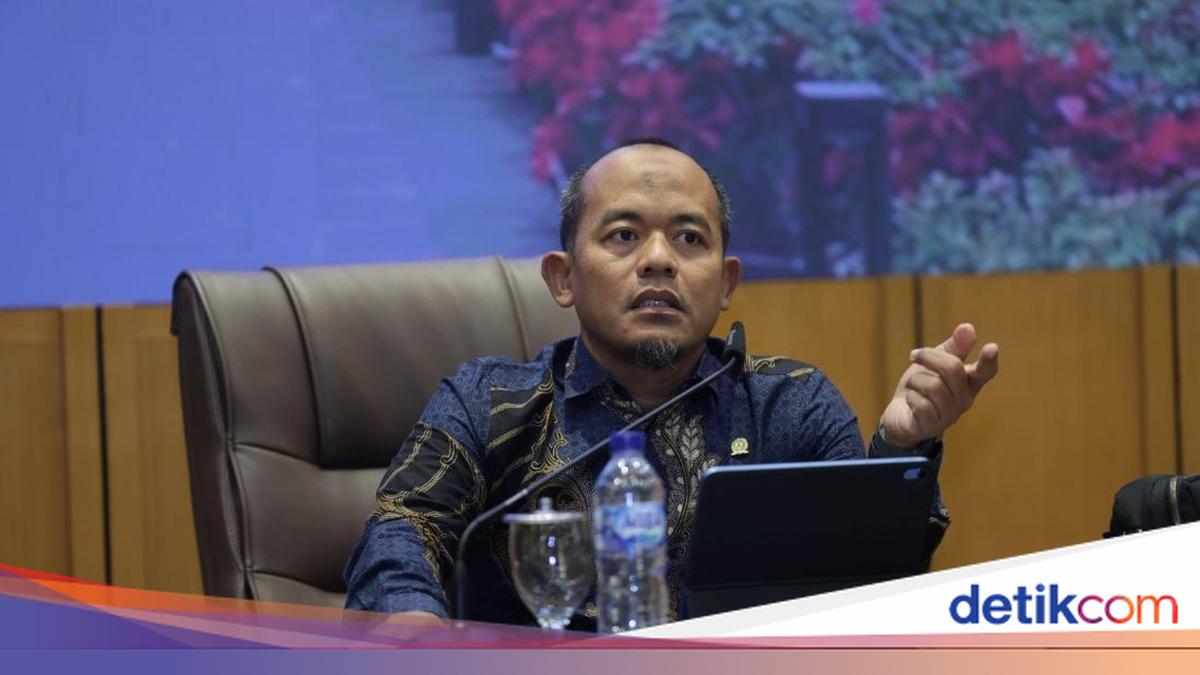
Riyono, a member of Commission IV of the Indonesian House of Representatives (DPR RI), has urged the government not to be complacent in facing the threat of forest and land fires (karhutla). He emphasised that the fire conditions throughout 2/9/2026 should serve as an alarm to strengthen prevention, as a greater threat is predicted for 2027.
Riyono stated that fires occurring in several regions, particularly Kalimantan and Sumatra, demonstrate the importance of government readiness in conducting early mitigation. Therefore, forest fire management must not wait for fires to spread but must be carried out through the mapping of high-risk areas and the strengthening of prevention systems.
“This is not the peak. Therefore, mitigation must be prepared from now. We must not wait for a major incident to occur before becoming busy with management,” Riyono said in his statement on Thursday (3/9/2026).
He shared these views during a ‘Dialektika Demokrasi’ discussion themed ‘Supporting Law Enforcement for Forest Fires to Provide a Deterrent Effect’ at the Nusantara Building, Senayan, Jakarta, on Wednesday (2/9/2026).
On that occasion, Riyono referenced the experience of major fires that occurred in 2015 and 2019. Although data from recent years shows a downward trend in the total area burned, he believes this condition should not make the government complacent.
Riyono revealed that changing climate conditions and extreme dry seasons could increase fire risks again, especially in peatland areas. He had previously warned the Ministry of Forestry regarding the potential for increased fire threats in 2026 compared to previous years.
“What is happening now proves that early warnings must truly be a priority. Fire hotspots are appearing in several regions, and this must serve as a lesson to prepare steps for the coming years,” he said.
He also highlighted the significant economic impact caused by forest fires. Riyono noted that losses from the massive 2019 fires reached hundreds of trillions of rupiah. Consequently, he believes that failure to implement early prevention could potentially lead to much larger losses for the state, the community, and the environment.
In addition to strengthening mitigation, Riyono emphasised that the issue of limited human resources in the forestry sector must receive immediate attention.
He highlighted the insufficient number of personnel tasked with supervising vast forest areas, a condition that prevents field supervision from operating at maximum capacity.
“With such vast forest areas, it is certainly impossible to rely solely on the current number of officers. We need to strengthen human resources, including forestry extension officers, Manggala Agni, and forest police,” he explained.
Riyono supports increasing personnel to strengthen comprehensive forest area supervision. In his view, forest security should not only be conducted when fires occur but must begin with preventing activities that have the potential to damage the area.
Community as a Vital Part of Forest Fire Prevention
He also emphasised the importance of involving the community in forest conservation. He believes that people living near forest areas can be a vital part of the fire monitoring and prevention system. With community involvement, potential fires can be detected more quickly before they escalate.
“Community involvement must be part of the main strategy. Those living closest to the forest areas can certainly assist in prevention and monitoring,” he said.
On the other hand, Riyono highlighted the ongoing widespread use of forest areas without permits for various interests, ranging from plantations to mining.
He stated that this issue must be addressed through stricter law enforcement. Riyano noted that the government has significant potential for revenue from administrative fines for forestry sector violations. However, he argued that the high value of these fines should serve as an indicator that many violations are still occurring in forest areas.
“We must not view fines merely as a source of state revenue. The primary goal must be to prevent forest destruction from occurring,” Riyono asserted.
DPR Pushes for Forestry Law Revision
Furthermore, Riyono stated that one of the critical issues that needs urgent resolution is the certainty of spatial planning and forest area mapping.
He assessed that clarity regarding the boundaries of conservation areas, areas available for use, and protected zones is key to strengthening forestry governance. Therefore, the DPR RI is currently pushing for the completion of the revision of Law Number 41 of 1999 concerning Forestry.
Riyono hopes that these regulatory changes can provide stronger protection for Indonesia’s forests while improving the prevention and law enforcement systems against perpetrators of forest destruction.
He mentioned various proposals regarding the strengthening of sanctions in the law revision, including against intentional forest destruction. However, all proposals are still subject to further discussion and have not reached a final decision.
“The hope is that the revision of the Forestry Law can be completed promptly. The main spirit is to keep our forests sustainable, strengthen prevention, and ensure that forest destruction does not continue to recur,” concluded Riyono.