
Forest Fire Threat Increases, DPR Calls for Strengthened Mitigation
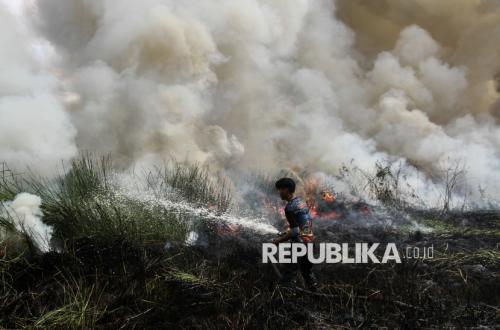
The number of hotspots in several regions of Indonesia is increasing along with the dry season, sparking concerns about the potential for widespread forest and land fires (karhutla). This condition necessitates the strengthening of mitigation measures, from increasing personnel to optimising disaster management budgets.
Member of Commission IV of the Indonesian House of Representatives (DPR RI), Sonny T. Danaparamita, stated that he has coordinated with the Director General of Law Enforcement at the Ministry of Forestry to obtain the latest developments regarding the handling of forest and land fires, particularly in South Kalimantan.
“As soon as I saw today’s news, I immediately communicated with the Director General of Law Enforcement at the Ministry of Forestry, Mr Dwi Januanto. I requested that this situation be given full attention immediately,” Sonny said on Friday (17/7/2026).
Based on a report from the Director General of Law Enforcement as of 16 July 2026, the area of land burned in South Kalimantan reached 383.07 hectares, consisting of 29.44 hectares of peatland and 353.63 hectares of mineral land. Nationally, the area of land burned from January to June 2026 has reached approximately 107,000 hectares.
Sonny explained that not all hotspots detected by satellites are actual fires. In South Kalimantan, there are 34 medium to high category hotspots spread across nine districts/cities, with the highest number in Tapin Regency at 13 points.
“For actual fire spots, they are currently being handled in two semi-peatland locations, namely in Tanah Bumbu Regency (2 Ha) and Banjarbaru City (2 Ha). Thankfully, the air quality is still in the moderate category and flight activities at Syamsuddin Noor Airport remain normal with a visibility of 10 km,” he said.
The South Kalimantan Provincial Government has declared a forest and land fire alert status from 6 July to 31 October 2026. Mitigation efforts include Weather Modification Operations (OMC), peatland wetting through the opening of water gates, integrated patrols, and the deployment of 180 Manggala Agni Forest Fire Control Brigade personnel in various areas.
Nevertheless, Sonny assessed that the handling capacity on the ground still needs to be strengthened.
“Based on the results of my working visits to several regions, it is clear that the number of personnel and forest fire control equipment is still inadequate. Therefore, in a working meeting with the Ministry of Forestry, I firmly requested that the ministry increase the number of personnel and equipment, including maximising the use of the latest technology,” he said.
In addition to strengthening resources, Sonny urged local governments to optimise disaster mitigation budgets from the prevention stage. According to him, Regional Disaster Management Agencies (BPBD) need to utilise regional budgets for procuring equipment, establishing Fire-Aware Community groups, and accelerating the use of Unexpected Expenditure (BTT) funds once an emergency alert status is declared.
He also proposed cross-sectoral budget integration, including the use of Village Funds for local-level fire prevention activities. For regions with limited fiscal capacity, local governments are asked to immediately coordinate with provincial governments or the National Disaster Management Agency (BNPB) to obtain Ready-to-Use Funds (DSP) and logistical assistance.
Beyond the government, Sonny urged plantation and forestry companies operating in fire-prone areas to play an active role in prevention efforts.
“Private companies in the plantation sector, whose surrounding areas are often hotspots, must be proactive in providing personnel and fleet support. These companies must not be selfish and wash their hands of the responsibility for environmental sustainability around their concessions,” he asserted.
Sonny added that Commission IV of the DPR will continue to oversee the handling of forest and land fires to minimise the ecological impact and economic losses caused.