
Forest Fire Hotspots in Kalimantan and Sumatra Reported to Decrease to 121
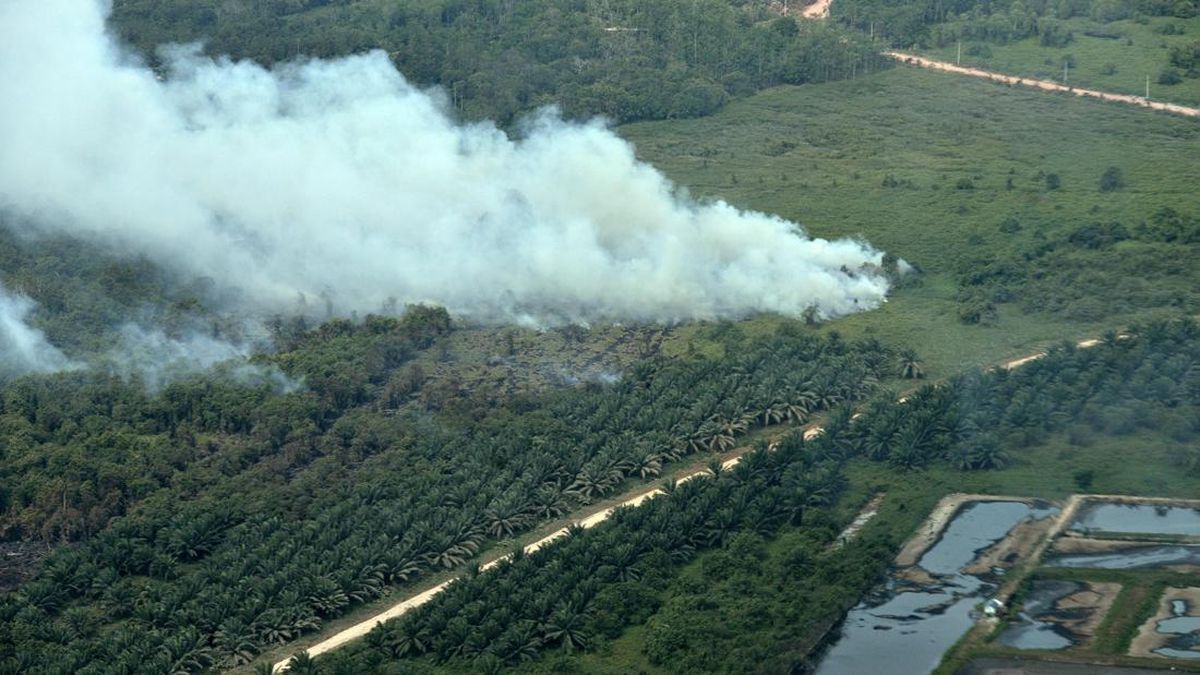
The number of forest fire hotspots in Kalimantan and Sumatra has decreased by 1lam 121 points, falling to 567 points as of Sunday (13/9).
The Head of the Bureau of Public Relations and Foreign Cooperation at the Ministry of Forestry, Ristianto Pribadi, stated that according to SiPongi data, the most significant decrease occurred in Central Kalimantan and South Kalimantan. However, West Kalimantan recorded an increase of 40 hotspots, and South Sumatra saw an increase of 41 hotspots, while no hotspots were detected in Riau and Jambi.
“The increases monitored in West Kalimantan and South Sumatra are a focus for strengthening patrols, ground checks, and firefighting operations,” he said in a written statement.
He noted that the Ministry of Forestry, alongside joint teams, continues to strengthen forest and land fire (karhutla) control through ground operations, water bombing, aerial patrols, and Weather Modification Operations (OMC).
Ristianto stated that OMC is also being continuously implemented in West Kalimantan and Central Kalimantan as part of the prevention and control strategy. Between 5 and 14 September, nine flight sorties were conducted in West Kalimantan using 7,200 kilograms of NaCl seeding material. Seeding was carried out in target areas including Mempawah, Singkawang, Bengkayang, Landak, Kubu Raya, Sanggau, Sekadau, Sintang, Ketapang, and North Kayong.
“The implementation of the OMC is estimated to have produced approximately 87.9 million cubic metres of rainfall. A full calculation of the overall increase in rainfall will be conducted after the operation concludes,” he explained.
Meanwhile, in Central Kalimantan, OMC was carried out between 6 and 15 September 2026, with a total of seven flight sorties using 5,600 kilograms of NaCl. Seeding locations included areas around Kapuas, Palangka Raya, South Barito, North Barito, East Barito, and Pulang Pisau. He noted that the rain from the OMC has helped moisten the land and support the work of firefighting teams on the ground.
Nevertheless, Ristianto said that for peatland ecosystems, firefighting, moistening, and cooling efforts must continue sustainably, as embers can persist beneath the surface.
He mentioned that the government maintains 53 aerial units to support fire control in six priority provinces. Of these, 3m4 units are used for water bombing operations, while 19 units are used for aerial patrols and supporting the OMC.
“Aerial operational capacity is also being strengthened with support from the Japanese Government in the form of three CH-47 Chinook helicopters, which have arrived in West Kalimantan. These three helicopters are being prepared to support water bombing operations following technical and flight safety preparation stages,” he said.
He stated that all available resources are being deployed based on hotspot developments, field verification results, fire conditions, and meteorological conditions, with the priority being to prevent the fire from spreading and to accelerate handling in active locations.
Ristianto added that the strengthening of these operations aligns with the directives of President Prabowo Subianto, urging all government levels to take action as early as possible at every hotspot without waiting for them to develop into full-scale fires.
The President, he added, also requested that prevention measures be strengthened through land moistening and the provision of water sources in high-risk areas.
“The Ministry of Forestry reminds the public not to clear or clean land by burning. If anyone sees smoke, hotspots, or burning activities, the public is requested to report immediately so that officers can respond as early as possible,” he concluded.