
Forest Destroyers Sentenced to Death
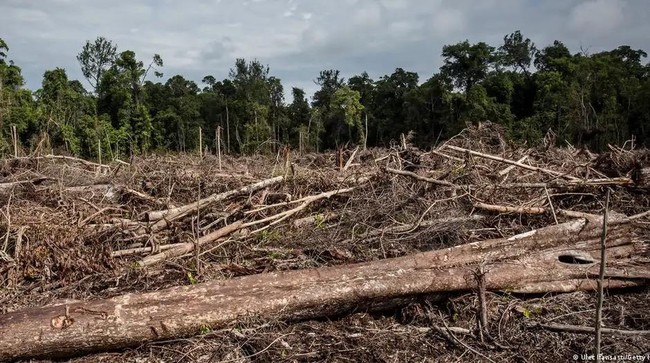
History records that long before environmental issues became as prominent as they are today, ancient Indonesia already had strict rules to preserve forests. This occurred during the Majapahit Kingdom, which established regulations stipulating that anyone who felled trees carelessly could face severe punishment, up to and including the death penalty.
The regulation is contained in the Majapahit legal code, the Kutara Manawa. According to research by the Ullen Sentanu Museum, citing the archaeologist Slamet Muljana, chapter V, article 92 of the code prohibits the indiscriminate felling of trees in the forest, except with permission from the owner.
Violators were fined 4 tali. However, if the felling was carried out at night, the offender could be sentenced to death. In addition, the trees that had been cut down had to be replaced with twice the number.
The threat of such punishment was inseparable from the importance of forests to the lives of the Majapahit people. In Slamet Muljana’s research entitled Menuju Puncak Kemegahan; Sejarah Kerajaan Majapahit (1965), it is stated that forests were areas that the community had to protect.
Slamet, quoting Hayam Wuruk in one of the inscriptions, described forests as vital areas because they were a source of wealth and produced various foodstuffs, one of which was timber.
“The state’s wilderness forests along the coast produce various types of timber available at the ports for shipment to China,” said Slamet.
Hayam Wuruk considered at length that if forests or other areas producing foodstuffs, such as rice fields or dry fields, were damaged, the existence of the state could be threatened.
The depiction of the importance of nature conservation is also evident in the Kakawin Nagarakertagama written by Empu Prapanca. In research entitled “Kakawin Nagarakertagama and Nature Management Efforts in Majapahit as a Reflection of Nature Conservation in Indonesia”, it is mentioned that Empu Prapanca described the capital of Majapahit and its places of worship as being adorned with various plants, such as banyan, tanjung, nagasari, andong, puring, coconut gadang, lotus, and cempaka.
This was done as an effort to preserve nature and forests. In fact, if the community could protect the forests, the King of Majapahit would exempt them from taxes. One example is recorded in the Katiden II Inscription of 1395 AD as an effort to consolidate the community to protect the forests. This was because the Mount Lejar area was prone to forest fires.
“[…] Because they protect the alang-alang forest on Mount Lejar, they must be exempted from all taxes […],” states the Katiden II Inscription of 1395 AD.
On this basis, ancient communities viewed forests and nature not merely as resources to be exploited. Forests, mountains, and rivers were considered important parts of life that had to be protected. For when nature is damaged, it is humans themselves who will bear the losses.