
Forest and Land Fires in West Java Spread to 14 Regencies and Cities, 61 Hectares of Land Burned
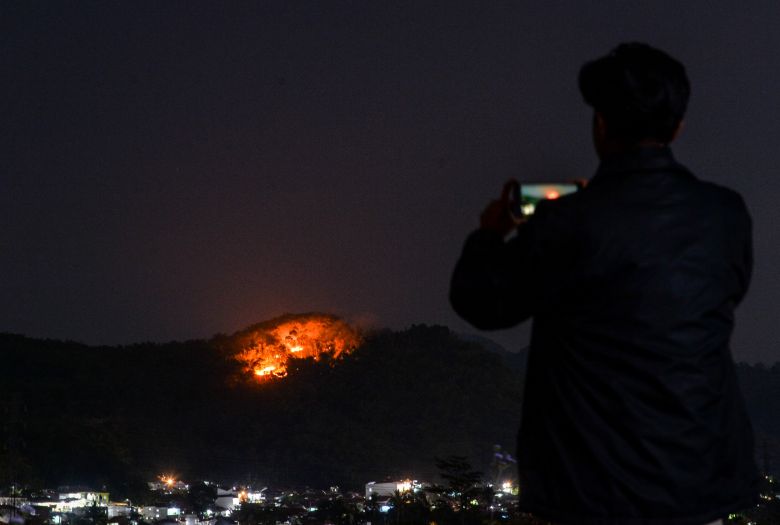
The Regional Disaster Management Agency (BPBD) of West Java Province has reported a significant rise in forest and land fires (karhutla) across the region. As of Wednesday (29 July), a total of 58 fire incidents have struck various points across West Java.
BPBD West Java spokesperson Hadi Rahmat detailed that the dozens of incidents are spread across 14 regencies and cities, covering 58 villages/urban wards in 47 districts. The environmental damage caused by the fires is now beginning to spread.
“The total area of land burned has reached 61.86 hectares,” Hadi said in his official statement on Wednesday (29 July).
According to BPBD data, Sumedang Regency has recorded the highest frequency of forest and land fires. It is followed by Majalengka Regency and Cirebon Regency, which have also registered considerably high fire figures during this dry season.
Although the number of incidents continues to rise, Hadi confirmed that all fire points have been successfully brought under control. Inter-agency synergy has been the key to rapid handling in the field.
“All forest and land fire incidents were extinguished within a matter of hours. BPBD is working together with other disaster management elements in the region, including the National Police and the Indonesian National Armed Forces,” he continued.
Heading into the peak of the dry season, BPBD West Java Province has urged the public to be more vigilant and to refrain from actions that could spark fire points. Simple activities such as carelessly discarding cigarette butts or burning rubbish in open land can have fatal consequences.
Hadi stressed that early prevention is far more effective than firefighting. “Prevention is the best step to protect the environment and collective safety,” he concluded.
According to the Meteorology, Climatology and Geophysics Agency (BMKG), the strengthening of the El Nino phenomenon has a 98 per cent chance of reaching the strong category. This condition will increase the risk of drought and forest and land fires.