
Forest and Land Fires in West Aceh: A Reminder of Nature's Fragility
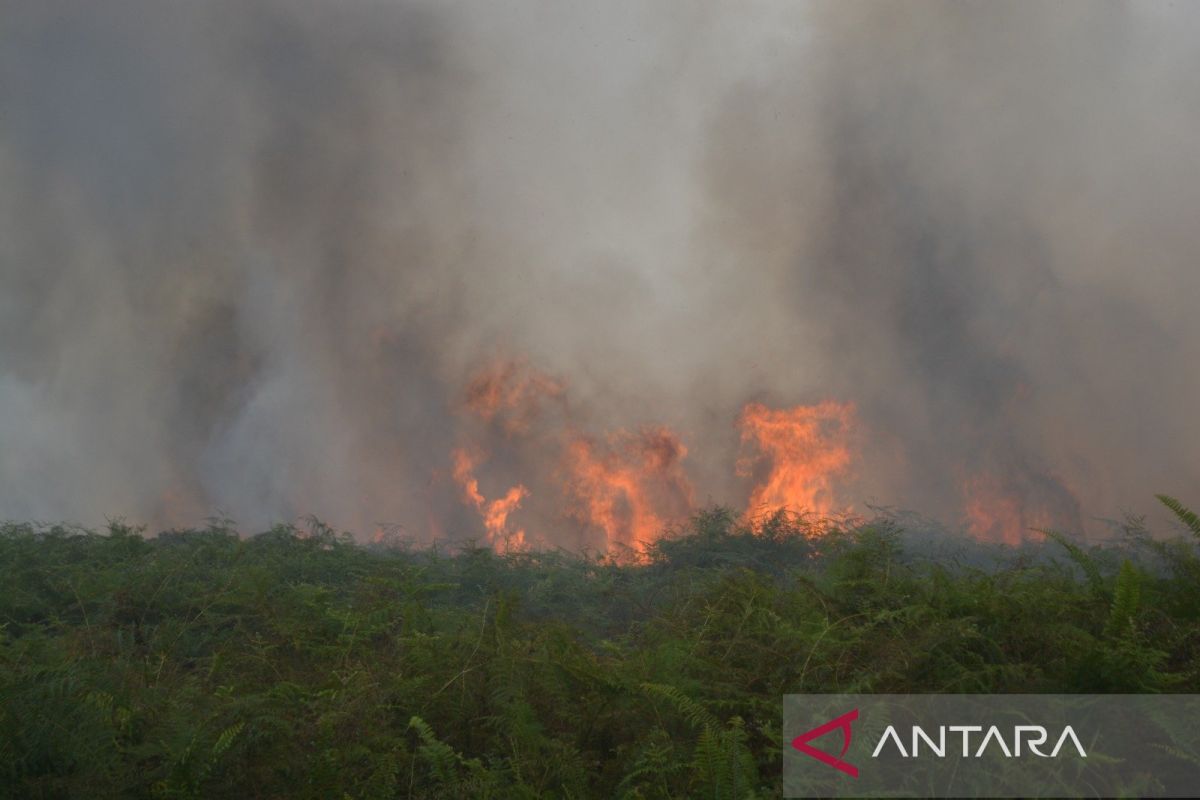
For more than two weeks, the sky over parts of West Aceh Regency has not been its usual clear blue. Instead, plumes of greyish-white smoke have billowed from dried-out tracts of land, signalling that the region is once again grappling with the threat of forest and land fires (karhutla).
Data from the West Aceh Regional Disaster Management Agency (BPBD) shows that since late May to mid-June, at least 34.1 hectares of land have been burned. While this figure is not as large as the fires that have ravaged other parts of Indonesia, it is enough to serve as a reminder that land fires remain a major unresolved issue.
Behind the numbers lies a long story of human struggle against fire, as well as a crucial lesson about our relationship with nature. According to data compiled by the Operations Control Centre (Pusdalops) of BPBD West Aceh, the fires are not concentrated in a single location but are spread across five sub-districts: Bubon, Samatiga, Meureubo, Arongan Lambalek, and Johan Pahlawan. Bubon is the worst affected, with a total of 25 hectares burned.
The scattered nature of the hotspots makes firefighting efforts far more complex. Joint teams cannot focus their strength on one location but must divide personnel, equipment, and attention across multiple sites simultaneously.
On paper, extinguishing a fire might seem straightforward: arrive at the location, spray water, and put it out. The reality is vastly different. Firefighters must operate in dry weather conditions that have persisted for weeks. Minimal rainfall has left vegetation parched and highly flammable. Strong winds accelerate the spread of the flames while making suppression efforts even more difficult. Thick smoke reduces visibility to just a few metres, and access to fire sites is often limited to narrow dirt tracks impassable for large vehicles. Many firefighting fleets are forced to stop at the edge of main roads. From there, personnel must proceed on foot, carrying water pump machines, hauling rolls of hose, and lugging jerry cans of fuel to reach fire spots deep in the interior.
The struggle becomes even more arduous when fires burn on peatland. The nature of peat means that fires do not only occur on the surface. Embers can continue to smoulder underground and spread unseen. From the outside, the land may appear extinguished. Yet, a few centimetres below the surface, the fire remains alive and continues to move, seeking new fuel. Consequently, extinguishing peat fires is not simply a matter of dousing visible flames. Firefighters must ensure that the embers deep within the soil are completely dead. If not, the fire can re-emerge days later. This is where the greatest danger lurks. Every step a firefighter takes on burning peatland carries risk. Ground that looks solid may conceal a hot cavity beneath. One wrong step, and a foot can plunge into an area still smouldering.