
Forest and Land Fires, Foreign Assistance and the Test of State Capacity
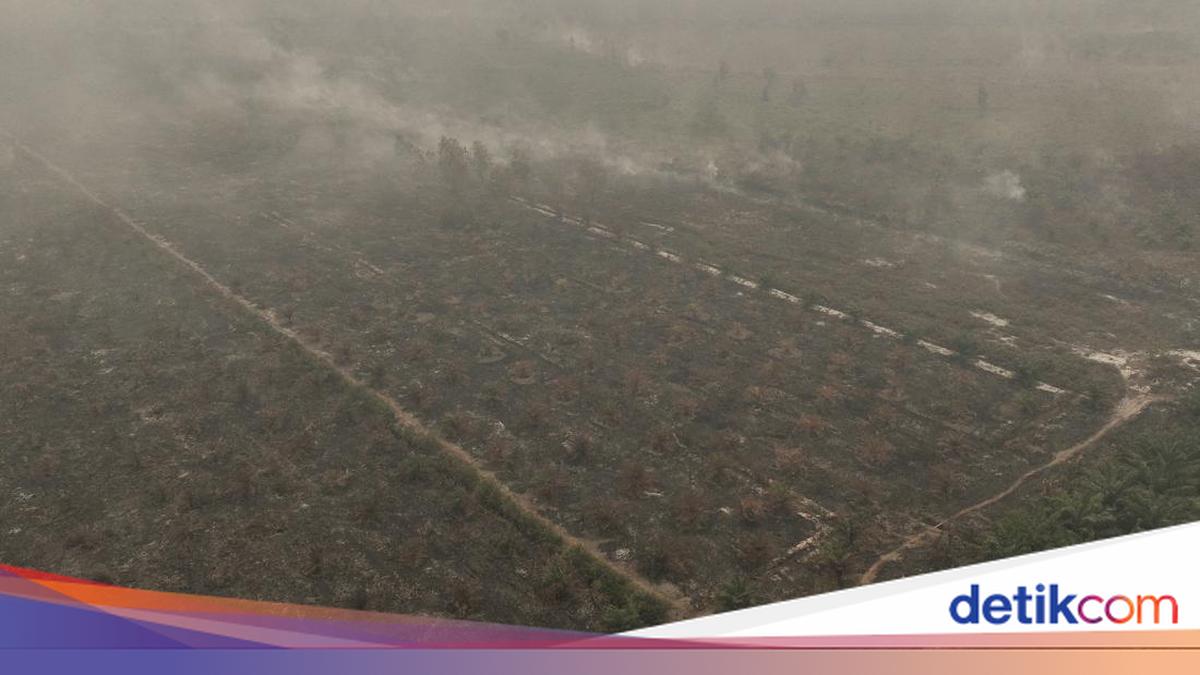
Forest and land fires have once again shown that disasters recognise no national administrative boundaries. In September 2026, the National Disaster Mitigation Agency (BNPB) recorded 274 forest and land fire incidents across 32 provinces, accounting for around 82 per cent of all disasters that month.
When haze drifts into neighbouring countries, a domestic environmental problem quickly becomes a regional issue. This raises a question often clouded by sentiment: when national capacity is insufficient, should Indonesia accept foreign assistance?
There is no need to answer that question with shame. What needs to be tested is not the country’s pride, but its capacity.
The fire spreads
Indonesia is certainly not without disaster-response capabilities. The BNPB, Indonesian military (TNI), National Police, local governments, Manggala Agni, weather-modification operations and air fleets have all been deployed to tackle the fires. As of 25 October, the government said 71,878 ground personnel and 63 aircraft had been deployed, including 39 water-bombing helicopters. Those figures show that the problem is not the absence of the state.
However, needs during a disaster do not always increase in a straight line. At a certain point, a large number of personnel does not automatically meet the need for equipment, technology or specialist capabilities. Extensive peatland fires, for example, require complex aerial operations, hotspot mapping, weather forecasts, logistics and flight coordination.
This is where the difference between having capacity and having the right capacity matters. A country may have substantial resources without necessarily possessing the specific capabilities required at a particular moment.
In September, Japan sent three CH-47 Chinook helicopters to help fight fires in Kalimantan. Over more than two weeks, the helicopters carried out 40 aerial operations and dropped more than 220 tonnes of water. This did not mean that the national system had stopped working. Foreign assets were brought in to expand capacity when operational needs exceeded the particular resources available domestically.
This kind of additional capacity is commonly known as surge capacity: the ability to bring in extra resources when the normal system is under pressure. Preparedness therefore does not mean owning every asset oneself. It also means knowing the procedures for requesting assistance, the compatibility of equipment, logistical requirements and command structures before help is actually needed.
Foreign assistance
The problem is that foreign assistance during disasters is still often discussed in excessively political terms. Accepting help is associated with incapacity, while refusing it is seen as a demonstration of sovereignty.
But sovereignty does not work that simply.
Indonesia already has a legal basis in BNPB Regulation No. 6/2018, which governs the acceptance of international assistance during disaster emergencies. At regional level, the ASEAN Agreement on Transboundary Haze Pollution also allows an affected country to request assistance from other member states, other countries or international organisations, subject to the recipient country’s consent.
In Japan’s operation, the deployment period was clearly defined and ended on 29 September. A similar approach was evident when the BNPB discussed Malaysia’s offer in late October, including a CL-415MP amphibious aircraft, Mi-171 helicopters and 44 personnel. The BNPB stressed that international support would be tailored to Indonesia’s needs and that the government would retain operational control.
In other words, accepting assistance is not the same as surrendering control.
Foreign assistance becomes a sovereignty issue only if the country loses the ability to decide what is needed, who will work, where operations will take place and when the mission will end. As long as those decisions remain with the Indonesian government, assistance is instead an instrument of sovereignty.
A misconception
This is where the way we assess state competence needs to change.
A competent state is not one that always does everything by itself. No modern country can realistically build all the capacity needed for every worst-case scenario at all times. The cost would be too high and the risks too varied.
Competence is instead demonstrated by the ability to recognise the limits of one’s own capacity.
The government must know when needs on the ground exceed domestic capabilities, what kind of assistance is required, who has the most suitable assets, and how that assistance can be brought in before the situation deteriorates.
If a decision is made only after the haze has spread widely, national capacity is saturated and neighbouring countries are beginning to be affected, the problem is not foreign assistance.
The problem is delayed decision-making.
Disaster diplomacy
Forest and land fires are also a foreign-policy issue. Haze crossing national borders has diplomatic consequences because neighbouring countries assess not only the causes of the fires, but also Indonesia’s ability to prevent them, respond to them and communicate about their impact.
The BNPB’s discussions with Malaysia on 27 October point to a more productive opportunity. Malaysia offered not only operational support, but also cooperation on monitoring, early detection, data analysis, fire-fighting strategies, research and human-resource development.
Relations between Indonesia and Malaysia over haze need not always follow the familiar pattern: Indonesia burns, Malaysia protests.
A cross-border problem should give rise to cross-border capacity.
Indonesia, Malaysia, Singapore and other ASEAN countries could strengthen real-time data exchange, aerial-operation exercises, rapid assistance-request mechanisms and flight-safety procedures. ASEAN already has cooperation frameworks for this. The challenge is to turn regional documents into operational readiness.
State capacity
The next issue to assess is the trigger for action. Indonesia needs clearer indicators for determining when national capacity should be supplemented from abroad. These could include the area burning, predicted haze dispersal, demand for water-bombing operations, the number of provinces affected, the extent to which aircraft fleets are stretched, or the potential for cross-border impact.
With clear triggers, the decision to accept assistance would no longer become a political debate every time a disaster occurs. It would become part of standard operating procedures.
In an emergency, time is a resource.
Delaying a request for assistance can make the eventual need even greater.
International cooperation should also serve as a means of transferring capabilities. The experience of joint operations with Japan’s Chinooks, for example, should be assessed not only by the volume of water dropped, but also by the lessons in flight coordination, fire mapping, safety and integrating foreign assets into the national command structure.
The sovereignty test
The 2026 fires offer a simple lesson. Indonesia is not short of institutions, nor is it entirely short of resources. What needs strengthening is the ability to assess whether those resources match the scale of the threat.
When national capacity is sufficient, Indonesia should use it to the fullest. When it is not, asking for help is no disgrace. More dangerous is allowing an assertion of sovereignty to delay the response while fire and haze recognise no borders.
A competent state is not one that is always able to work alone.
A competent state knows when to act alone, when to ask for help, and how to remain in the lead when assistance arrives.
Ultimately, the test of sovereignty in a disaster is not the ability to refuse help.
The test is whether Indonesia can retain control while ensuring that public safety is not sacrificed merely to appear capable.
Source: jawawa.id (https://jawawa.id/newsitem/forest-and-land-fires-foreign-assistance-and-the-test-of-state-capacity-1793696069)
Originally published by detikcom (https://news.detik.com/kolom/d-8736430/karhutla-bantuan-asing-dan-ujian-kapasitas-negara), translated from Indonesian