
Forest and Land Fires Drive a 61.3% Rise in Acute Respiratory Infections, with Children Most at Risk
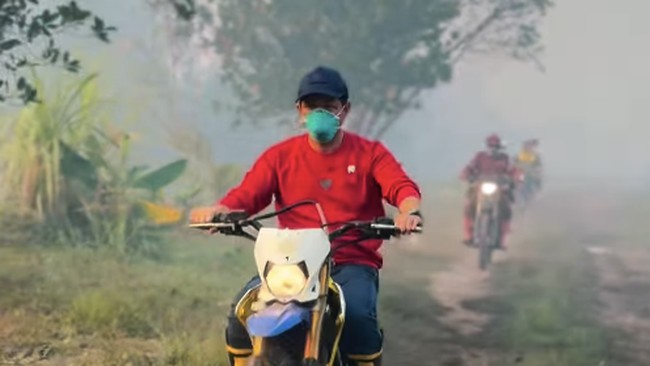
Jakarta, CNBC Indonesia – South Kalimantan recorded 182,710 cases of acute respiratory infection (ARI) in September 2026, amid forest and land fires affecting the region. The Indonesian Paediatric Society (IDAI) said cases had risen by around 61.3%, based on health department data presented by the organisation.
Dr Khairiyadi, a member of IDAI’s Respirology Coordination Working Unit, said ARI cases increased during the dry season and amid exposure to smoke from forest and land fires. Cases peaked in September before declining in October.
“There were 182,710 ARI cases. I do not think we can say whether these were pneumonia or upper respiratory tract infections,” Khairiyadi said at an IDAI media webinar entitled “The Impact of Forest and Land Fires and the Increase in Pneumonia among Children” on Tuesday (3 November 2026).
The areas with the highest numbers of ARI cases were Banjarmasin, followed by Banjar Regency and Banjarbaru. All three areas were also among those affected by land fires.
Khairiyadi explained that an increase in ARI cases does not necessarily indicate a surge in pneumonia. ARI covers a range of illnesses affecting both the upper and lower respiratory tracts.
He acknowledged that data specifically on pneumonia remain limited, as most respiratory illnesses are still recorded under the broader ARI category.
Children most vulnerable to fire smoke
Khairiyadi warned that children, particularly those under five, are the most vulnerable to health problems caused by smoke from forest and land fires. Their airways are relatively small, they breathe more frequently, and their lungs and immune systems are still developing.
Children with underlying conditions such as asthma, heart disease, immune disorders or malnutrition face an even greater risk. Khairiyadi said smoke from forest and land fires contains a range of harmful substances, including fine PM2.5 and PM10 particles, carbon monoxide and gases produced by burning vegetation.
PM2.5 particles can reach the lower respiratory tract and trigger inflammation. Exposure can also disrupt the respiratory system’s defences, making the body more vulnerable to infection.
“The effects are not limited to ARI; smoke can also worsen asthma and increase the risk of other respiratory problems,” he said.
Based on his observations at hospitals, some child patients whose asthma had previously been under control experienced repeated attacks during the fire season. Some had stopped using preventive asthma medication but suffered attacks two or three times during the period of smoke exposure.
Khairiyadi said he himself had experienced three asthma attacks during the dry season from May to October 2026, despite having had no recurrence for about three years.
“During this dry season, the fire season from May to October, I had three asthma attacks because I have asthma, even though I had not had an attack in the past three years,” he said.
Source: jawawa.id (https://jawawa.id/newsitem/forest-and-land-fires-drive-a-61-3-rise-in-acute-respiratory-infections-with-children-most-at-risk-1793706756)
Originally published by CNBC Indonesia (https://www.cnbcindonesia.com/lifestyle/20261103152758-33-781942/karhutla-bikin-kasus-ispa-naik-613-anak-anak-paling-rentan), translated from Indonesian