
Forest and Land Fires Besiege Penajam Paser Utara, Over 9 Hectares Scorched
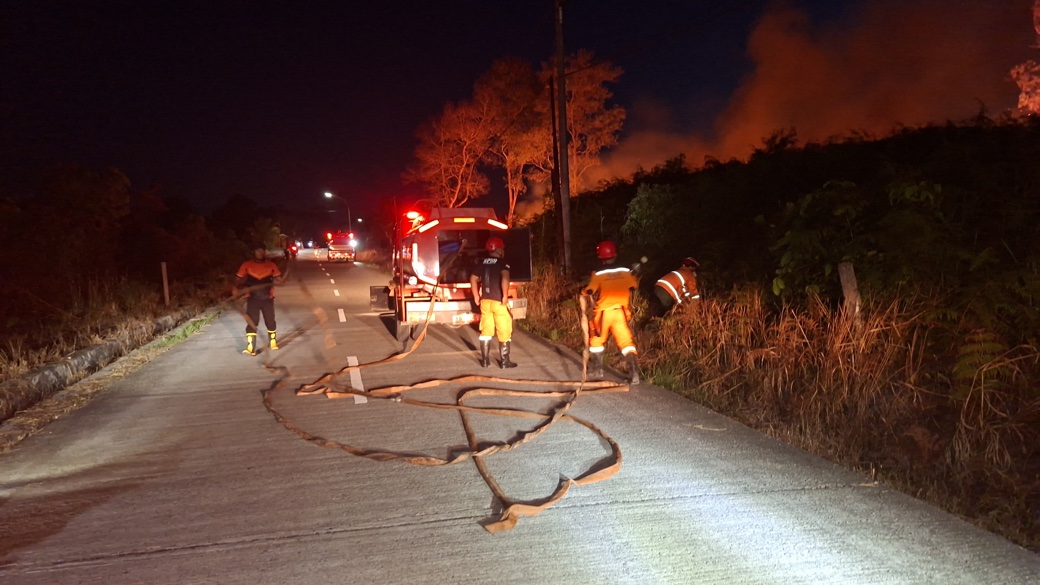
Penajam Paser Utara (PPU) Regency in East Kalimantan is being beset by forest and land fires (Karhutla) as a result of the El Nino phenomenon and the dry season in the region, which carries the branding of Gerbang Nusantara as a partner area of the Nusantara Capital (IKN).
Head of the Regional Disaster Management Agency (BPBD), Nurlaila, told Media Indonesia on Monday (27 July) that according to the agency’s records from 27 January to 25 July, there have been 17 Karhutla incidents, with the total burnt area reaching 9.99 hectares.
“Even today, there are still reports of Karhutla, so the number of incidents and the extent of the fire damage could still increase,” she said.
Of the 17 Karhutla incidents, the majority occurred in Penajam District with 14 incidents, followed by two in Babulu District and one in Sepaku District. Waru District recorded no incidents.
Based on field observations, she said, the Karhutla in PPU was caused by humans rather than natural factors. Residents have been taking advantage of the dry season to open or clear land by burning, without taking precautions to prevent the fires from spreading.
She appealed to the public not to open land by burning, as it could trigger Karhutla. If land must be cleared, anticipatory steps must be taken, given that the weather is extremely hot with above-normal temperatures.
Nurlaila said the agency has been widely disseminating information and warnings to the public about the potential and impacts of Karhutla during the dry season, coinciding with the arrival of the El Nino phenomenon in Indonesia.
According to her, the most effective response occurs when a Karhutla incident happens: a joint team comprising BPBD, the TNI, the National Police, the Fire and Rescue Service (DPKP) and other elements typically identifies the landowner and ascertains the cause of the fire.
“If it was deliberately set alight by individuals, they will be summoned by the police for questioning and classification,” said Nurlaila.
She stressed that all equipment and personnel are on standby, and whenever a Karhutla or residential fire occurs, they move immediately to handle it.
As for potential water resources, the agency is still carrying out mapping to anticipate the fires, because during the dry season water sources also dry up and mapping is therefore necessary.
“God willing, personnel and equipment are ready, and they collaborate with other agencies in handling Karhutla or residential fires. We are currently mapping potential water resources,” Nurlaila concluded.
Beyond Karhutla, in facing the challenge of the extreme dry season El Nino phenomenon, the PPU Regency Government has formed an El Nino Drought Disaster Management Task Force involving all relevant agencies, including government elements, the TNI, the National Police, state-owned and regionally-owned enterprises (BUMN/BUMD), the private sector and community groups.
“We recently held a coordination meeting with relevant agencies specifically to anticipate the extreme dry season, which is often marked by weather dynamics — this so-called Godzilla El Nino. The PPU government is currently designing and preparing the establishment of an emergency alert status should the natural situation and conditions force it,” she said.
She explained that the emergency alert status would be based on empirical field references, such as declining raw water discharge, rising temperatures that heighten the risk of land and property fires, and weather forecasts released by the Meteorology, Climatology and Geophysics Agency (BMKG).
Once the emergency alert status is formally declared by the regional head, the deployment of assistance would not fall solely on autonomous agencies but would involve all elements with resources, including vertical agencies, the private sector, institutions, and BUMN/BUMD.
“All resources in the region, whether from the regional government, the TNI, the National Police, BUMN, BUMD and the private sector, are being mobilised so we can handle the drought impacts facing the community,” she concluded.