
Foreign Worker Services Integrated to Provide Investment Certainty
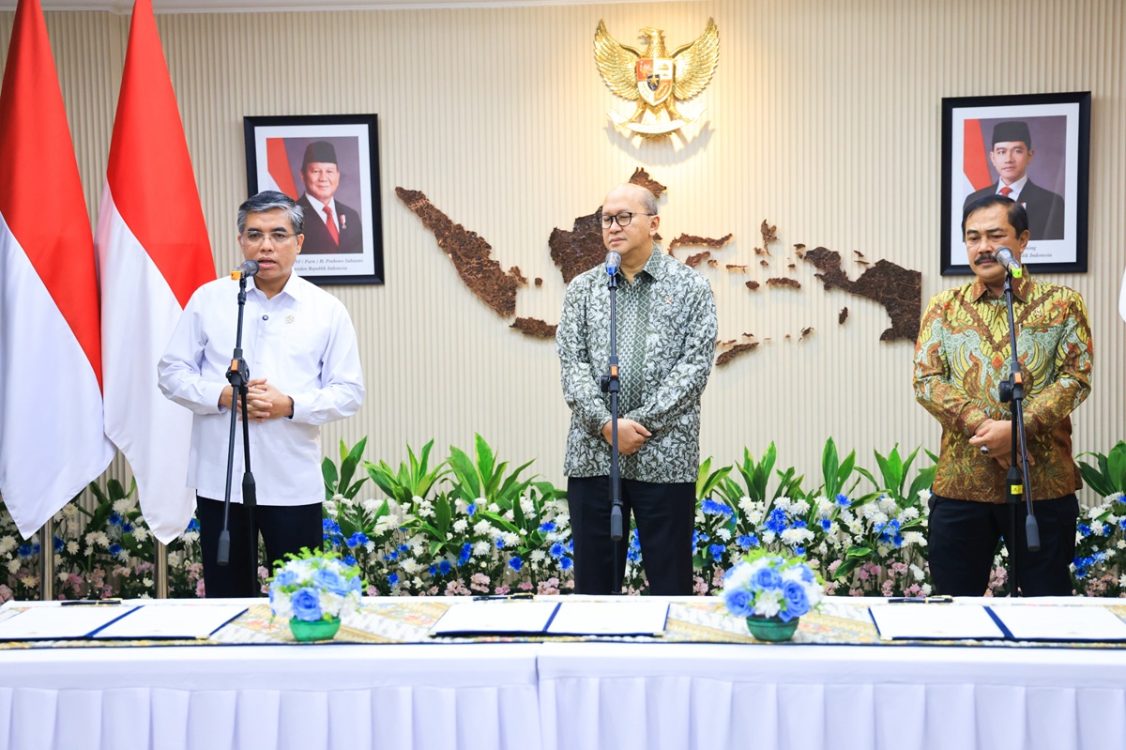
The Indonesian government is integrating foreign worker (TKA) services through the Online Single Submission (OSS) system to simplify licensing and strengthen investment certainty. This integration is being carried out by the Ministry of Manpower, the Ministry of Investment and Downstreaming/Investment Coordinating Board (BKPM), and the Ministry of Immigration and Correctional Services in Jakarta, on Wednesday (9/9/2026). Under this scheme, foreign worker permits can be accessed via a single entry point through the OSS under the Ministry of Investment and Downstreaming. This unification is achieved by integrating the SIAPKerja system from the Ministry of Manpower and All Indonesia from the Ministry of Immigration and Correctional Services.
Foreign Worker Services Accessed via a Single Door
The integration of foreign worker services is formalised in a Joint Ministerial Decree (SKB) signed by the three ministries. The government stated that the unification of these systems is intended to improve the quality of public services, provide ease of doing business, and ensure that the use of foreign workers aligns with specific competency requirements.
Minister of Manpower Yassierli stated that simplifying the process is a vital part of implementing the service integration. According to him, the new system must not add additional administrative stages for companies applying for permits.
“The process must be simpler, faster, and more certain. Integration should not introduce more steps, but rather provide better service,” said Yassierli.
He explained that certainty in the licensing process is essential in the dynamics of investment, particularly for companies requiring workers with specific competencies that are not yet fully available domestically.
With a single-entry service through the OSS, processes that previously operated under separate agency systems are being directed to become more coordinated. The unification also encompasses data and service processes across the various ministries.
Government Collaboration Aimed at Greater Speed
Minister of Investment and Downstreaming/Head of BKPM, Rosan P. Roeslani, stated that cross-ministerial collaboration is necessary so that government services can follow the needs of the business world more quickly and effectively.
According to Rosan, the integration of services must continue to operate in accordance with applicable regulations. He hopes this cooperation will impact the economy, job creation, and public welfare.
“Collaboration must run quickly, effectively, and remain in accordance with applicable regulations, thereby providing a positive impact on the economy, job creation, and community welfare,” said Rosan.
Meanwhile, Minister of Immigration and Correctional Services Agus Andrianto stated that the cooperation between the three ministries regarding foreign worker services and foreign investors had been ongoing even before being formally recorded in the Joint Ministerial Decree.
He noted that the signing of the SKB is a form of formalising the collaboration that has been taking place between ministries.
“This is the formalisation of what we have been doing. Our cooperation has been quite good; today we are formalising it through the signing of this agreement,” he said.
Data Unification for Investor Certainty
Agus assessed that data unification is a key factor in providing service certainty, particularly for foreign investors who require clarity when conducting their investments in Indonesia.
“This effort is undertaken to unify data so that we all have certainty regarding where all processes can take place, especially for investors who require investment certainty in Indonesia,” he said.
The government is directing the integration to unify services that previously resided under different systems. The OSS serves as the gateway for services, while SIAPKerja and All Indonesia are integrated into this service scheme.
Data and process unification is expected to reduce sectoral barriers in government services. At the same time, the foreign worker licensing process must still comply with the regulations governing the use of foreign labour.
Use of Foreign Workers Encouraged to Support Local Labour
Yassierli emphasised that the use of foreign workers is not only intended to meet the needs of experts. The presence of foreign workers is also expected to encourage technology and skill transfers to the Indonesian workforce.
Furthermore, the use of foreign workers is expected to strengthen the absorption of local labour. Thus, the ease of licensing through the OSS will proceed in tandem with the interests of developing the competence of the Indonesian workforce.
The integration of foreign worker services also reflects a shift in the government’s working pattern from sectoral services towards more coordinated services. The government is not only pursuing administrative ease for the business world but is also building a more integrated governance framework for the use of foreign workers.
This step is expected to support the investment climate while ensuring that the needs of foreign workers align with the development of competence and employment opportunities for the Indonesian workforce.