
Foreign Tourists Surge but Indonesian Hotels Remain Underoccupied: What's Going On?
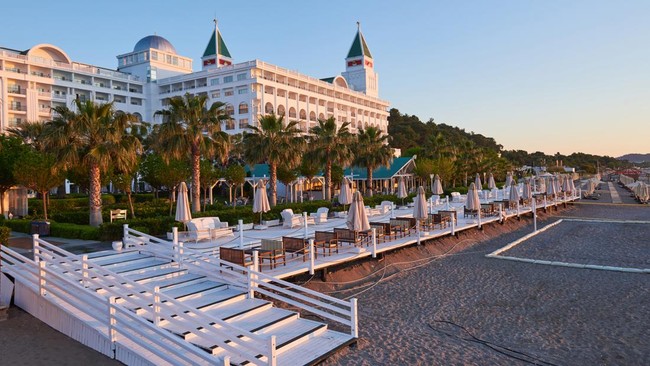
Jakarta, CNBC Indonesia - The surge in foreign tourist visits to Indonesia has yet to fully benefit the hospitality industry. Amid the rise in the number of foreign tourists arriving throughout the first quarter of 2026, hotel occupancy rates have not shown significant improvement, particularly in Bali.
Statistics Indonesia (BPS) recorded 3.43 million foreign tourist visits from January to March 2026, an increase of 8.62% compared to the same period last year. This figure marks the highest since 2020.
General Secretary of the Indonesian Hotel and Restaurant Association (PHRI), Maulana Yusran, acknowledged that the increase in foreign tourists is indeed occurring. However, its impact on the hotel industry has not been evenly distributed across regions.
“The increase in foreign tourists is recorded at airports, and there has indeed been a rise compared to 2020. But the target is actually to surpass the 2019 achievement of around 16 million foreign tourists,” Maulana told CNBC Indonesia.
Foreign tourist movements are currently concentrated in key areas such as Bali, Jakarta, Riau Islands, Yogyakarta, and East Java. Among these, Bali remains the primary destination for foreign tourists.
However, the high influx of foreign tourists to Bali has not automatically boosted hotel occupancy rates. The prevalence of illegal accommodations poses the main challenge currently facing the hospitality industry.
“The challenge in Bali is that the increase in foreign tourists is not matched by an increase in hotel occupancy due to the abundance of illegal accommodations. They operate but lack the proper permits in accordance with regulations,” he said.
Weak oversight of business permits has allowed many informal accommodations to proliferate unchecked. This situation is seen as detrimental to official hotels and reduces potential local revenue (PAD).
“Every business must contribute to PAD and job absorption. If illegal operations are tolerated, their contribution diminishes. Foreign tourists increase, but they do not contribute to PAD,” he stated.
Maulana noted that this is reflected in hotel occupancy rates, which remain around 50%. In the first quarter of 2026, the average hotel occupancy in Bali was about 54%, while in March it was around 56%.
“Compared to last year, it is slightly higher. But not yet significant,” he said.
PHRI also highlighted BPS data showing average foreign tourist spending reached US$1,345.61, or approximately Rp23.27 million per visit during the first quarter of 2026. The largest expenditures were on accommodation, food and drink, and souvenir shopping.
Nevertheless, the hotel industry has not yet directly felt this surge in spending.
“The increase in foreign tourist spending has not been felt in hotels. Hotels can only significantly raise room rates when occupancy exceeds 70%,” Maulana said.
He mentioned that only certain hotels with special appeal are currently benefiting from the rise in foreign tourists. Overall, the impact has not been uniform across the entire hotel industry in Bali.
“Many tourists choose to stay in boarding houses, private homes, or other accommodations that are prevalent there. This ultimately does not contribute to hotel businesses or PAD,” he said.
Previously, Deputy for Distribution and Services at Statistics Indonesia (BPS), Ateng Hartono, stated that the foreign tourist visits over the three months were the highest since 2020. Specifically for March 2026, the number reached 1,088,166 visits, down 6.17% monthly but up 10.50% annually.
“The foreign tourist visit achievement for January-March 2026 is the highest since 2020,” Ateng said during a press conference at his office in Central Jakarta on Monday (4/5/2026).
On average, foreign tourists spent around US$1,345.61, equivalent to Rp23.27 million (at Rp17,300 exchange rate), during their stay in Indonesia in the first quarter of 2026.
“In the first quarter of 2026, the largest proportion of foreign tourist spending was allocated to accommodation at 37.23%. This was followed by spending on food and drink at 20.17%, and shopping and souvenirs at 11.04%,” Ateng said.