
Foreign National's Outburst Over Quran Recitation Speaker Prompts Response from MUI and Religious Affairs Ministry
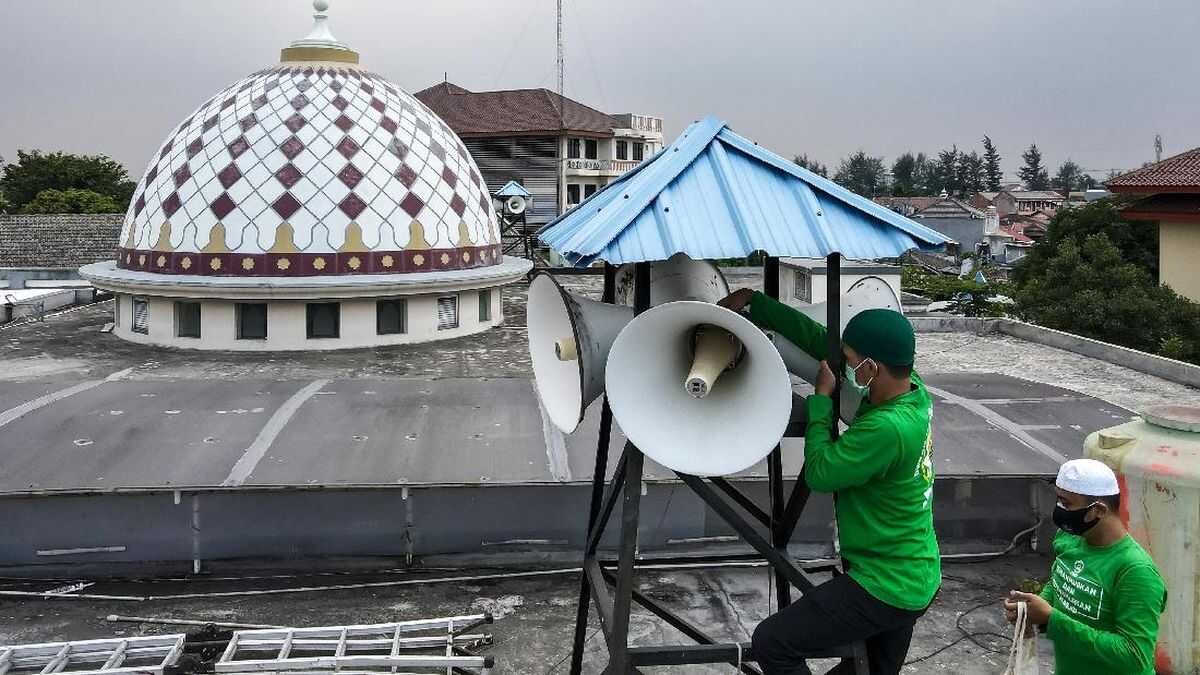
The Indonesian Council of Ulema (MUI) and the Ministry of Religious Affairs (Kemenag) have both responded to an incident involving a foreign national who went on a rampage in Gili Trawangan, Lombok, after being disturbed by the sound of Quran recitation (tadarus) broadcast from a local prayer hall’s loudspeaker.
MUI Secretary-General Amirsyah Tambunan urged all parties to exercise restraint in dealing with the matter, particularly those observing the Ramadan fast, and to prioritise mutual respect.
“All parties must exercise restraint, especially those who are fasting. As for the impact on the surrounding environment, it is best to hold back and not become emotional or aggressive, as concerns can be conveyed in a wise and prudent manner,” said Amirsyah.
Amirsyah stressed the importance of maintaining a conducive atmosphere during Ramadan. He noted that those conducting Quran recitation also need to maintain order and solemnity to foster a sense of safety and fellowship.
However, he added that foreign nationals residing in Muslim-majority areas of Indonesia also need to understand the situation and conditions of locals observing worship during Ramadan.
“There must be mutual tolerance (tasamuh),” he said, as reported on Sunday (22 February). “Foreign visitors, as guests, must understand local customs and wisdom.”
Meanwhile, the Ministry of Religious Affairs reminded the public that regulations governing the use of loudspeakers at places of worship, including prayer halls, already exist.
“The use of loudspeakers is actually already guided by a Ministerial Circular to ensure shared tranquillity, order, and comfort,” said Thobib Al Asyhar, Head of the Ministry’s Public Relations and Communications Bureau.
The regulation, Circular No. 05 of 2022 on guidelines for loudspeaker use at mosques and prayer halls, distinguishes between two types of loudspeakers: internal and external.
Internal loudspeakers are designed for use within the mosque or prayer hall, whilst external loudspeakers are intended for outdoor use.
External loudspeakers are designated for broadcasting the call to prayer (azan), whereas Quran recitation, Tarawih prayers, and religious lectures should use internal loudspeakers only.
“So for Quran recitation, internal speakers should be used in accordance with the circular,” said Thobib.
The incident occurred when a female foreign national went on a rampage as residents were conducting Quran recitation on the first night of Ramadan in Gili Trawangan hamlet, Gili Indah village, Pemenang district, North Lombok, West Nusa Tenggara.
The incident went viral on social media. Muhammad Husni, the head of Gili Trawangan hamlet, said the woman felt disturbed by the sound of the recitation.
“She eventually came to the prayer hall, then immediately flew into a rage and damaged the microphone and other equipment,” he recounted.
A confrontation ensued, with the foreign woman becoming involved in a verbal altercation with residents. During the incident, one local resident sustained scratch wounds.