
Foreign Media Highlight Prabowo’s Plan for the State to Control 70% of Mining Proceeds
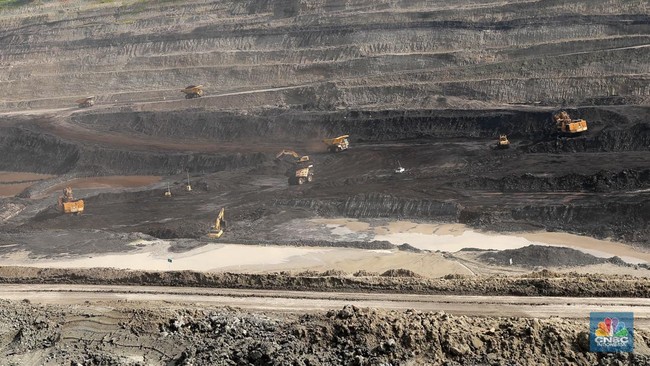
Jakarta, CNBC Indonesia — Several foreign media outlets have highlighted the Indonesian government’s plan to secure 70% of mining proceeds for the state and take equity stakes in mining operations. They say the policy is causing concern among businesses in the country, a major exporter of coal, nickel, tin and copper.
Reuters reported that Energy and Mineral Resources Minister and Coordinating Minister for Downstreaming and Energy Transition Bahlil Lahadalia said the government was refining the technical options for implementing the President’s directive.
“In future, we will determine whether the option is 70% equity or 70% of revenue controlled by the state,” Bahlil told reporters.
Reuters noted that Bahlil had assured companies that the government would honour existing contracts, meaning any changes to ownership structures would apply only to new agreements in the future.
Bahlil also stressed that the options were still under discussion and no final decision had been made. He said the government needed substantial funding to build new infrastructure and public facilities.
“This requires accelerating and optimising state revenue by harnessing the potential of our natural resources,” he said.
Bloomberg wrote that the intervention formed part of an ongoing campaign to consolidate state control over commodity sectors that contribute a large share of export earnings. It cited Prabowo’s speech in Palu, Sulawesi, last Saturday, which caused confusion because he did not specify whether the rules would apply retrospectively to existing permits.
“Effective immediately, at least 70% of the benefits from all mining permits and licences must go to the state. If necessary, the state must take control of their shares,” Prabowo said in the speech.
Bloomberg said Prabowo’s administration had taken a much tougher line than that of his predecessor, Joko Widodo. Under Widodo, the state’s acquisition of stakes in major mining companies such as Freeport-McMoRan Inc. and Vale SA was achieved through lengthy negotiations. Prabowo’s government, by contrast, has seized mines and millions of hectares of oil palm plantations while imposing large fines on their owners.
Bloomberg also pointed to the history of similar policies becoming subject to reversals and disputes. A proposal for state control of major commodity exports was eventually revised by officials, while a plan announced in January to take over a gold mine in Sumatra owned by multinational group Jardine Matheson Holdings Ltd., over alleged links to severe flooding, was not carried out.
Hong Kong-based South China Morning Post (SCMP) highlighted questions among industry players about how the 70% figure would be calculated.
SCMP cited an Indonesian mining professionals’ association, which said the state already receives a much larger share of the benefits than mining companies’ net profits.
The newspaper also quoted CreditSights, a research unit of Fitch Solutions, as saying the proposal, together with a new requirement to pay export service fees to PT Danantara Sumberdaya Indonesia (DSI), had revived policy uncertainty.
The situation is seen as keeping Indonesia’s mining sector under a high risk premium in investors’ eyes, even though increasing national control over resources is one of President Prabowo’s key economic goals. This year, he launched PT DSI as well as the Strategic Minerals and Commodities Exchange (BMKS).
Source: jawawa.id (https://jawawa.id/newsitem/foreign-media-highlight-prabowos-plan-for-the-state-to-control-70-of-mining-proceeds-1795492236)
Originally published by CNBC Indonesia (https://www.cnbcindonesia.com/news/20261124084217-4-787835/media-asing-sorot-prabowo-mau-kuasai-70-hasil-tambang-untuk-negara), translated from Indonesian