
Foreign Investors Still Interested in Entering Indonesia
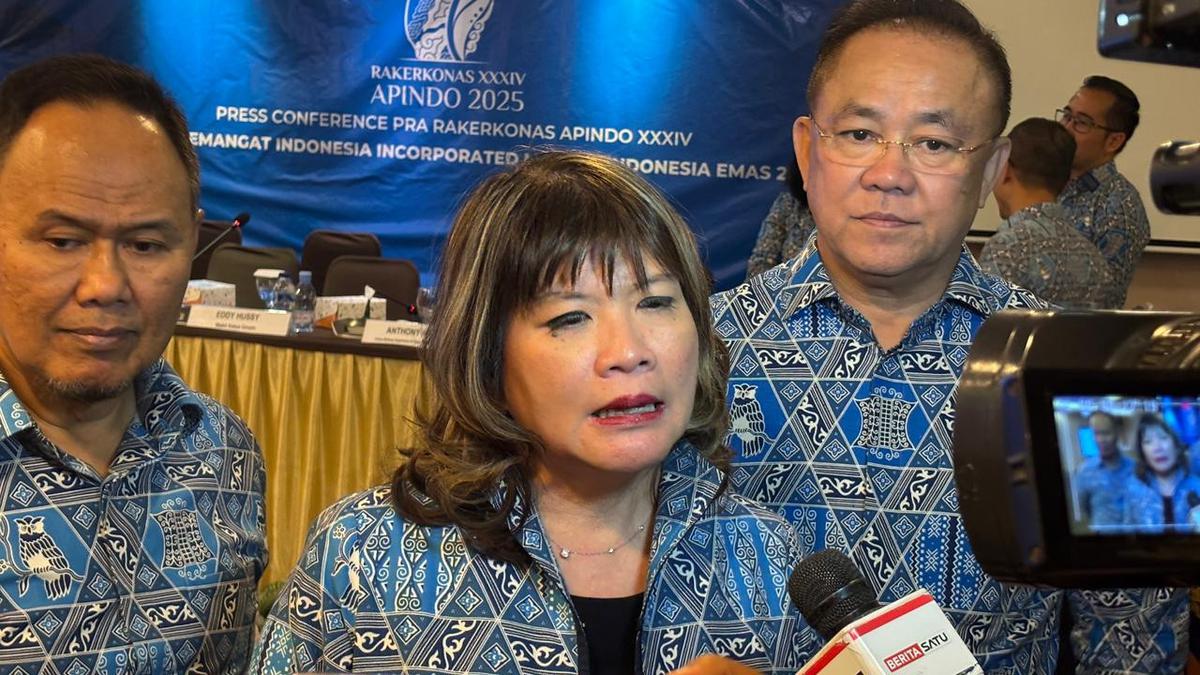
The Indonesian Employers’ Association (Apindo) confirms that foreign investors are still interested in investing in Indonesia, although they remain cautious about the impact of global economic turbulence.
Apindo General Chairman, Shinta Kamdani, affirms that foreign entrepreneurs are still eyeing Indonesia as an investment destination. This aligns with the government’s reported investment realisation figures.
“This shows that amid global turbulence, Indonesia is still viewed as a relevant destination,” Shinta told Liputan6.com on Monday (27/4/2026).
Investment performance in the first quarter of 2026 recorded a share of foreign direct investment (FDI) at 50.1% of the country’s total investment. This figure rose 8.5% from the same period last year.
“However, the current investor profile is indeed more selective and cautious, particularly in considering global risk factors as well as domestic challenges,” she said.
She stated that Indonesia remains attractive to investors for several reasons. For example, the large size of the domestic market, its strategic position in the global supply chain, and opportunities in downstreaming and industrial development.
“However, on the other hand, investors also continue to highly consider factors such as legal certainty and regulations, logistics and energy cost efficiency, and ease of doing business in daily practice,” Shinta explained.
Realised Investment
Previously, the Ministry of Investment/Investment Coordinating Board (BKPM) announced that total downstream investment realisation for the first quarter of 2026 amounted to Rp 147.5 trillion. This grew 8.2% compared to the first quarter of 2025, which was Rp 136.3 trillion.
Investment in Downstreaming
Investment in downstreaming reached 29.6% of the total investment realisation throughout the first quarter of 2026, which was Rp 498.8 trillion. “The contribution from investments in sectors related to downstreaming is quite significant and could increase further in the future,” said Minister of Investment/Head of BKPM, Rosal Perkasa Roeslani, during a press conference in Jakarta on Thursday (23/4/2026).
Of the total downstream investment realisation of Rp 147.5 trillion, Rp 98.3 trillion was in mineral downstreaming. The details are nickel Rp 41.5 trillion, copper Rp 20.7 trillion, iron and steel Rp 17.0 trillion, bauxite Rp 13.7 trillion, tin Rp 2.5 trillion, others Rp 2.9 trillion.
Downstreaming of Plantations
Then, downstreaming of plantations and forestry amounted to Rp 29.8 trillion. The details are palm oil Rp 18.3 trillion, log wood Rp 7.0 trillion, rubber Rp 2.4 trillion, others Rp 2.1 trillion.
“We want investment in plantation and forestry downstreaming to also increase,” he said.
Then, downstreaming of oil and natural gas (oil and gas) Rp 17.7 trillion, consisting of crude oil Rp 13.6 trillion and natural gas Rp 4.1 trillion.
Downstreaming of Other Sectors
Meanwhile, downstreaming of fisheries and marine affairs amounted to Rp 1.7 trillion. Commodities in this sector include salt, TCT fish (tuna, skipjack, mackerel), shrimp, seaweed, crab, tilapia.
“We see that investment in fisheries and marine downstreaming could increase in the next semester,” said Rosan.
The majority of downstream investment realisation is located outside Java, namely 75.5% or Rp 111.4 trillion. The largest in Southeast Sulawesi (Sulteng) Rp 24.1 trillion, North Maluku (Malut) Rp 18.6 trillion, West Java Rp 13.0 trillion, West Nusa Tenggara (NTB) Rp 12.9 trillion, and Riau Islands Rp 9.6 trillion.