
Foreign Investors Exit Indonesia’s Stock Market as They Await Reform from the OJK and SROs
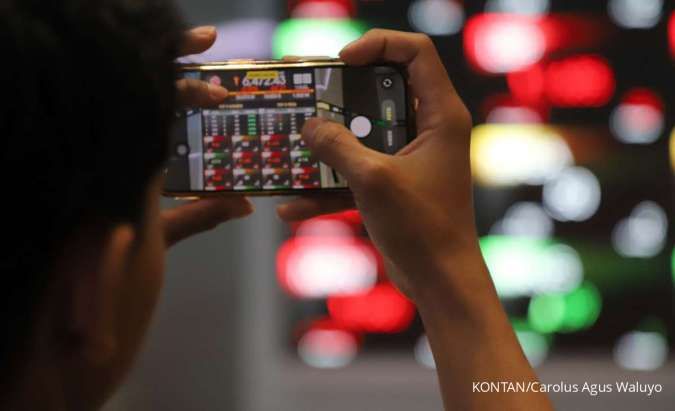
KONTAN.CO.ID – JAKARTA. Foreign investors’ net selling has become increasingly difficult to stem. So far in 2026, they have recorded net sales of Rp84.99 trillion, as of the market close on Friday (9 October 2026).
That figure is higher than the outflows during several crises in previous years. When the Covid-19 pandemic struck, foreign net sales reached Rp53.84 trillion over 2020. In 2008, foreign net sales totalled Rp50.17 trillion.
Budi Frensidy, a capital-market observer at the University of Indonesia, said this year’s foreign investor outflows reflected a combination of external factors and global investors’ specific concerns about Indonesia’s stock market.
He said Indonesia’s stock market was losing out to other markets because global investors now had many alternatives. Taiwan and South Korea, for example, are benefiting from themes related to artificial intelligence and technology.
RHB Sekuritas president director Thomas Nugroho added that foreign selling reflected both global pressures and domestic concerns about confidence. A stronger US dollar and high US yields are weighing on emerging markets, he said.
Domestically, Thomas said, there were further concerns over share-ownership transparency, free float, policy certainty and evaluations by global index providers.
“This year’s pressure also has a domestic structural dimension. The authorities’ clean-up measures are positive, but investors need evidence of consistent implementation before they increase their exposure again,” he said.
Selling pressure emerged after global index provider MSCI placed changes to Indonesia’s stock-market indices on hold on 27 January 2026.
Another blow came in May 2026, when MSCI removed six Indonesian stocks from its Global Standard Index and 13 from its Small Cap Index.
The US-based company also issued a strong warning that Indonesia could be downgraded to Frontier Market status if reforms to exchange transparency were not implemented consistently.
Investors and market participants are now awaiting MSCI’s review in November 2026. MSCI is scheduled to announce the results of its latest rebalancing on 11 November 2026.
As part of its clean-up effort, the Financial Services Authority (OJK), together with the self-regulatory organisations (SROs), launched eight action plans to accelerate reforms to the integrity of Indonesia’s capital market.
Earlier, on 6 February 2026, the OJK imposed administrative sanctions and/or written orders on PT Repower Asia Indonesia Tbk (REAL), PT Multi Makmur Lemindo Tbk (PIPA) and related parties.
In late February 2026, the OJK also fined a social-media personality Rp5.35 billion for price manipulation through the dissemination of information on social media in connection with several stock trades during 2021–2022.
The OJK also imposed administrative fines on three parties over trading in PT Impack Pratama Industri Tbk (IMPC) shares between January and April 2016.
According to sources cited by Kontan, the OJK will publish the results of investigations into several shares in the renewable-energy sector and a coal-mining issuer that is also a holding company, with fines amounting to hundreds of billions of rupiah.
The two companies are suspected of manipulating share prices, with several prominent securities firms allegedly involved in each case. Kontan’s sources said the securities firms would also face fines of tens of billions of rupiah.
Liza said the reforms announced by the OJK and SROs—including disclosure of shareholdings above 1%, announcements on ownership concentration, more detailed investor classifications and a minimum free float of 15%—were positive steps.
“The next step is to provide evidence that the data are accurate, that shares held by the public are genuinely available for trading, and that the rules are enforced consistently,” she said.
In her view, foreign investors would return to the Indonesian stock market once the rupiah stabilised, pressure from the dollar and US yields eased, listed companies’ earnings grew, fiscal policy became more certain, and index providers recognised the reforms.
“Confirmation in the market would be sustained net buying over several weeks, spreading across a number of liquid stocks and accompanied by healthy trading,” Liza said.
Budi identified four main indicators that could prompt foreign investors to return to Indonesia’s stock market: a stable rupiah, a weaker US dollar or lower US Treasury yields, upward revisions to listed companies’ earnings, and fiscal policy that is predictable and supportive of the public.
Source: jawawa.id (https://jawawa.id/newsitem/foreign-investors-exit-indonesias-stock-market-as-they-await-reform-from-the-ojk-and-sros-1791791438)
Originally published by investasi.kontan.co.id (https://investasi.kontan.co.id/news/asing-keluar-dari-pasar-saham-ri-investor-menanti-upaya-pembenahan-dari-ojk-dan-sro), translated from Indonesian