
Foreign Investors Begin Construction in Nusantara, Authority Targets Core Area Completion by 2028
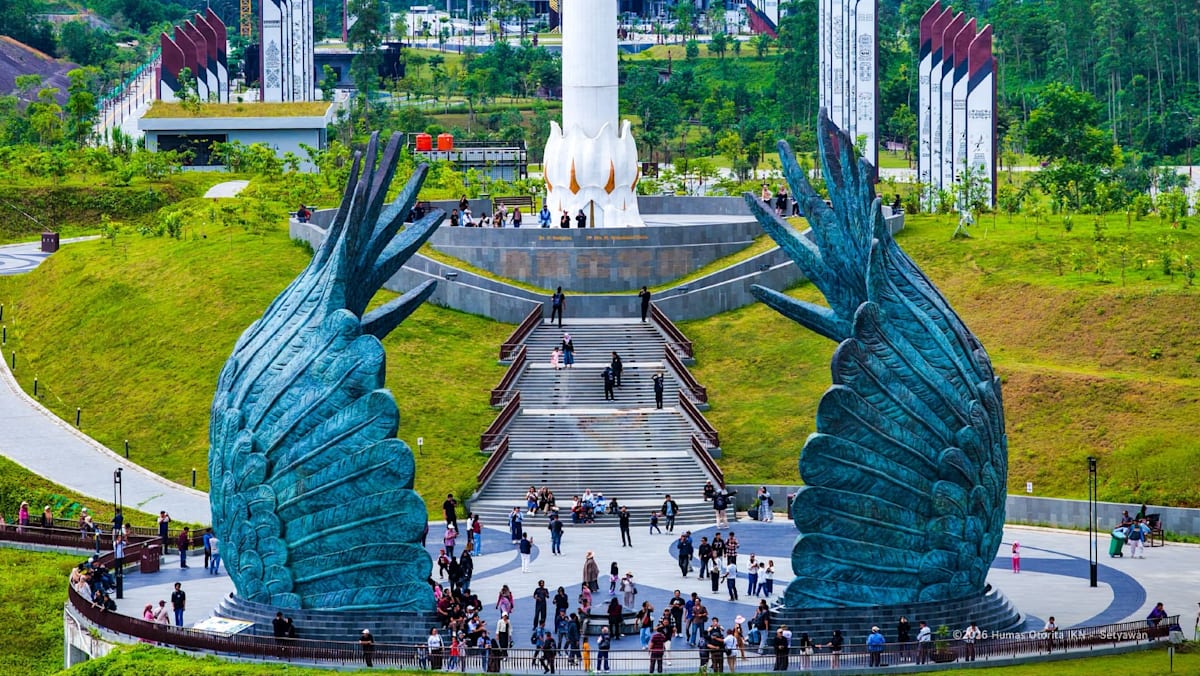
The development of the Nusantara Capital City (IKN) has entered a new phase after the Chinese company PT Star Bright International Investment began construction of an integrated complex worth Rp1.25 trillion in the Central Government Core Area of IKN.
The project, the first foreign-funded construction at IKN, will comprise apartments, restaurants, retail areas and office space on a 1.5-hectare site, with completion targeted for the end of 2026.
Head of the IKN Authority Basuki Hadimuljono said the project’s location is strategically valuable because it sits at the heart of Nusantara’s government district. “This location is very special. From here we can see the State Palace as well as the judicial and legislative quarters currently under construction. We will complete the entire area by 2028,” Basuki said, as reported by Detik Finance on Thursday (16/7).
In addition to the investment from China, the IKN Authority will soon receive further investment from South Korea through PT Dian Jaya Indonesia worth around Rp1.2 trillion. The funds will be used to build apartments and offices in the IKN area.
Basuki said that project is targeted to be realised this year following a meeting between the IKN Authority and the investors. “Soon we will have the one from South Korea, Dian Jaya, around Rp1.2 trillion, also for apartments and offices,” Basuki said. Asked about investment realisation this year, he replied: “Yes indeed (realisation this year), which is why we recently invited them to keep up the momentum.”
President Director of PT Star Bright International Investment Lu Keming said his company also sees other investment opportunities in Nusantara. “The team from China is also interested in investing in the hospitality and tourism sectors,” he said, quoted by Kompas.id on Thursday (16/7).
According to the IKN Authority, the project’s groundbreaking took place on 15 July and was attended by business delegations and prospective investors from China and South Korea.
The arrival of foreign investment adds to the momentum of private investment at IKN. The IKN Authority records that six private investment projects are currently under construction: the PT Star Bright International Investment apartment complex, the Gunadarma University Nusantara campus, Abdi Waluyo Hospital, Teras by Plataran, a mixed-use area by PT Fajar Maju Karya Gemilang, and apartments by PT Dian Jaya Indonesia.
Beyond these, nine private projects have been completed, while 67 businesses have signed cooperation agreements with the IKN Authority.
THREE FINANCING SCHEMES
Basuki said IKN’s development is underpinned by three financing schemes: the state budget (APBN), government cooperation with business entities, and private investment.
According to Antara News, for projects funded by the state budget, the IKN Authority manages 40 physical work packages, consisting of nine packages completed in 2025, 15 under construction, and 16 still in tender preparation.
Meanwhile, the Ministry of Public Works handles 90 work packages, with 78 completed and 12 still under construction, while the Ministry of Housing and Settlement Areas manages 12 packages, including one low-income high-rise housing project still under construction.
For the public-private partnership scheme, there are 13 initiated projects comprising seven in the housing sector and six in the roads sector. In the near future, this scheme will enter the construction phase of 108 landed houses initiated by PT Intiland Development Tbk and eight apartment towers by PT Nindya Karya.
Basuki said the IKN Authority routinely monitors and evaluates progress together with the ministries, investors, construction service providers, consultants and construction management to ensure all work proceeds according to target. He said the acceleration of development must not come at the expense of occupational safety or the quality of the results.
“Our occupational health and safety standards must be tightened further. Accidents can happen, but we must minimise them. We work fast, but it must remain safe and comfortable,” Basuki said.
He added that development continues to be guided by three main pillars: quality, aesthetics and environmental sustainability. “Occupational safety and health are always being tightened to minimise workplace accidents. Accidents can happen at any time, so anticipation and vigilance must be prioritised,” he said.