
Foreign Investment Opportunities in Indonesia Across Strategic Sectors
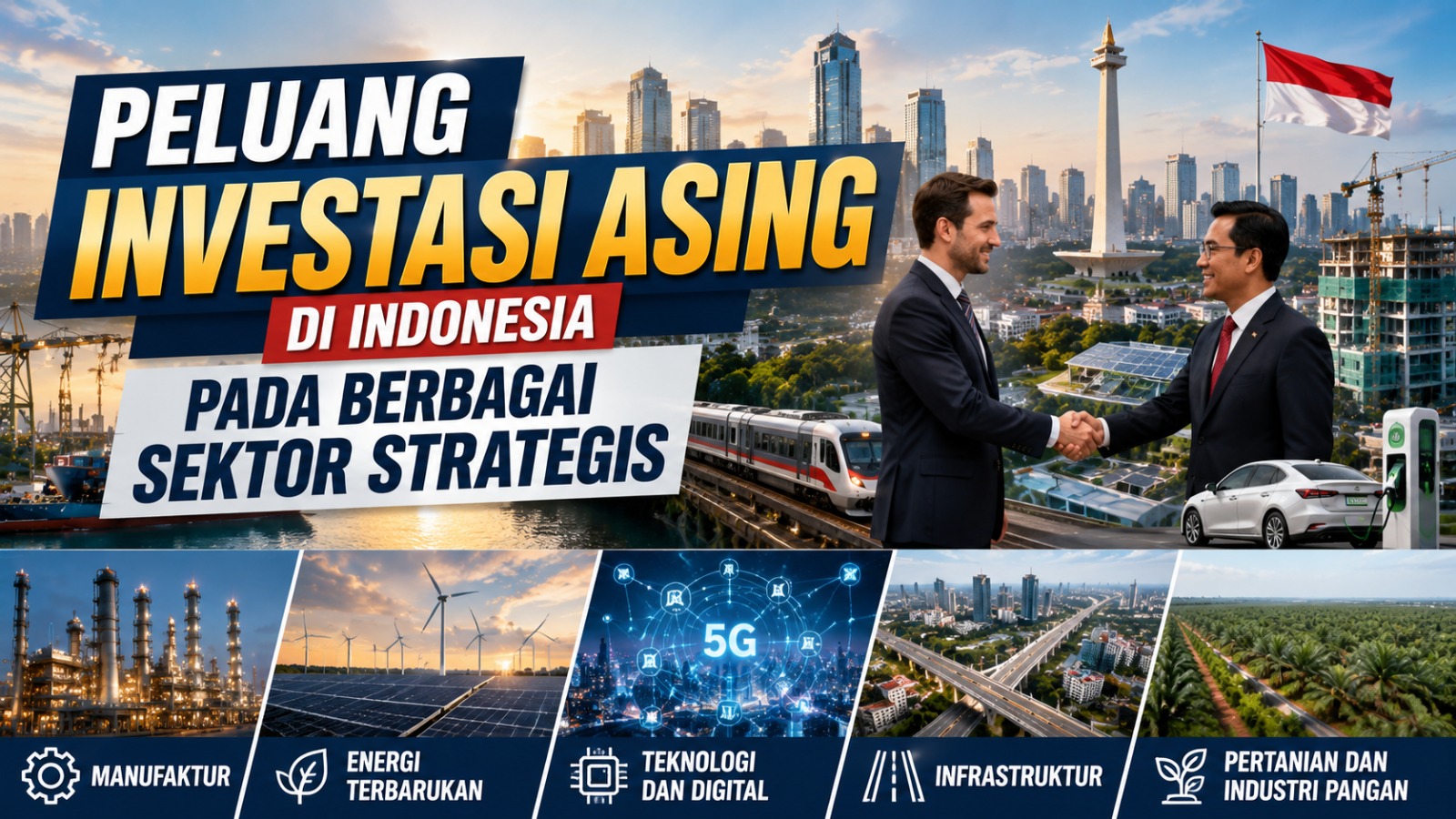
Foreign investment is a crucial factor capable of accelerating Indonesia’s economic growth. With a large population, abundant natural resources, and a strategic geographical position, Indonesia offers numerous opportunities for investors from various countries. The government is also continuously undertaking regulatory reforms and infrastructure development to create a more competitive investment climate. These conditions make Indonesia one of the primary destinations for foreign capital investment in the Southeast Asian region. Therefore, understanding the sectors with high prospects is essential for prospective investors and business actors.
Indonesia has a vast domestic market with a population of more than 270 million people. The large number of consumers creates high demand for various products and services, thereby providing extensive business opportunities. In addition, Indonesia has relatively good economic stability compared to many other developing countries. Various national development projects also continue to open new opportunities for investors to participate in economic development.
The government is also actively improving the ease of doing business through licensing simplification, digitalisation of investment services, and the provision of various incentives for investors. This support makes the foreign investment process in Indonesia more efficient and attractive. Furthermore, increasingly broad international trade cooperation enhances Indonesia’s appeal as a production and distribution hub in the regional area.
The manufacturing sector is one of the strategic sectors that continues to attract foreign investor interest. The automotive, electronics, food and beverage, and textile industries still have significant growth potential supported by the large domestic market. Besides meeting domestic needs, many Indonesian manufactured products also have export opportunities to various countries.
The government continues to encourage the development of modern industrial estates equipped with adequate infrastructure. The presence of these industrial estates helps improve production efficiency and strengthens the national supply chain. With the support of a competitive workforce and improved human resource quality, the manufacturing sector is expected to remain one of the main destinations for foreign capital investment.
Indonesia is known to have very abundant natural resources, including coal, nickel, copper, natural gas, and geothermal energy. This wealth provides significant opportunities for investors wishing to invest in the energy and mining sectors. Global demand for various strategic commodities is also increasing along with the development of the electric vehicle and clean energy industries.
In addition to the conventional mining sector, the government is also promoting the development of renewable energy such as solar, wind, hydro, and geothermal power. This step opens up long-term investment opportunities that support sustainable development. With a combination of large resources and increasingly supportive policies, the energy sector remains one of the mainstays in attracting foreign investment.
Infrastructure development is a national priority to improve inter-regional connectivity. Various projects such as toll roads, ports, airports, railways, and special economic zones offer very promising investment opportunities. Improved infrastructure also enhances the efficiency of goods and services distribution, thereby supporting overall economic growth.
The government opens opportunities for cooperation between the public and private sectors in financing various strategic projects. This cooperation model provides greater space for foreign investors to participate in national development. As the need for modern infrastructure increases, this sector is expected to continue growing in the coming years.
Technological developments have significantly driven the growth of Indonesia’s digital economy. The increasing use of the internet creates significant opportunities for companies in e-commerce, financial technology, digital services, artificial intelligence, and data centres. The large number of internet users makes Indonesia one of the largest digital markets in Southeast Asia.
In addition to digital technology, the creative economy such as animation, games, music, film, design, and digital content is also showing positive growth. The government continues to provide support through the development of digital talent and technological innovation. These conditions make the digital sector one of the main choices for foreign investment in Indonesia oriented towards long-term growth.
The modern agricultural sector has increasingly significant prospects as the need for food continues to rise every year. The use of agricultural technology, more efficient irrigation systems, and production mechanisation opens up new, more productive investment opportunities. Indonesia also has extensive agricultural land with various superior commodities such as palm oil, coffee, cocoa, spices, and horticulture.
In addition to increasing production, investment is also needed in the processing of agricultural products to provide higher added value. The development of technology-based food industries will enhance the competitiveness of Indonesian products in the international market. Thus, the agricultural sector not only supports national food security but also offers attractive profit opportunities for investors.
Although there are significant opportunities, every investment decision must consider the challenges that exist.
Source: jawawa.id (https://jawawa.id/newsitem/foreign-investment-opportunities-in-indonesia-across-strategic-sectors-1785232227)
Originally published by stekom.ac.id (https://stekom.ac.id/artikel/peluang-investasi-asing-di-indonesia-pada-berbagai-sektor-strategis-20260728145629), translated from Indonesian