
Foreign Investment Needs a Boost, Batam Could Serve as the Gateway
The government has been urged to develop innovative economic policies, one of which involves attracting foreign investment. Senior economist at Indef, Didik J. Rachbini, explained that amidst weak domestic consumption, economic policies must be innovative and continuously seek alternatives.
According to him, the government cannot rely solely on inward-looking social policies that spend tax revenue and the state budget (APBN) in an unproductive manner. “Excessive social programmes currently reflect Indonesia transforming into one of the largest socialist-leaning countries in the world. While the argument for social welfare is not wrong, it can be misguided in terms of economic growth policy,” Didik stated on Tuesday (29/09/2026).
He noted that neighbouring countries like Vietnam have transformed from communist states into market-oriented capitalist or state-capitalist nations. He believes this is the key to neighbouring countries achieving economic growth of 7-8%.
He argued that Indonesia will never reach the promised 7-8% growth rate if it avoids investment and export-oriented policies. “The key is simple: just emulate Vietnam, which is currently succeeding in driving high economic growth,” said Didly.
The Rector of Paramadina University also noted that Indonesia has actually done something similar in the past. He recounted that in the mid-1980s, the EDSA revolution toppled the Marcos regime in the Philippines. At that time, Manila, as the capital, was relatively more advanced than Jakarta, Hanoi, and other major cities in Southeast Asia.
However, because the revolution caused instability in Manila, investment flowed out to other countries. Indonesia seized that opportunity, and Jakarta absorbed the large-scale investments leaving the Philippines.
“A problem in one country can become an opportunity for another. Indonesia took advantage of that major event,” said Didik.
The momentum was highly appropriate as Indonesia was actively working to attract investment to make the economy competitive and outward-looking. At that time, the business and investment environment was improved, and broken bureaucracies, such as customs, were streamlined to ensure the smooth import and export of goods.
Exports were encouraged through various incentives, including credit and state assistance in the form of promotion and non-financial aid via embassies. As a result, Indonesia’s economy in the 1980s and 1990s grew by 7-8%.
“This happened not long after Indonesia had been eroded by the massive Pertamina corruption scandal under Ibnu Sutowo. Indonesia was nearly bankrupt in 1979. With the right policies, an economy broken by corruption managed to rise with high growth. Indonesia was then dubbed the New Asian Tiger,” explained Didik.
A similar but more intense event is occurring now, according to him, as the Middle East—a developing and highly advanced region—experiences escalating geopolitical tensions affecting security and defence. Such geopolitical tensions can drive some investors to exit or at least diversify geographically.
While Dubai, Abu Dhabi, or Qatar are not experiencing a massive exodus of investment, their investment movement will certainly slow down. The alternative opportunity presented by this geopolitical shift could allow Indonesia to receive this overflow of investment.
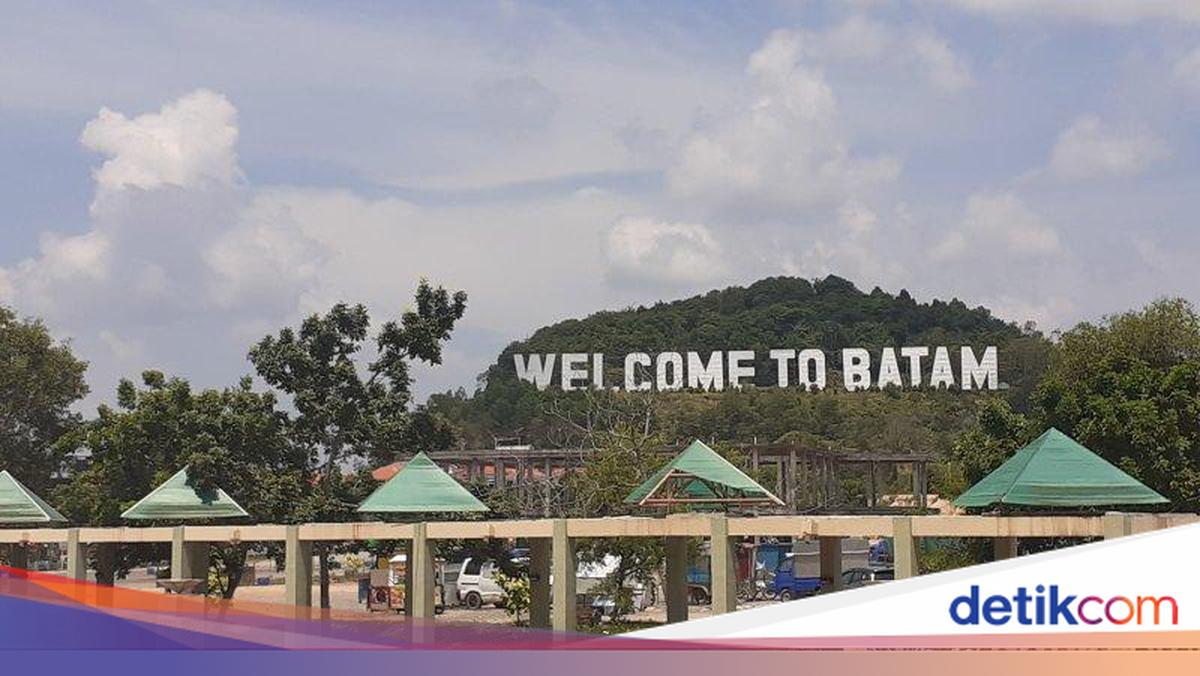
To capitalise on this situation, he believes special economic zones such as Batam and its surroundings should be positioned as a safe, affordable Asian investment alternative, close to Singapore.
If the government chooses to focus its policy on developing Batam, for instance, that economic zone has been planned to advance alongside Singapore since the 1980s under President B.J. Habibie. It has now become sufficiently advanced and is developing more rapidly than surrounding cities and provinces.
He suggested that Batam could be planned to become a “Little Dubai” in Sumatra. Economic growth in the last quarter reached 7% and remains dynamic due to its interaction with Singapore, which is already reaching capacity.
“Now, the public is looking towards Batam because global investors plan to move their investments to this island. Batam is set to become one of the world’s data centre hubs; this must be prepared with the support of a healthy business climate,” said Didik.
According to him, Batam continues to grow, with investments in 2025 reaching IDR 69.3 trillion. The digital sector alone has reached IDR 8.56 trillion. The government is also encouraging the development of the Batam-Bintan-Karimun area as a green industrial hub linked to the Indonesia-Singapore clean energy cooperation.
Nvidia is already preparing to enter Batam. Nvidia’s planned investment in Batam is worth approximately US$4.5 billion, or equivalent to IDR 80.55 trillion, for the development of artificial intelligence data centre infrastructure. With one such significant large investor, Batam’s investment could increase by 2 to 3 times.
Furthermore, there are plans to build the Nvidia DSX AI Factory within the Batam Special Economic Zone (KEK), involving cooperation with Firmus Technologies from Australia and Day One from Singapore. The target is for it to begin operating in stages from the first quarter of 2027 to 2028.
For Didik, these plans will help the national economy grow faster and absorb more labour than it does currently.
“The key is investment policy; if the dragon’s head enters and shows confidence, then the body and tail will soon follow. The investment record that lags behind neighbouring countries will change if Batam becomes a new global data centre hub,” stated Didik.
In addition to the momentum of natural resource processing policies, it is time for Indonesia to implement investment policies that attract high technology, such as Nvidia, to support economic growth.
Didik believes Batam can become a “Little Dubai” in Sumatra because it already possesses the necessary advantages.