
Foreign Exchange Reserves Shrink and Rupiah Weakens, Increasing Public Interest in Gold
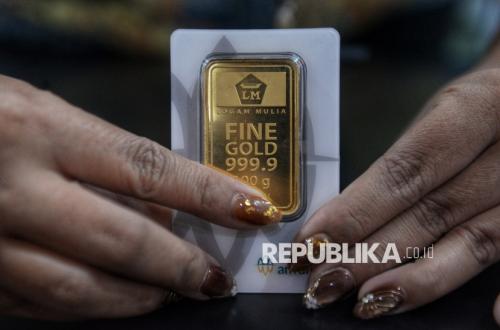
Pressure on the rupiah exchange rate and the decline in Indonesia’s foreign exchange reserves are prompting the public to increasingly look towards gold as a value-preserving instrument. Amid global economic uncertainty and the strengthening of the US dollar, precious metals are considered one of the assets capable of maintaining public purchasing power.
Indonesia’s foreign exchange reserves were recorded to have fallen to 146.2 billion USD at the end of April 2026 from a position of 148.2 billion USD in March 2026. At the same time, the rupiah is also facing pressure due to external sentiments, including the strengthening US dollar and rising global energy prices.
This condition has a direct impact on gold prices in the domestic market. Because gold prices traded in US dollars become more expensive when converted to rupiah as the exchange rate weakens.
Various market observers assess that gold price movements in Indonesia are currently influenced by two main factors: global gold prices and the rupiah exchange rate. An increase in just one of these factors can drive domestic gold prices, especially if both move in the same direction.
For the public, this phenomenon is palpable in saving and investment activities. With the same amount of funds, purchasing gold now requires more rupiah compared to previous periods.
In addition to exchange rate factors, the shrinkage of foreign exchange reserves is also a concern for market participants. Foreign exchange reserves are viewed as one of the indicators of the central bank’s ability to maintain exchange rate stability and face external volatility.
Nevertheless, Bank Indonesia previously emphasised that the foreign exchange reserve position remains at an adequate level to support external sector resilience and maintain national financial system stability.
In the global market, gold prices also continue to receive support from high economic and geopolitical uncertainty. Precious metals are traditionally considered safe-haven assets when financial markets face pressure.
On the other hand, the strengthening US dollar and rising US government bond yields have the potential to limit the rise of global gold prices. Therefore, investors need to closely monitor the developments of both factors simultaneously.
For the Indonesian people, gold remains an easy-to-understand investment instrument that has long been used as a means of saving and wealth protection. In addition to investment, gold is also frequently utilised for emergency funds and long-term financial planning.
Amid the pressure on the rupiah and increasing global economic uncertainty, demand for gold is expected to remain steady. As long as financial market volatility remains high, gold is considered to remain one of the primary choices for the public to protect the value of their assets.