
Foreign exchange reserves continue to slide since the start of the year, Bank Indonesia explains
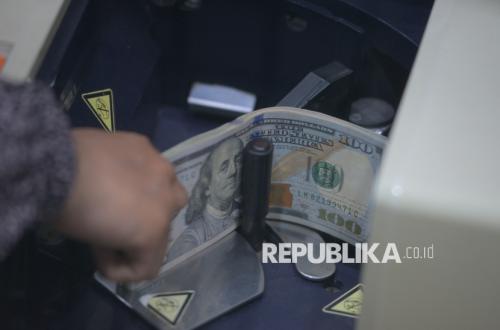
Indonesia’s foreign exchange reserves have continued to decline since the start of 2026, slipping from US$154.6 billion to US$146.2 billion in April 2026. Bank Indonesia (BI) emphasised that the country’s foreign exchange reserves remain sufficiently strong to support external resilience of the economy amid high global uncertainty.
According to BI data, the April 2026 foreign exchange reserves stood at US$146.2 billion, down from US$148.2 billion in March 2026. The March figure had declined from US$151.9 billion in February 2026.
The position at the start of the year, January 2026, was US$154.6 billion. Thus, there was a drop of US$8.4 billion from January to April 2026.
Ramdan Denny Prakoso, head of BI’s Public Communications Department, stated that the reserve level in April 2026 remained robust and adequate to support external resilience as well as to safeguard macroeconomic stability and the national financial system.
“The level of foreign exchange reserves is equivalent to around 114% of the IMF’s adequacy standard according to international standards and reflects the strength of Indonesia’s external resilience,” Denny said in a briefing to reporters on Tuesday, 19 May 2026.
For information, the 114% figure indicates that reserves are 14% above the minimum adequacy threshold. In general, the condition is still regarded as adequate or safe, but not overly loose. In other words, the buffer is not thick enough to absorb a major crisis, capital outflow, or exchange-rate pressure.
Denny explained that developments in the foreign exchange reserves up to April 2026 were influenced by tax and services receipts, as well as the government’s global bond issuance amid debt service payments on the government’s external debt and the rupiah stability policy. The stability policy is BI’s response to rising global financial market uncertainty.
As at end-April 2026, foreign exchange reserves stood at US$146.2 billion, equivalent to financing 5.8 months of imports or 5.6 months of imports and payments on the government’s external debt. The figure remains above the international adequacy standard of around three months of imports.
“Bank Indonesia continues to manage foreign exchange reserves in a measured manner to support exchange-rate stability, maintain market confidence, and bolster the external resilience of Indonesia’s economy amid high global uncertainty,” concluded Denny.
Source: jawawa.id (https://jawawa.id/newsitem/foreign-exchange-reserves-continue-to-slide-since-the-start-of-the-year-bank-indonesia-explains-1779546265)
Originally published by Republika (https://ekonomi.republika.co.id/berita/tf9v2e490/cadangan-devisa-terus-melorot-sejak-awal-tahun-ini-penjelasan-bank-indonesia), translated from Indonesian