
Foreign Bank Projects Rupiah to Remain at This Level by End of 2026
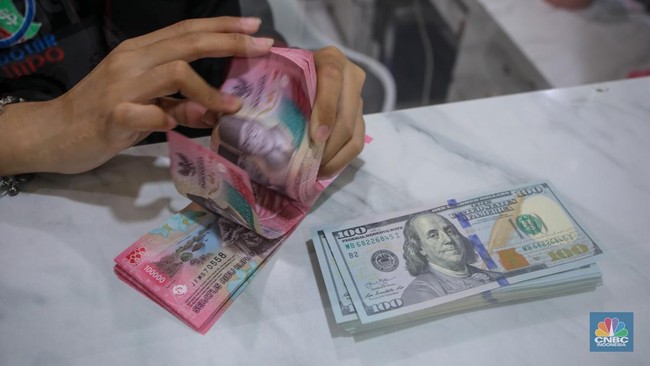
Jakarta, CNBC Indonesia - Foreign banks project that the Rupiah will remain within the Rp18,000 range until the end of the year. PT Bank HSBC Indonesia stated that the current weakening of the Garuda currency against the US Dollar is not caused by fundamental factors.
Frederic Neumann, Chief Asia Economist and Co-head of Global Investment Research Asia at HSBC, noted that the greenback is currently strengthening. One contributing factor is the policy of the US central bank, the Federal Reserve, to increase its benchmark interest rate, which supports the US Dollar exchange rate.
“As a result, we are seeing the dollar strengthen against many currencies. For example, against the Japanese, New Zealand, and Euro currencies,” Neumann said during the HSBC Indonesia Summit 2026 Media Briefing at the St. Regis Hotel on Tuesday (29/09/2026).
Given that only three months remain until the end of the year, he stated that the Rupiah’s position tends to be stable. Neumann suggested the Rupiah might weaken slightly, but not significantly. He argued that the movement of the Rupiah against the US Dollar reflects the strength of the Dollar rather than an underlying weakness in the Rupiah.
“So, if you are asking for a target, a figure around 18,000, for instance, is a reasonable target. That figure reflects the strength of the dollar more than the weakness of the Rupiah,” Neumann explained.
He assessed that the Rupiah has the potential to appreciate next year, as the US Dollar will eventually weaken, subsequently strengthening the Rupiah.
“The key message is that the specific weakening of the Rupiah that occurred at the beginning of the year is no longer present. That weakening trend has been successfully contained,” Neumann concluded.
He highlighted how Bank Indonesia (BI) responded firmly to the Rupiah’s weakening trend earlier this year by rapidly raising interest rates. This policy has been instrumental in reassuring investors regarding currency stability. Furthermore, the Indonesian government continues to move forward with various reforms involving financial officials, including leadership changes at the Indonesia Stock Exchange (BEI), Bank Indonesia (BI), and even the Ministry of Finance.
“In my view, all of this sends a signal that the government continues to strive to maintain macroeconomic stability, which certainly helps to stabilise the Rupiah,” said Neumann.
Under these circumstances, HSBC continues to monitor specific factors such as high real interest rates, relatively stable exchange rates, and a controlled fiscal situation.
Neumann mentioned that his focus has shifted towards structural reforms, specifically how far Indonesia can address infrastructure deficits, the emphasis on education, and steps regarding regulation and energy provision.
“The macroeconomic challenges have actually been resolved. The focus is now more on micro-fundamental aspects, and the handling of these micro-reforms will be the next stage of growth for Indonesia,” Neumann explained.