
For the First Time in History, Astronomers Capture Radio Signals from a Distant Planet
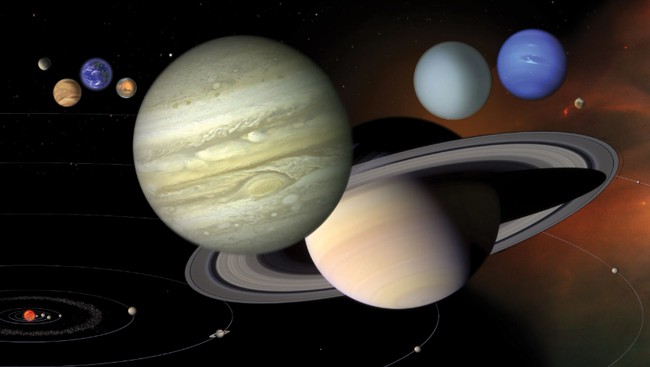
Astronomers have successfully detected direct radio emissions believed to originate from a planet outside our solar system. The signal, arriving from a distance of 63 light-years, is not evidence of alien life, but rather a strong indication that the planet possesses an extraordinarily large magnetic field.
The signal was detected from Beta Pictoris b, a gas giant planet with a mass approximately 12 times that of Jupiter. This planet orbits the young star Beta Pictoris, which has a mass about 1.75 times that of the Sun.
The discovery was made by a research team using MeerKAT, a network of 64 radio telescope antennas in South Africa. Astronomers identified recurring radio bursts and successfully localised the source to Beta Pictoris b, rather than its host star.
Harvard professor of astronomy, Edo Berger, stated that the emissions are related to the planet’s magnetic field. The process is believed to be similar to the formation of auroras on Earth.
“To detect radio waves at the frequencies we observed, a very strong magnetic field is required,” Berger said, as quoted by CNN.
The magnetic field of Beta Pictoris b is estimated to be at least 200 times stronger than Jupiter’s magnetic field. When charged particles move in a spiral within such a strong magnetic field, the process can produce auroras while simultaneously emitting radio waves.
This phenomenon is known as auroral radio emission. Previously, similar phenomena have been observed on Jupiter, Saturn, the Sun, several stars, and brown dwarfs.
The detection is considered significant because one of the primary challenges in searching for radio emissions from exoplanets is confirming the signal source. While indications of radio emissions from planets outside our solar system have been found previously, astronomers had not been able to entirely rule out the possibility that the signals originated from the host star.
Joseph Callingham from the Anton Pannekoek Institute for Astronomy, University of Amsterdam, who was not involved in the study, noted that this aspect is one of the unique features of the recent study.
According to Callingham, the research team succeeded in localising the emission on the planet itself and separating it from its host star.
If confirmed, this finding could open new ways to study exoplanets. Auroral radio emissions allow astronomers to study magnetic fields and the interaction between planets and their surrounding space environments—characteristics that are difficult to ascertain through other observation methods alone.
While the results are compelling, the research has not yet reached a final conclusion. The paper containing these findings was uploaded on 15 September via the arXiv preprint platform and is still undergoing the peer-review process.
Scientists outside the research team have also requested that the results be interpreted with caution until the review process is complete.
Beta Pictoris b is part of a planetary system estimated to be only about 23 million years old, much younger than our solar system, which is approximately 4.5 billion years old. This system also contains other planets, comets, and a large disc consisting of dust and debris left over from planetary formation.
If the detection is eventually confirmed, the presence of such a strong magnetic field on Beta Pictoris b could provide new clues regarding the structure and atmosphere of planets outside our solar system.
The research team has now applied for additional telescope observation time to study Beta Pictoris b further, including investigating why this young giant planet possesses such a powerful magnetic field.