
For Muslims, the Hajj is Sacred, But How Do You Explain it to Non-Muslims?
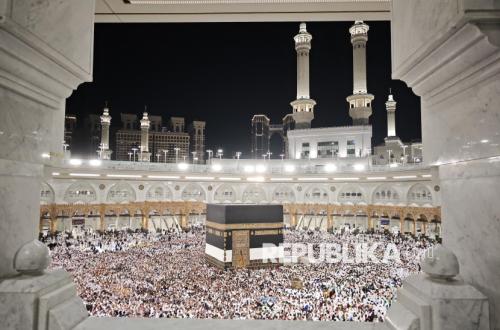
REPUBLIKA.CO.ID, JAKARTA – The Hajj pilgrimage often sparks curiosity among many non-Muslims. For Muslims who are about to perform the Hajj for the first time, explaining the meaning and series of Hajj rituals to their non-Muslim friends can also be a challenge.
So, how do you explain the Hajj pilgrimage to a non-Muslim friend?
An Indian Islamic studies consultant and professor, Prof. Shahul Hameed, explained that the Hajj is not just a physical journey to the Holy Land, but a spiritual journey full of meaning about unity, equality, and devotion to Allah.
“The Hajj is the fifth pillar of Islam. Muslims who are physically and financially able are encouraged to perform it once in their lifetime,” he said, quoted from About Islam, Friday (15/5/2026).
According to him, the Hajj is performed in Mecca and several locations around it, such as Mina, Arafah, and Muzdalifah, for several days during the month of Dzulhijjah.
Prof. Shahul Hameed explained that the Hajj rituals begin by entering a state of ihram, which is a state of purity in which pilgrims are prohibited from doing a number of things, such as wearing ordinary clothes, cutting hair and nails, using perfume, and having sexual relations.
After that, pilgrims go to Mina and then perform wukuf in Arafah, which is the peak and core of the Hajj pilgrimage. From Arafah, pilgrims move to Muzdalifah to spend the night before returning to Mina.
On the 10th of Dzulhijjah, pilgrims perform the sacrifice of animals, shave or cut their hair, and throw stones at the jamarat.