
Food Self-Sufficiency Through the Eyes of Satellites
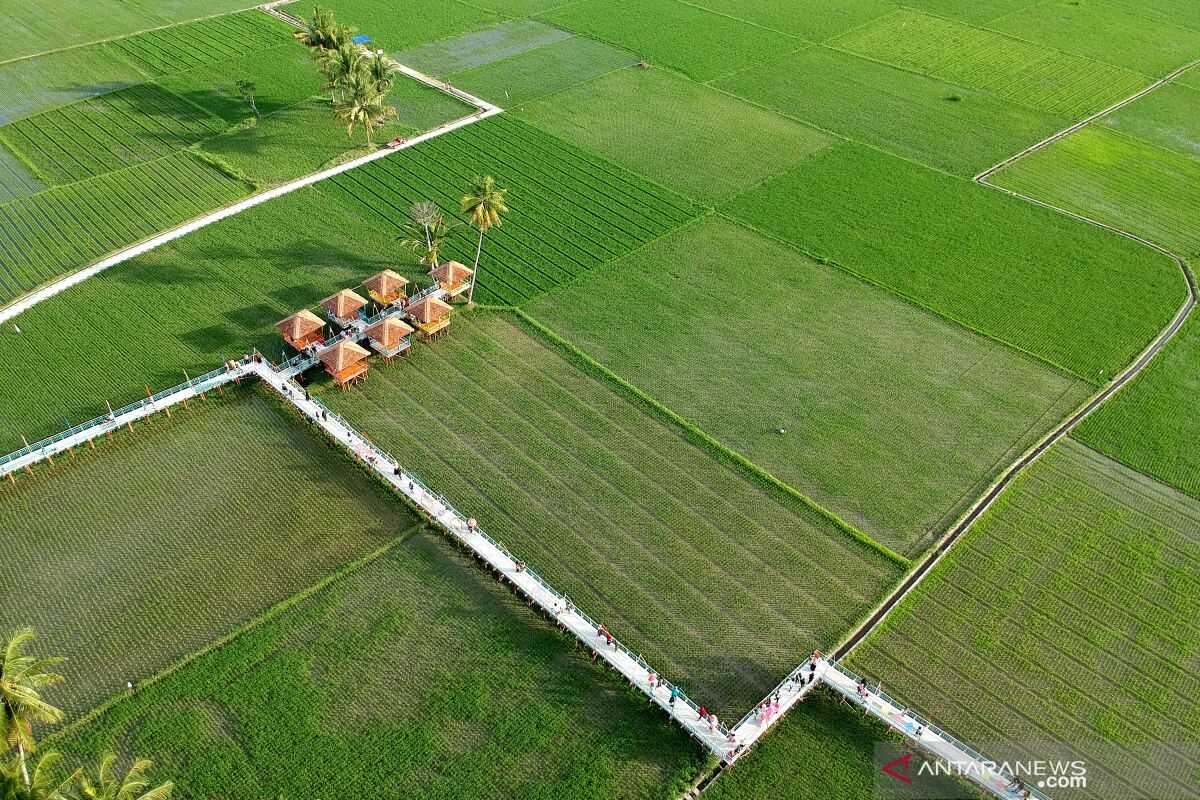
Jakarta (ANTARA) - President Prabowo Subianto has stated that since 31 December 2025, Indonesia has achieved rice self-sufficiency, with a target of comprehensive food self-sufficiency within the next three years.
The statement, delivered on 8 February 2026, naturally inspires pride and hope. In an agrarian nation such as Indonesia, food independence is not merely a statistical achievement but a symbol of sovereignty and national dignity.
Today, in the era of satellites and geospatial intelligence, the dynamics of paddy fields and agricultural land are no longer understood solely through administrative reports or limited surveys. They can be read from space.
However, as an academic who has spent three and a half decades researching soil, paddy fields, and landscapes, a fundamental question arises: Do we truly know the actual condition of paddy fields on the ground? How much land is genuinely cultivated, rather than merely recorded? How many harvests actually take place each year on every plot of paddy from Sumatra to Papua?
When floods submerge paddy fields or drought cracks the earth into long fissures, what is the state of the rice crops upon which millions of families across the archipelago depend?
Self-sufficiency is not simply a matter of national production figures meeting domestic demand without imports. Self-sufficiency is a story about soil health, water availability, and wise spatial management.
If the soil is degraded, self-sufficiency collapses. If the soil is preserved, food security is assured. That is why it is important to look deeper. This is not to cast doubt on achievements, but to ensure that optimism stands upon honest data.