
Food Self-Sufficiency Amid Climate Change
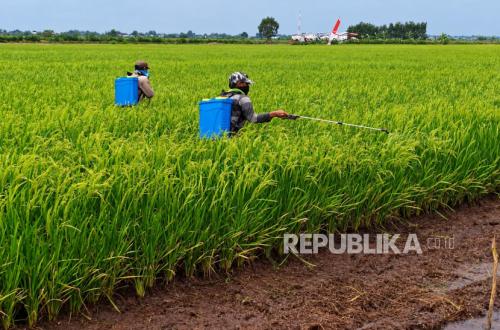
Food independence is not merely the ability to produce food autonomously. It is also an important part of national resilience and a key foundation of national sovereignty. President Prabowo Subianto has stressed that Indonesia does not want to be dictated to by any particular power.
He made the remarks at the 18th BRICS Summit in New Delhi, India, in 2026. The President underlined the importance of strengthening food and energy security as foundations for national self-reliance. In his view, national resilience must begin with food security; food security begins with food independence; and food independence begins with self-sufficiency.
Increasing production
Food independence means a country’s ability to meet its food needs without relying on others. Food self-sufficiency means meeting those needs through domestic effort and production on domestic land. National food production is not only about output, but also about the capacity of the agricultural system to provide food for the public.
Since 2025, Indonesia has achieved self-sufficiency in rice and maize, and in 2026 the government continues to target its maintenance despite the threat of El Niño. According to the Ministry of Agriculture, eight of 11 strategic commodities—rice, feed maize, sugar for consumption, large chillies, bird’s-eye chillies, chicken meat, eggs and shallots—have reached self-sufficiency. Production of the remaining three—soybeans, garlic and beef—is still being boosted to reduce imports.
The achievement has depended on a range of policies and programmes aimed at strengthening farmers’ capacity. Since 2023, the government has introduced measures including improved management of subsidised fertiliser through simpler regulations and a 20 per cent price cut; seed distribution; pump-based irrigation; land optimisation; food brigades; the opening of new community rice fields; increases in government purchase prices for paddy, from Rp6,000 to Rp6,500, and maize, from Rp5,000 to Rp5,500; paddy procurement; and the empowerment of agricultural extension workers.
These policies have produced encouraging results. Rice production reached 34.7 million tonnes in 2025, up about 13 per cent, or approximately 4.2 million tonnes, on the previous year. The increase was driven mainly by a rise in harvested area, from 10.05 million hectares in 2024 to 11.32 million hectares in 2025—an increase of about 1.27 million hectares, or 12.69 per cent.
PM-AAS
Alongside expanding the harvested area, rice production can be increased by raising productivity. Since early 2026, the Ministry of Agriculture has been developing the Modern Agricultural Advanced System (PM-AAS), an initiative conceived by Agriculture Minister Andi Amran Sulaiman. The system centres on dense direct seeding in rows, with wider spacing between columns, and the use of modern agricultural technology, or smart farming. Direct seeding requires shallow water conditions, with the soil neither dry nor flooded. Modern farming methods include the use of machinery before and after harvest—tractors, transplanters, harvesters and drones—as well as bioscience products, including high-yielding varieties, balanced fertilisation and pest and disease management, alongside the Internet of Things (IoT).
Direct seeding can produce a very dense plant population, potentially up to three times that of conventional methods. PM-AAS requires about 70 kilograms of seed per hectare, far more than the 20–25 kilograms needed for conventional planting. As seeds are sown on the soil surface, the system requires varieties that are not only high-yielding but also resistant to lodging. The use of silica fertiliser is also recommended to strengthen plants, helping them withstand lodging and pest and disease attacks. Fertiliser requirements also rise to about 1.5 times the usual recommended rates: two tonnes of compost, 400 kilograms of NPK and 300 kilograms of urea per hectare.
Demonstration plots developed by the Agency for Agricultural Research and Modernisation (BRMP) in 34 provinces have recorded rice productivity of more than 10 tonnes per hectare, with some sites reaching 15 tonnes. Increasing plant populations and optimising other growing conditions have helped multiply yields. The method is similar to a zig-zag maize planting system, which doubles plant populations and uses one tonne per hectare each of phosphate rock and compost, together with hybrid varieties. On acidic soils, it has produced more than 20 tonnes of dry shelled maize per hectare.
Climate change challenges
Despite rising production, the agricultural sector faces an increasingly severe and complex challenge: climate change, including extreme El Niño (dry) and La Niña (wet) conditions, as well as widespread pest and disease outbreaks. During El Niño, rainfall falls significantly and the risk of drought rises. During La Niña, rainfall increases sharply and can cause flooding, raising the risk of crops being submerged as well as pest and disease attacks. These conditions pose a serious challenge because water availability and widespread pest and disease outbreaks are major determinants of production.
Production strategies in a changing climate therefore require timely and effective innovations. Boosting technologies alone are not enough; approaches must also mitigate and adapt to unpredictable climate conditions. Mitigation means preventing or reducing greenhouse gas emissions, while adaptation means responding to biotic stresses, such as pest and disease attacks, and abiotic stresses, including drought, flooding, soil acidity and salinity. A combined mitigation and adaptation approach, such as climate-smart agriculture (CSA), has proved highly effective.
Climate-smart agriculture
Humanity must be able to prevent or reduce risks and adapt to the impacts of climate change. One CSA approach developed for farmers is climate field schools, which help them understand mitigation and preparedness measures, including how to cope with El Niño, La Niña, pest and disease outbreaks, salinity and other challenges.
During drought caused by El Niño, irrigation water is scarce and must be managed as efficiently as possible. Alternative sources, such as rivers, reservoirs and long-storage ponds, should also be sought. Available water needs to be delivered to fields through systems that minimise losses, such as piped distribution. At field level, shallow or intermittent irrigation—also known as alternate wetting and drying—along with drip and sprinkler irrigation, is an important part of water-efficiency strategies. The soil around the roots, or rhizosphere, should also be kept moist through water conservation measures, for example by using compost and biochar.
Other mitigation and adaptation methods must continue to be developed and implemented in the field. These include rice varieties with low emissions and resistance to drought, submergence, high salinity and acidic soils, as well as tolerance to stem borers, neck blast and bacterial leaf blight. Other options include balanced fertilisation; the use of organic and biological fertilisers and soil amendments; integrated pest management; raised-bed farming systems in wetland areas; and the use of agricultural machinery and IoT.