
Food Security is Key to National Sovereignty
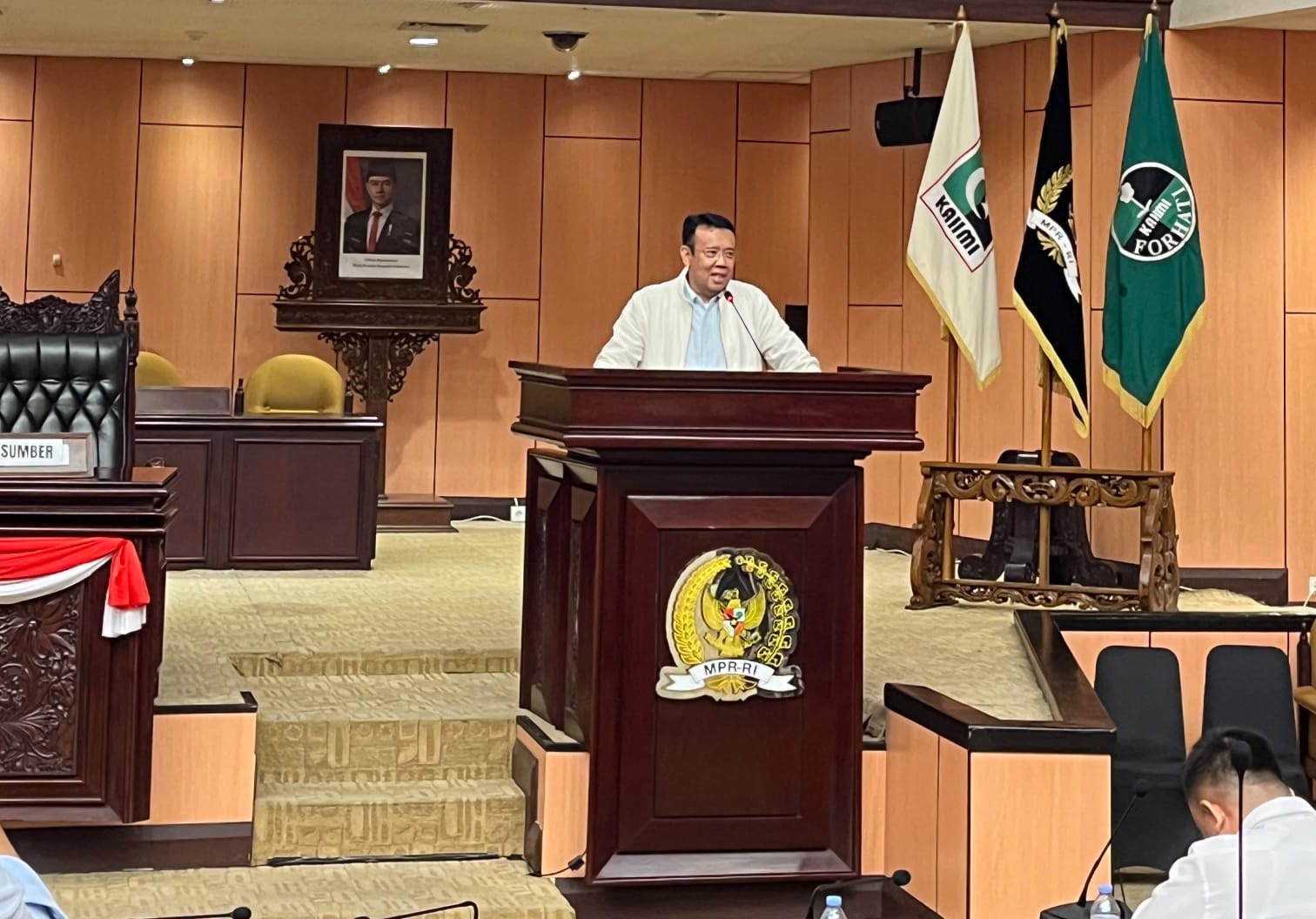
Food security must be positioned as a strategic component in strengthening Indonesia’s national sovereignty and resilience. This was stated by Achmad Tjachja Nugraha, Professor of Agribusiness at UIN Syarif Hidayatullah Jakarta, during the National Symposium ‘KAHMI for National Sovereignty’ held at the DPR/MPR Complex, Senayan, Jakarta, on Wednesday (9/9).
In the forum, Achmad Tjachja presented a paper titled ‘Food Security Towards an Advanced Indonesia’ from the perspective of Article 33 of the 1945 Constitution of the Republic of Indonesia. He argued that food should not merely be viewed through an economic lens.
Food holds a strategic position because it is directly linked to the continuity of community life and national resilience. “Food is not just an economic commodity; it is an absolute prerequisite for national security,” the presentation emphasised.
Achmad explained that a nation’s inability to build food self-sufficiency can become a serious vulnerability to its sovereignty. This issue is increasingly critical amidst global geopolitical volatility, climate change, and international supply chain disruptions. “Food fragility is a weak point in national sovereignty,” he asserted during the symposium.
According to Achmad, there are four main pillars that must be addressed in building food security: availability, access, utilisation, and stability. These four aspects must function continuously.
Indonesia faces significant challenges in meeting food needs due to its archipelagic nature and diverse ecological characteristics. Furthermore, food requirements must be met for a population of over 280 million. Therefore, the success of food security, according to him, cannot be judged solely by national achievements; food conditions must be measured down to the regency, city, and household levels.
“The success of food security is not only measured by national figures, but by the fulfilment of availability, access, utilisation, and stability in every region,” Achmad explained yesterday.
As the Chairperson of the Association of Indonesian Agricultural Engineers and Graduates (PISPI), Achmad also emphasised the importance of involving agricultural engineers and graduates in the development of the food sector, ranging from the development of agricultural machinery to research and farmer assistance. He also encouraged strengthening inter-island food connectivity through the digitalisation of food balances, mapping regional surpluses and deficits, modern warehousing, and cold chain systems to maintain food quality.
“Food security also needs to be linked to various national programmes, including agricultural downstreaming, energy self-sufficiency, and the Free Nutritious Meal (MBG) Programme. For instance, the raw materials for the MBG programme can be supplied by local farmers and fishermen,” he concluded.
Achmad added that building food security requires synergy between the government, academics, the business world, farmers, fishermen, PISPI, and the media. Strengthening protection for productive agricultural land is also a vital part of this strategy. Ultimately, food security is not just about the ability to produce and provide food; a self-sufficient and sustainable food system is considered a foundation for strengthening national resilience and sovereignty.