
Food Security Coordinating Minister outlines four steps to improve free nutritious meals programme during Prabowo-Gibran government’s second year
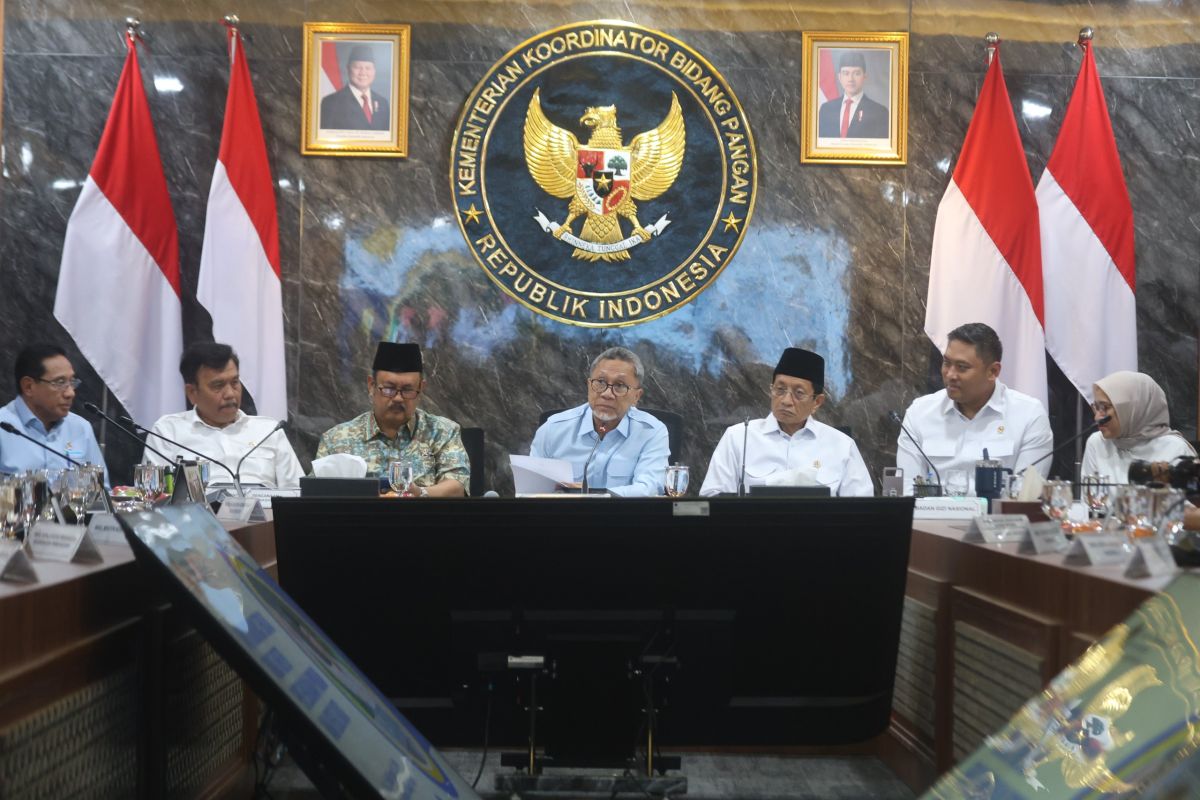
Jakarta (ANTARA) — Coordinating Minister for Food Affairs Zulkifli Hasan (Zulhas) has outlined four measures to improve the Free Nutritious Meals (MBG) programme, with the aim of extending equitable access, enhancing food safety, and strengthening governance and oversight during the second year of President Prabowo Subianto and Vice-President Gibran Rakabuming Raka’s administration.
The measures comprise accelerating services in disadvantaged, frontier and outermost (3T) areas; reorganising Nutrition Fulfilment Service Units (SPPG); improving food safety and quality; and overhauling beneficiary data while taking action against irregularities.
“Entering the administration’s second year, the President’s directive is to implement MBG equitably as soon as possible, particularly in 3T areas and regions with high stunting prevalence. Shortcomings must be addressed, governance put in order, and irregularities dealt with firmly,” Zulhas said in a statement in Jakarta on Tuesday.
He made the remarks after chairing a ministerial-level coordination meeting on the implementation of MBG in Jakarta on Monday (19 October).
First, the government is accelerating the equitable provision of MBG by activating new SPPGs in 3T areas, particularly regions that have long faced limited access to services.
The National Nutrition Agency (BGN) activated 480 new SPPGs in 16 provinces in eastern Indonesia on 2 October 2026, followed by 980 SPPGs in Sumatra, Kalimantan and Bali on 14 October.
The next phase is scheduled for the fourth week of October, focusing on Islamic boarding schools and religious schools in remote areas.
The government is also aiming to complete technical guidelines for operating SPPGs in 3T areas this week.
The second measure involves improving the governance of MBG kitchens by introducing a new incentive scheme of Rp2,000 per portion from 2 October 2026, alongside a reassessment of SPPGs’ operational eligibility.
Under the requirements of Provisional Determination Letter 2 (SPS 2), SPPGs must hold a Hygiene and Sanitation Fitness Certificate (SLHS), not be subject to a temporary suspension of operations, have no record of a fatal incident, and serve more than 1,000 beneficiaries.
BGN data show that 26,385 SPPGs have operational status under SPS 2. The review is intended to ensure that kitchens serving the public meet the programme’s operating requirements.
Third, the government is improving food safety and quality, including through a trial of buffet-style MBG meals at 66 SPPGs across 10 provinces.
The trial draws on food-service practices in several countries, including Japan and Italy.
The government’s initial assessment found that the buffet method could help keep food warm, reduce food waste and improve nutrition education by involving teachers and pupils.
The government will evaluate the trial regularly before considering whether to extend it to other regions.
As its fourth measure, the government is putting MBG beneficiary records in order through verification by name and address, integrated with the National Identity Number (NIK).
The data collection covers pupils, Islamic boarding-school students and the 3B groups: toddlers, pregnant women and breastfeeding mothers. Integrating the data is expected to improve targeting and provide a basis for evaluating the programme’s benefits.
Zulhas stressed that better governance must also be accompanied by action against intermediaries and alleged irregularities in the management of SPPGs.
“In the past, foundations were set up and locations designated, and in the end that led to corrupt collusion. That is what we are cleaning up. And if there is deliberate wrongdoing, with clear and unequivocal evidence, the case can be taken to court,” he said.
BGN Head Sudaryono said the agency was trialling the integration of CCTV cameras at around 70 SPPGs with a central monitoring system powered by artificial intelligence (AI).
According to Sudaryono, CCTV cameras already installed in kitchens have generally been used for internal monitoring. Connecting them to the central system is expected to enable checks on compliance with standard operating procedures (SOPs), from food preparation and cooking through to washing utensils.
Oversight is also being strengthened through the role of regional MBG task forces, in accordance with Presidential Regulation No. 115 of 2025 on the governance of the Free Nutritious Meals programme.
Through these reforms, the government aims to ensure that MBG’s expansion goes hand in hand with safer food, more accurate beneficiary targeting and greater accountability in programme delivery.