
Food Security as the Foundation of National Stability
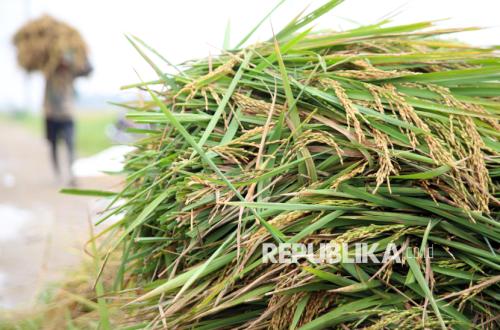
The title above is an excerpt from President Prabowo’s speech at the ASEAN Summit in the Philippines. President Prabowo reminded his ASEAN counterparts not to be half-hearted in building food security within their respective countries, expressing his desire for food security to become a flagship programme within ASEAN.
According to Law No. 1ability 2012 concerning Food, Food Security is defined as a condition where food needs are met for the nation down to the individual level. This is reflected in the availability of sufficient, safe, diverse, nutritious, equitable, and affordable food that does not conflict with religious, beliefs, and cultural values, enabling a healthy, active, and productive life sustainably.
The Food Law emphasises three main pillars in achieving national food security. First, food availability: ensuring sufficient food through domestic production, food reserves, and imports if necessary. Second, food accessibility: ensuring all members of society can access food both physically and economically. Third, food utilisation: the consumption of food that is safe, nutritious, diverse, and aligned with the culture and beliefs of the community. Essentially, it is not merely about the ‘availability of rice’, but also that it must be safe, nutritious, affordable, equitable, and culturally appropriate.
It is noteworthy that when discussing Indonesia’s successful food security development practices that could be shared with ASEAN nations, several practices have recently come under the spotlight in various ASEAN forums. There are at least five elements deemed important and worthy of collective review:
Regional Emergency Food Reserve System – APTERR: Indonesia actively encourages and serves as a primary driver in the ASEAN Plus Three Emergency Rice Reserve (APTERR) scheme, which is a shared rice reserve between ASEAN countries, China, Japan, and South Korea to anticipate food crises. At the 48th ASEAN Summit in May 2024, APTERR was reaffirmed as a key deliverable to guarantee the availability of emergency rice reserves in the region. Shareable practices include inter-country coordination mechanisms, stock release systems, and regional food reserve information management.
Food Sovereignty as a National Vision: The Prabowo Subianto administration places food and energy security as the fundamental pillars of national sovereignty. This approach ensures that food policy is no longer viewed merely as a technical ministerial matter, but as part of the geopolitical and regional stability agenda. Shareable practices include how food issues are mainstreamed to the level of heads of state and directly linked to regional stability efforts.
Strengthening Production & Local Diversification: Indonesia continues to strengthen local food production and diversification through the development of food estates, rice production intensification, and food diversification programmes based on local commodities such as sago, sorghum, and maize. This policy aims to reduce dependence on rice and wheat imports. This step is relevant for other ASEAN nations striving to reduce single-commodity risks.
Collective Response to Global Shocks: At the recent summit, Indonesia urged ASEAN to be more resilient, as conflicts in the Middle East have proven to rapidly impact food and energy availability. A shareable model is Indonesia’s food diplomacy used to build regional solidarity when global supply chains are disrupted.
Energy Stability to Support Food: In addition to APTERR, there is the ASEAN Petroleum Security Agreement agreed upon by ASEAN nations. This agreement demonstrates that energy issues are closely linked to food security, as energy directly affects fertiliser availability, production costs, and food prices. A shareable practice from Indonesia’s experience is the food-energy nexus approach, ensuring that policies in both sectors are mutually supportive rather than operating in isolation.