
Food Prices Could Strain Indonesian Households' Wallets, BI Prepares New Strategy to Control Inflation
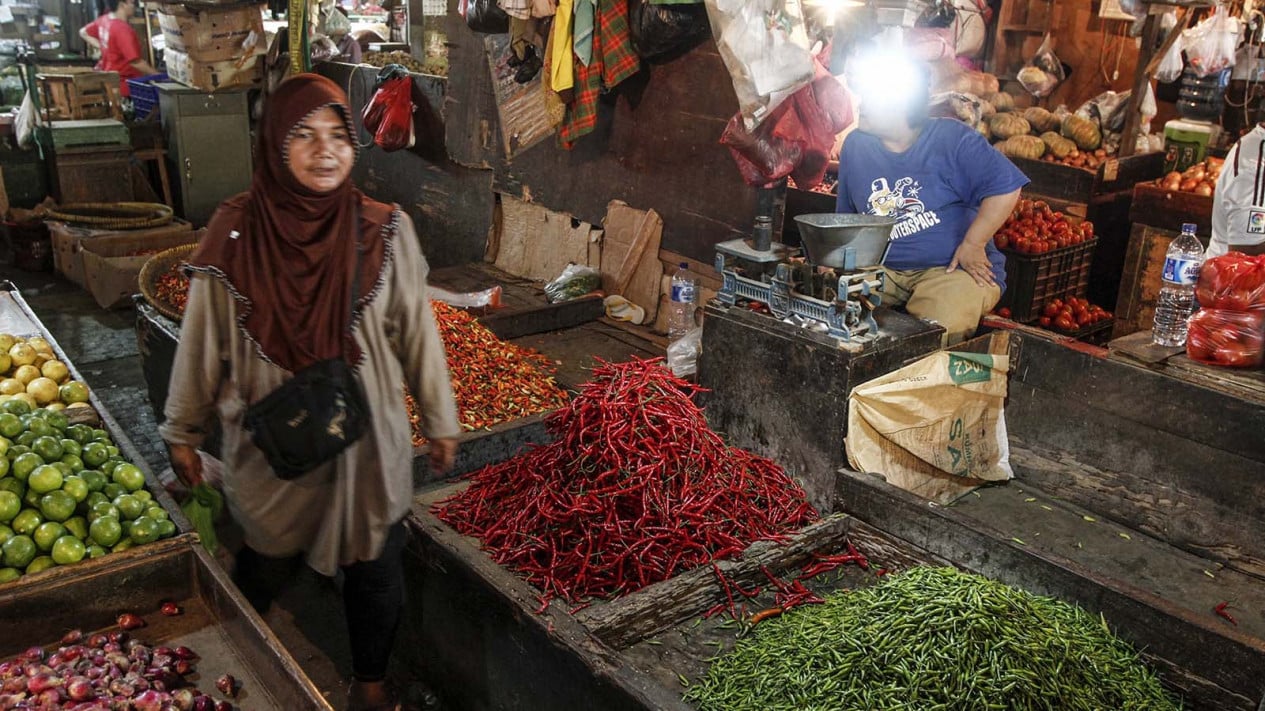
Bank Indonesia, together with the central and regional governments, has officially launched the Gerakan Pengendalian Inflasi Pangan Sejahtera (GPIPS) in East Java on Wednesday, 13 May 2026. This programme strengthens the previously implemented Gerakan Nasional Pengendalian Inflasi Pangan (GNPIP) to maintain national food price stability and bolster food resilience amid global challenges.
The launch of GPIPS took place at the Bulog Warehouse in Sidoarjo and was attended by various stakeholders, including Bank Indonesia, the Coordinating Ministry for Economic Affairs, the Ministry of Home Affairs, local governments, Bulog, OJK, and banking actors.
East Java was selected as the national launch location due to its strategic role as a food barn and distribution hub for eastern Indonesia, as stated by BI Deputy Governor Aida S Budiman.
She explained that GPIPS serves as a reinforcement of the food inflation control strategy that has been running through the Central and Regional Inflation Control Teams.
“Therefore, this morning, we are changing from GNPIP to GPIPS, Gerakan Pengendalian Inflasi Pangan Sejahtera,” Aida said in her remarks on Wednesday.
According to her, the strengthening focuses particularly on supply availability and smooth food distribution. This step is deemed essential to maintain price stability while ensuring society continues to have access to affordable food.
Aida emphasised that food inflation has a significant impact on low-income groups. For these communities, food expenditure can reach 60 to 80 percent of total income.
“If in terms of inflation, what is called volatile food, its weight is not far from 20 percent. But for low-income people, this weight from their income can be 60-80 percent. So we must keep their prices stable,” she said.
In its implementation, GPIPS continues to use the 4K strategy, namely price affordability, supply availability, smooth distribution, and effective communication. However, this time the government and BI are adding strengthening to the food supply chain from upstream to downstream.
The programme will also be carried out through seven flagship programmes integrated with various government initiatives. The focus ranges from increasing productivity, post-harvest processing, product downstreaming, to efficiency in national food distribution.
Source: jawawa.id (https://jawawa.id/newsitem/food-prices-could-strain-indonesian-households-wallets-bi-prepares-new-strategy-to-control-inflation-1778656139)
Originally published by VIVA.co.id (https://www.viva.co.id/bisnis/1898372-harga-pangan-bisa-ganggu-dompet-warga-ri-bi-siapkan-jurus-baru-jaga-inflasi), translated from Indonesian