
Food Inflation Hits 5.81%, Hitting Poor Households Hardest
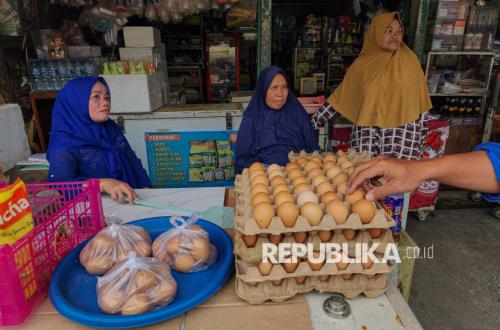
JAKARTA — Food inflation rose to 5.81% in October 2026, potentially putting further pressure on the purchasing power of poor households. Low-income groups are most vulnerable because they spend a large share of their income on daily food needs.
Afqah Hudaya, a researcher at the Institute for Development of Economics and Finance’s Centre for Food, Energy and Sustainable Development, said food price rises affect people unevenly. Poor households have to allocate a larger proportion of their income to food than middle- and higher-income groups.
“So when food prices rise, they are the ones who are hit hardest,” Afqah said during an online public discussion entitled “Response to 2026 Quarterly Economic Performance” on Thursday (5 November 2026).
Price pressures are evident in the rise in volatile food inflation in recent months. It increased from 2.52% in July to 4.06% in August, then to 5.03% in September, reaching 5.81% in October 2026.
Over the same period, headline inflation stood at 3.23%. Core inflation, meanwhile, trended down, falling from 2.92% in August to 2.56% in October.
Afqah said the differing trends indicated that price pressures were driven more by food supply problems than by stronger consumer demand. “So it is not because public demand is too strong,” she said.
In Afqah’s view, falling core inflation alongside rising food prices also suggests that people may be cutting spending on non-food needs. Households could be holding back on purchases of goods and services to ensure they can still afford essentials.
The pressure is particularly acute for widely consumed commodities such as bird’s eye chillies, rice, chicken and beef. Higher prices for these foods could alter household consumption patterns.
“There is a shift, a switching, because people’s purchasing power is starting to come under pressure,” Afqah said.
In addition to distribution problems, production disruptions could add to food price pressures. Afqah said the El Niño phenomenon, which causes drought, had also affected national agricultural production.
According to figures she presented, rice production in 2026 is projected to fall by 4.57% to 57.45 million tonnes, from 60.20 million tonnes in 2025. The decline risks tightening rice supplies while demand continues.
Supply pressures could also intensify ahead of Christmas 2026 and New Year 2027. Food demand usually rises during this period, while supplies could be disrupted by lower harvests.
Afqah said efforts to control food inflation should prioritise strengthening supply and distribution. She argued that fiscal stimulus to support purchasing power would not be effective enough if rising prices for basic necessities were left unaddressed.
“The response has to come from food supply and distribution policies,” she said.
Indef is urging the government to increase distribution of rice under the Food Supply and Price Stabilisation (SPHP) programme, particularly in areas experiencing high food inflation. Inter-regional distribution cooperation should also be strengthened to maintain availability and affordability.
Protection for vulnerable groups should also be expanded through well-targeted food assistance. This is important to safeguard the purchasing power of agricultural labourers, smallholders and fishers, whose incomes could also come under pressure if the lean season lasts longer, extending into early 2027.
Source: jawawa.id (https://jawawa.id/newsitem/food-inflation-hits-5-81-hitting-poor-households-hardest-1793883085)
Originally published by Republika (https://ekonomi.republika.co.id/berita/to0zls416/inflasi-pangan-tembus-581-persen-rumah-tangga-miskin-paling-terpukul), translated from Indonesian