
Food Deputy Coordinating Minister: Iron and steel smelting must not be located in Greater Jakarta
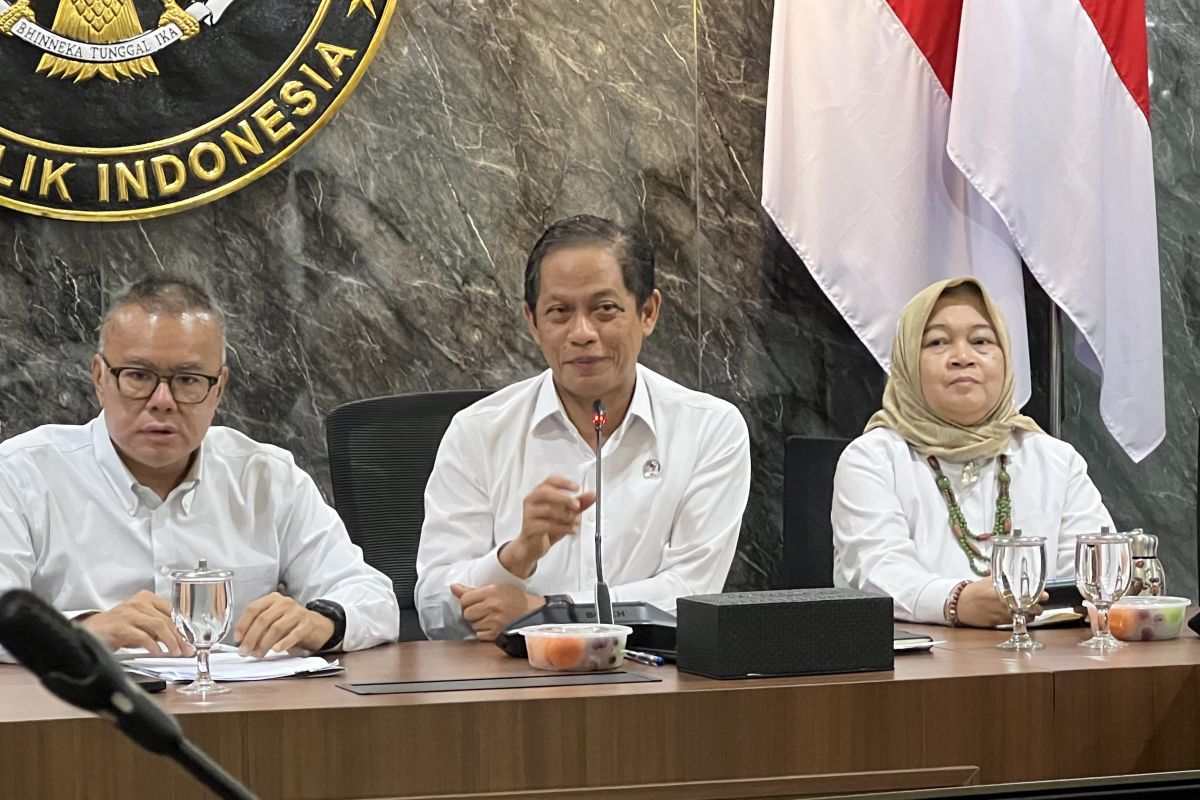
Jakarta (ANTARA) — Deputy Coordinating Minister for Food Hanif Faisol Nurofiq said iron and steel smelting plants should not be located in Jakarta, Bogor, Depok, Tangerang, Bekasi, Cianjur (Jabodetabek) and surrounding areas, to protect air quality and prevent radioactive contamination.
“My advice is that these industries really should not be in Greater Jakarta. In many countries, smelting industries are moved elsewhere,” Hanif said at a press conference on the response to Cesium-137 contamination in the Cikande Industrial Estate, held at the Coordinating Ministry for Food’s office in Jakarta on Monday.
Hanif said the proposed restriction was intended to protect people’s health from pollution and contamination that such industries could cause, particularly when smelting facilities are located next to food-processing plants.
In his view, relocating smelting industries would be more feasible than moving people who could be put at risk by industrial activity.
He said the relocation was also in line with a Supreme Court order that is legally binding and intended to improve public health.
“We have to choose between people’s health and an industry that can, in fact, be moved. The industry is not that expensive to relocate; it might cost a few tens of billions of rupiah. It can be moved,” Hanif said.
Hanif also called for smelting industrial areas not to be built alongside food-processing facilities. He said this was a mitigation measure to prevent a repeat of the Cesium-137 contamination incident.
“We are not convinced that smelting plants can maintain air quality properly. Sometimes their pollution directly affects nearby food, so technically these smelters should not be located in the same area as food production and its derivatives,” he said.
The Cs-137 contamination is known to have originated at a smelting facility owned by PT Peter Metal Technology (PMT).
The source of exposure was scrap metal found to contain radioactive material. During smelting, the radioactive material evaporated and became airborne. Air currents then carried the radioactive particles to other locations within the industrial estate.
On 19 October 2026, the Coordinating Ministry for Food officially declared the emergency response phase for Cesium-137 contamination at the Modern Cikande Industrial Estate in Serang, Banten, over.
Although the emergency phase has ended, Bara said the task force handling Cs-137 would ensure that further action continued within the respective agencies’ authority.