
Food Coordinator Offers Carbon Market Incentives to Global Investors
Jakarta (ANTARA) - The Coordinating Minister for Food, Zulkifli Hasan, has offered incentive schemes through carbon market mechanisms for global investors committing capital to green projects in Indonesia.
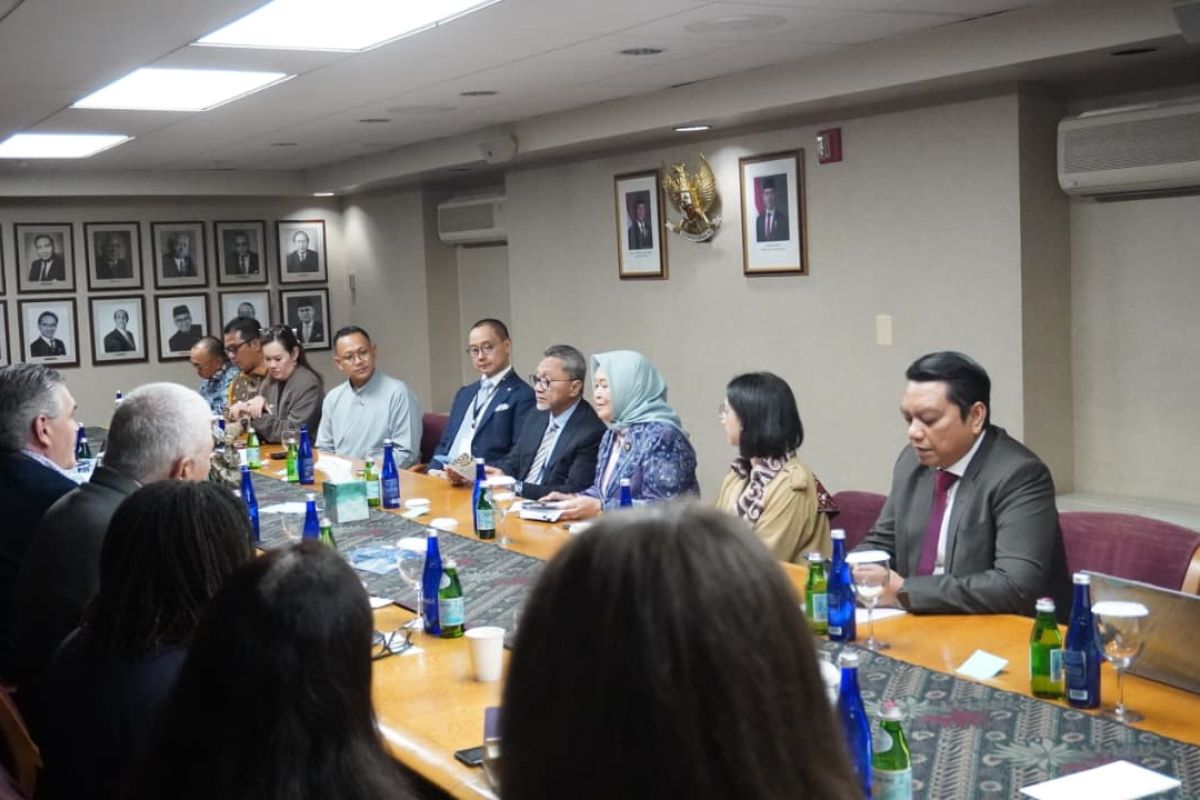
The offer was presented to more than 20 CEOs during the “High Level and CEO Forum on Low-Emission Rice and Sustainable Agriculture” held as part of the 81st United Nations General Assembly (UNGA) and Climate Week NYC 2026 in New York, United States.
“Indonesia faces a waste emergency that must be addressed immediately, one way being through waste-to-energy. Therefore, the Indonesian Government is encouraging green investment in the waste sector as a priority,” said Zulhas, as noted in an official statement received in Jakarta on Tuesday.
He outlined three sectors that present green investment opportunities: food through the development of low-emission rice, waste management that generates economic value, and the marine sector through blue carbon development.
According to him, the opportunity to gain added value and incentives from emission reduction actions through carbon market mechanisms can increase the attractiveness of green projects for investors.
As the Chairman of the Steering Committee for Carbon Economic Value (NEK), Zulhas is also coordinating the simplification of regulations and the strengthening of carbon trading governance to ensure that the implementation maintains the credibility of emission reduction results.
The strengthening of this framework is expected to pave the way for measurable emission reductions to obtain economic value while simultaneously attracting financing.
The carbon trading framework is also being strengthened by the Financial Services Authority (OJK) through OJK Regulation Number 10 of 2026, which was enacted on 6 July 2026. This regulation requires that carbon units traded through the carbon exchange be registered in the Carbon Unit Registry System (SRUK).
OJK data shows that as of 31 August 2026, there were 159 service users registered in the Indonesia Carbon Exchange. Since its launch on 26 September 2023, the aggregate transaction volume has reached 1.98 million tonnes of CO2 equivalent (tCO2e) with an accumulated transaction value of Rp93.90 billion.
Previously, in July 2026, Zulhas mentioned that the implementation of NEK instruments has the potential to drive green investment of up to US$5.8 billion, or approximately Rp104.2 trillion, while reducing greenhouse gas emissions by about 570 million tCO2e.
In the food sector, the government is offering opportunities for the development of low-emission rice cultivation to strengthen food security while developing agricultural practices that are more resource-efficient and lower in emissions. According to him, the large-scale implementation of such cultivation requires support in technology, financing, market certainty, and clear economic benefits for farmers.
In the waste sector, investment is directed towards processing facilities that can reduce the burden on landfills while generating energy and other economic value. In the marine sector, green investment is aimed at supporting sustainable resource utilisation and improving the welfare of coastal communities, including through the development of blue carbon potential.
The government believes that partnerships with investors are necessary to bridge the financing needs of climate action with projects that can be implemented on the ground, while simultaneously supporting emission reductions, increasing food production, benefiting farmers and fishermen, and helping to resolve waste issues.
The Coordinating Minister for Food also emphasised that climate action must be translated into real projects with specific locations, implementers, funding requirements, measures of success, and benefits for the community.
In a speech themed “Indonesia’s Food System Transformation,” the Coordinating Minister for Food presented the progress of Indonesia’s food sector and the agenda to ensure its sustainability. The meeting in New York was also utilised by the government to invite global business players to explore cooperation linking food security, emission reduction, and green investment.