
Food Coordinating Ministry and WWF Indonesia Push for Sustainable Palm Oil Transformation
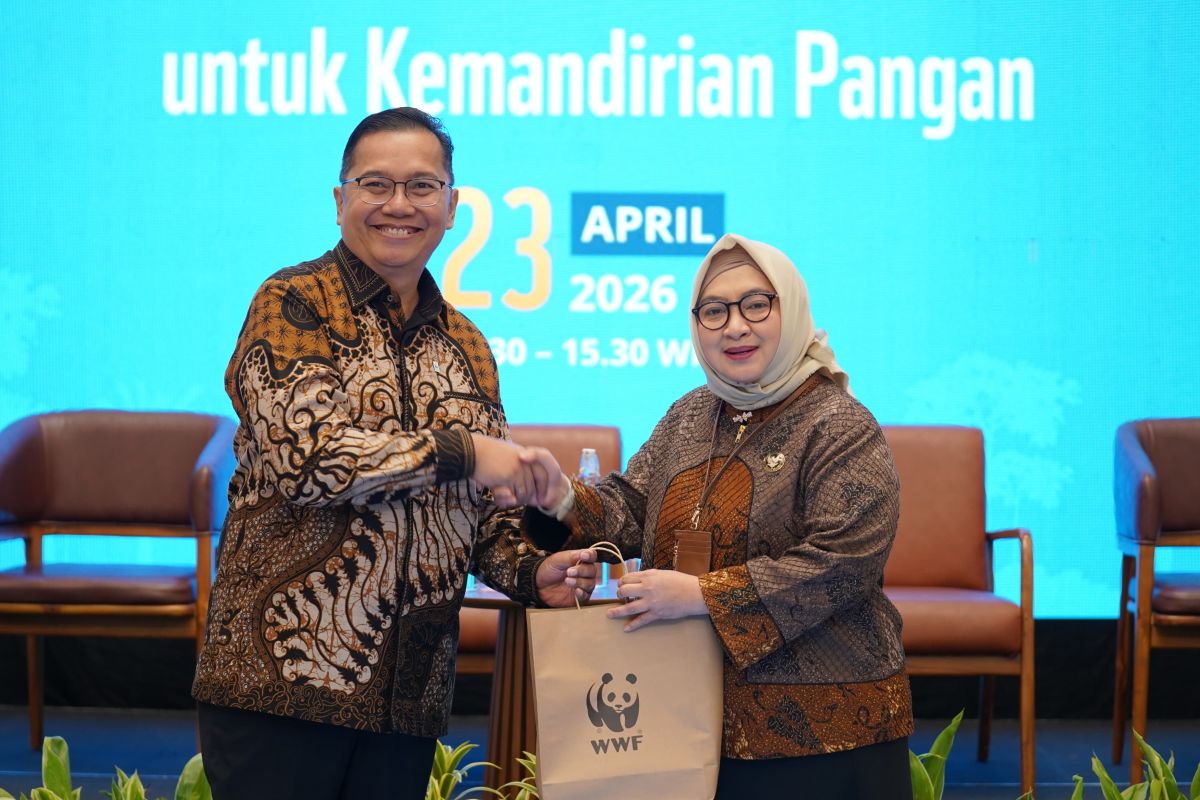
Jakarta (ANTARA) - The Coordinating Ministry for Food is collaborating with the World Wide Fund for Nature (WWF) Indonesia to promote a sustainable and inclusive transformation of palm oil governance in order to strengthen national food self-sufficiency.
This push was conveyed during the National Food Self-Sufficiency Dialogue 2026, which brought together cross-sector stakeholders to formulate concrete steps for improving palm oil governance, given Indonesia’s strategic position as the world’s leading palm oil producer.
“Strengthening inclusive, transparent, and accountable governance is key to maintaining global competitiveness while ensuring the welfare of smallholders and national food security,” said Deputy for Coordinating Food and Agriculture Affairs of the Food Coordinating Ministry, Widiastuti, in her statement in Jakarta on Friday.
She explained that the palm oil transformation needs to focus on increasing productivity through optimising existing land, strengthening the role of independent farmers, and implementing national sustainability standards.
According to her, improving the productivity of independent farmers still faces several obstacles, including land legality, access to superior seeds and fertiliser, and limited financing.
“We have the resources, we have the scale; what we need now is truly inclusive governance and a system that can meet global standards without sacrificing small farmers,” she stated.
Meanwhile, Chief Executive Officer of WWF Indonesia, Aditya Bayunanda, emphasised the importance of balancing palm oil production increases with environmental conservation.
“Through proper mentoring and intensification for independent farmers, we can boost productivity without needing to open new land,” said Aditya.
He assessed that this approach is key to curbing environmental degradation while preserving biodiversity.
According to Aditya, strengthening farmer capacity and applying better cultivation practices can also enhance the competitiveness of Indonesian palm oil in the global market.
“With strengthened capacity and better cultivation practices, global standards will no longer be a pressure but an opportunity,” he added.
According to him, Indonesia currently contributes around 58 per cent of global palm oil production, with a volume of 46–51.6 million tonnes of crude palm oil (CPO) in the 2024–2025 period.
This production comes from 16.83 million hectares of palm oil land, with about 40 per cent managed by independent farmers who still face various productivity and support challenges.
The national dialogue, which took place on Thursday (23/4), also discussed the palm oil supply chain from upstream to downstream, from national policies to real conditions at the farmer level.
Furthermore, the forum is expected to produce cross-sector commitments to accelerate the transformation of sustainable and inclusive palm oil governance.
These efforts align with the direction of national development in the National Medium-Term Development Plan (RPJMN) 2025–2029 and the National Long-Term Development Plan (RPJPN) 2025–2045.
Source: jawawa.id (https://jawawa.id/newsitem/food-coordinating-ministry-and-wwf-indonesia-push-for-sustainable-palm-oil-transformation-1777017163)
Originally published by Antara (Indonesian) (https://www.antaranews.com/berita/5540727/kemenko-pangan-wwf-indonesia-dorong-transformasi-sawit-berkelanjutan), translated from Indonesian